
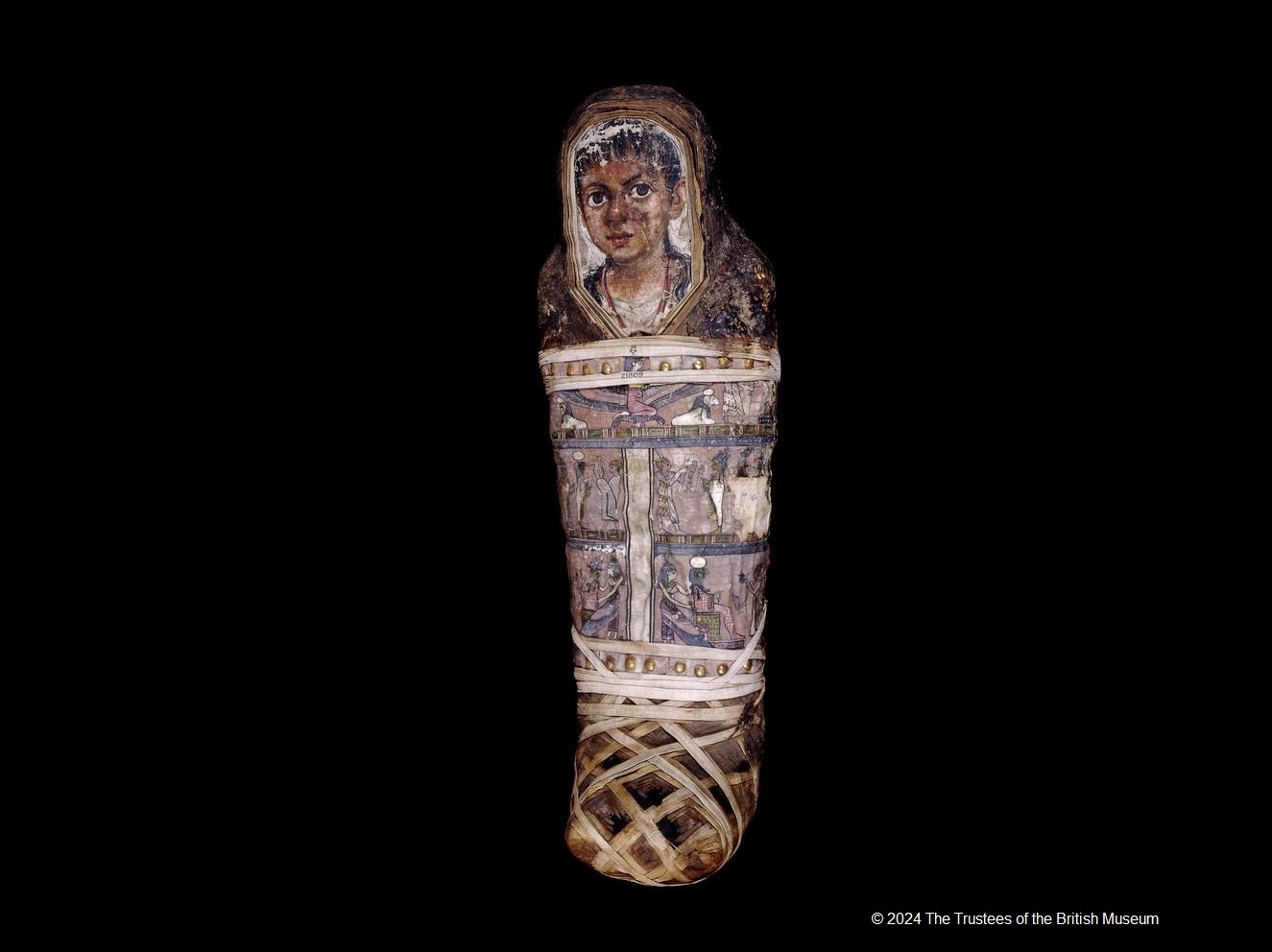
Ancient Egyptian mummification has captured the interest of researchers and the public alike for over 100 years. However, much of our understanding of ancient Egyptian mummification and funerary culture comes from the mummified remains of elite adults recovered from Pharaonic Egypt (c. 3000-332 BC). Interestingly, in the Roman Period (30 BC-AD 395) a discernible shift in mortuary traditions can be observed and a greater number of non-adult mummies have been recovered.
 This doctoral project draws together existing evidence for mummification techniques with the direct analysis of c.50 non-adult mummies using Computerised Tomography (CT) scanning, and aims to provide key evidence for how mummified children were prepared for their journeys into the afterlife. The funerary treatment of non-adults with adults from a range of periods and geographical locations are being compared and contrasted to explore possible mummification differences, and try to understand the reasoning behind this apparent shift in mummification. The analysis also explores how children were thought to exist in the afterlife as well as investigating their position in a changing ancient Egyptian society.
This project is being undertaken by Doctoral Candidate Eleanor Chipps.
Supervisors:
Professor Mary Lewis (University of Reading)
Professor Hella Eckardt (University of Reading)
Dr Daniel Antoine (British Museum)
Dr Marie Vandenbeusch (British Museum)