
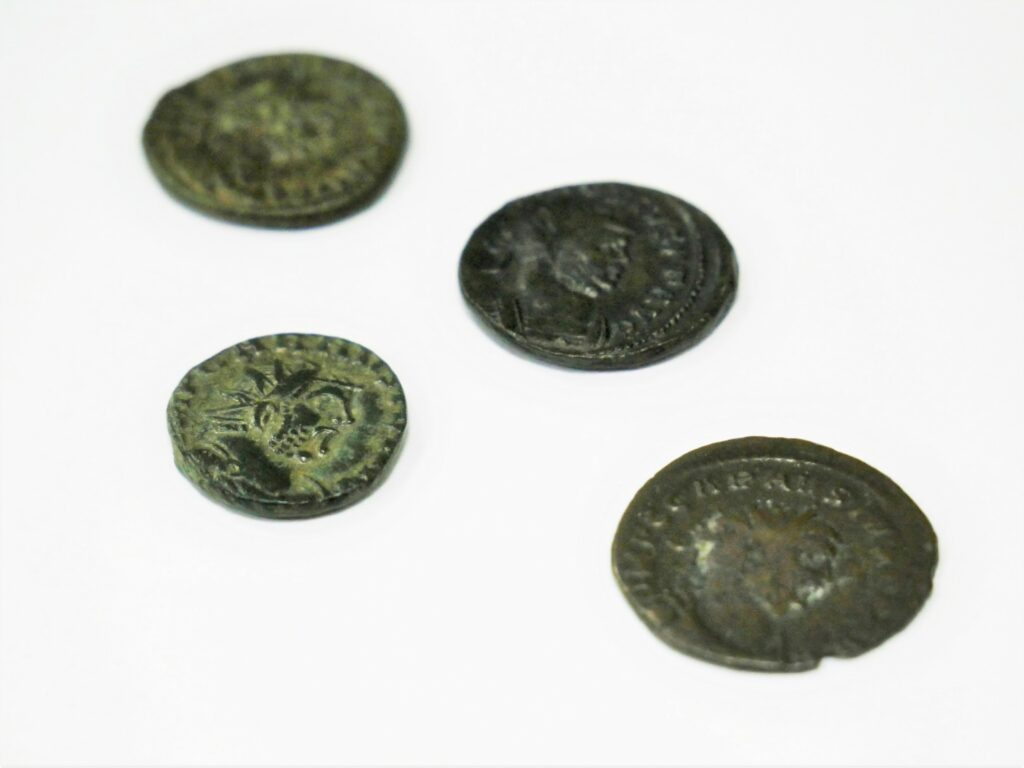
The Roman and Early Medieval Alloys Defined (REMADE) project is addressing unanswered questions about the mysterious lives of Romans and Saxons by investigating ancient precious metals using modern techniques.
High quality brooches, brass coins and other artefacts that have hidden secrets under our noses for centuries will be re-investigated using chemical analyses at the University of Reading in a first-of-its-kind research study.
REMADE project will bring together scientists, archaeologists and museum curators to better understand human connections through the ages via the shared use of metal in Britain.
Dr Peter Bray, a Reading archaeologist who is set to lead the project, said: “Metals created connections across the Roman and Medieval world, and were used in complex ways by diverse societies over hundreds of years. Civilisations from bygone eras were good at recycling and successfully reclaimed and recast copper, bronze and brass into new objects.
“For example, we know Saxon craftspeople were deliberately targeting, sorting and recycling the highest quality material they could find, much of which was from the Roman era.
“This tells us a great deal about their use of colour to identify good brass, and their sense of value and social priorities. We hope to uncover more trends like this so we can learn more about our ancestors.”

Deep dive
Hosted in new laboratory facilities at the University of Reading, Dr Bray and his team will take a deep dive into thousands of ancient copper-alloy objects, including brooches, coins, military equipment, cosmetic sets, sculptures, figurines and ingots.
Here, they will examine how and why different civilisations reused and recycled metals and learn more about ancient ideas of economics and identity.
The team is also aiming to understand more about how different areas of the UK exchanged metal, discover more about links between metal and glass production that were not previously understood, and unearth more ways in which metal was used for personal items such as brooches.
Public co-operation
The £1.5 million project, which is set to last four years, is funded by UK Research and Innovation as part of its Future Leaders Fellowship programme.
A key aim of the project is to encourage public participation in the investigations. Online training, communication material and workshops will be provided to expand the impact and understanding of chemistry in archaeology to a wide audience of budding participants.
Co-operation is a central tenet of the project and a network of fifteen partner heritage organisations, including national museums, major archaeological businesses, will use the results from the investigations to tell social, economic and political stories about their past.
Sussex Past is one partner set to take part in REMADE and it is hoped results from the chemical analysis will shine a light on the history of Fishbourne Roman Palace in Chichester.
Dr. Rob Symmons, Curator, Sussex Past, said: “Fishbourne Roman Palace is in many ways an enigma. Since it was excavated in the 1960s, questions around its function, evolution and its place in the wider Roman empire have remained unanswered. REMADE’s cutting edge science will finally address these questions that have until now been beyond our reach. It will help us understand the Palace and its residents so much better, as well as wider Roman society and our place in it.”
The full list of partner organisations are:
- AC Archaeology
- British Museum
- Colchester Museums
- Durham Castle Museum
- English Heritage
- Headland Archaeology
- MOLA
- National Museums of Scotland
- National Roman Legion Museum, Caerleon (National Museum of Wales)