
Transforming Resources for Young People Through Innovative Communication Design
Transforming Resources for Young People Through Innovative Communication Design (TRYPTIC) is a cross-disciplinary collaboration between the Royal Berkshire Hospital and the University of Reading. TRYPTIC brings together clinicians, design researchers, patients, and parents to co-design learning resources for chronic childhood constipation and pain.
Chronic childhood constipation, and pain are two pressing needs-based conditions with profound implications on young people’s well-being.
When constipation in children is not recognised and treated promptly and appropriately, it can lead to significant long-term bowel, bladder, and mental health problems. These problems often persist into adulthood. Constipation can also lead to discomfort and severe pain. Paediatric chronic pain typically is under recognised, under treated, and occurs in a significant population of children around the world. Watch a video ›

TRYPTIC is addressing two conditions affecting young people…

Childhood constipation
30% of the paediatric population suffering from childhood constipation is affected by the ‘Cinderella’ condition.
Late referrals and under-treatment have long-term negative effects for patients.
Paediatric chronic pain
Paediatric chronic pain occurs in 10% of hospitalised children, and in 20–35% of children and adolescents worldwide.
The condition is typically under-treated and under-reported in many regions and countries.
…by bringing together designers, physicians, and users in the design process

address needs, and ensure solutions fit with all groups
identify needs and constraints
develop and test prototypes
revise communications
test, improve, repeat
co-design learning resources
align content, needs, and context
ensure effective communication, and not pre-suppose answers
remain community-targeted
align with GP education
remain relevant to young people
transfer our approach to other challenges
build and retain hub expertise
set guidelines and share how-to insights
add value to various armamentaria
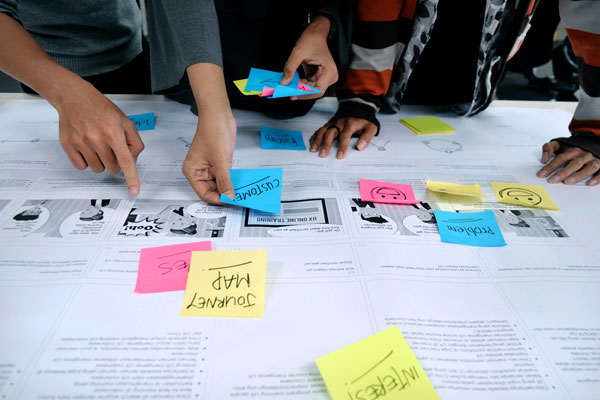
We are taking a co-design approach to building user-centred solutions for patients, carers, and clinicians, by involving each in the design process, from ideation to evaluation.
Explore our research
Co-design is a well-established approach for designing health solutions. We are working to identify local requirements so as to develop a sustainable approach to communication design for the Royal Berkshire Hospital — an approach that is also replicable across other conditions.