TRIYBE is a Black heritage-led community organisation based in Reading, committed to driving positive change through transformation, research, and innovation. Its mission is to unite people, creating a sense of connection and strength within communities, whilst building opportunities, leadership, confidence and capacity.
TRIYBE stands for Transformation, Raising Aspirations and Resilience, Inspiring, Younity, Building a strong sense of identity, and Empower. Guided by these six principles, TRIYBE is dedicated to shaping a future where everyone has the opportunity to thrive and be celebrated.
“The experiments were powerful and helped make the science easy to understand. The group discussions were just as valuable, hearing other people’s stories made the information hit even harder.” Participant, TRIYBE
Aims
Core research theme: Investigate, understand, and raise awareness of the mental, physical, and overall well-being impacts that Black hair care products have on Reading’s Black Heritage community, by exploring the science of Black hair, the chemical composition of hair products marketed to Black heritage communities, and the broader cultural and systemic implications tied to Black hair and identity.
Through its engagement with the CLRP, TRIYBE designed a project responsive to Black heritage communities and cultural identity. Project Natura focused on the intersection of Black hair care practices, the chemical composition of Black hair care products, and the physical and mental health of Black individuals and communities related to Black hair and heritage. The project was both bold and vital, with little to no other research of this type being carried out in the UK. The specific aims of the project were:
- Chemical exposure and health: Establish what harmful ingredients are commonly used in Black hair care products, and investigate how these ingredients affect both the physical and mental health of Black heritage individuals and communities
- Identity and emotional wellbeing: Understand how hair care, hair loss, and the policing of hair affect mental health, self-image, and identity within Black heritage communities
- Empowerment through alternatives – recommending community-informed, natural alternatives which can be created to support safer, healthier hair care
- Raising awareness: Promote awareness of safe and healthy hair care within Black heritage communities through interactive workshops, group discussions, and hands-on lab sessions.
Methods, Principles and Practices
Project Natura combined rigorous science with deep, responsive community engagement. However, there were initial challenges following the activity testing phase, when developing the project and its delivery team. Across the CLRP, community organisations were matched with University of Reading researchers, but due to a lack of Black Chemistry researchers, which reflects a sector-wide issue in a subject where there is only one Black Professor in the UK, external recruitment was required. This resulted in Post-Doctoral Researcher Symiah Barnett from Loughborough University joining the team, alongside University of Leeds’ Dr Tamanda Walker, who supported from a social science perspective.
Once the academic team was established, the partnership commenced with TRIYBE’s delivery team, including TRIYBE’s Director Claudette Maharaj and Community Researchers Tyler Hinkson, Sharon Titus, and Nicola Bennett. Over a 12-month period, focusing on the core research theme, TRIYBE conducted surveys, curated podcasts and videos, hosted brunch discussions, facilitated storytelling events and creative writing sessions to inspire analytical thinking and emotional resonance, carried out 1-1 interviews, and co-designed and co-delivered lab workshops at the University of Reading’s Chemistry labs.
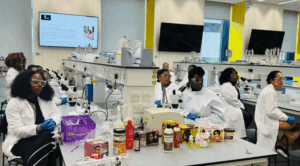
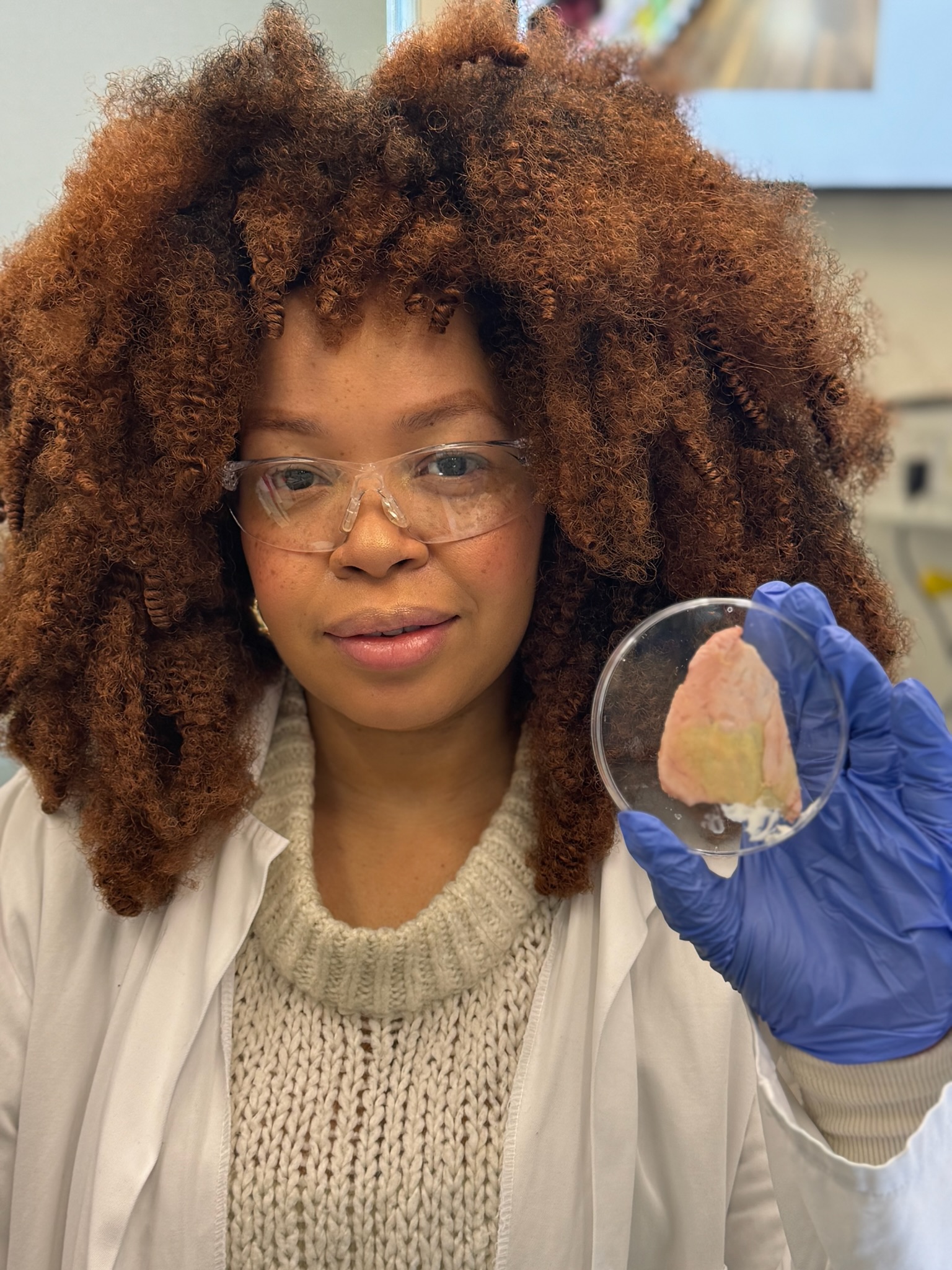
The hands-on lab workshops were a crucial aspect of the project, co-designed by TRIYBE’s team Claudette Maharaj, Tyler Hinkson and PhD researcher Symiah Barnett. Over four days, they delivered four workshops that enabled participants to directly examine the effects of hair relaxers using chicken skin to mimic the scalp, as well as the impact of direct heat on hair. Participants compared untreated and treated hair samples under microscopes, allowing them to visually witness the damage caused by hair products many had used in the past and present. One participant reflected: “I found the workshop incredibly engaging and informative. The hands-on experiments really helped me to understand the impact of harmful chemicals in Black hair, scalp, and beard products. Seeing the science in action made everything feel more real and relevant.”
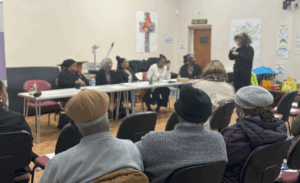
The experiments were paired with candid discussions on identity, cultural pressures, self-worth, masculinity, and product marketing. Alternative forums such as brunch events and podcasts were delivered to encourage deeper, more comfortable participation and to engage community members who might not attend traditional event settings. By involving children as both interviewers and interviewees, the project developed a distinctive intergenerational aspect that deepened emotional resonance and provided a sense of continuity. Participation was intentionally inclusive, drawing from a wide range of genders, ages, and backgrounds. Many participants identified as Black British, Caribbean, African, or of mixed heritage. Outreach extended beyond Reading to London and the wider South-East, attracting interest from hairdressers, barbershops, salons, universities, sports venues, cultural organisations, a wide range of independent businesses and festivals.
Outcomes
The impacts of Project Natura were multifaceted, spanning scientific, emotional, and social dimensions. Laboratory research successfully identified and mapped chemical ingredients in widely used Black hair care products, raising awareness of harmful substances such as endocrine disruptors commonly found in relaxers, texturisers, beard products, dyes, shampoos, and straighteners. This work provides a valuable scientific baseline for future research and supports calls for greater regulation in product development.
Through extensive digital and face-to-face engagement, TRIYBE reached over 7,600 people with communications about the lab workshops, Hair Care Survey, and other project activities. This included more than 500 direct, face-to-face conversations and over 7,000 digital interactions via platforms such as Instagram and Eventbrite. Demand for the lab workshops far exceeded capacity, with 116 enquiries and 60 registrations for just 32 places, illustrating significant community interest and engagement with the research theme.
The impacts around cultural identity, mental health, and wellbeing were also significant. The politicisation and policing of Black hair are particularly harmful not only relating to aesthetics, but also shaping a sense of belonging and self-worth. As TRIYBE Director Claudette Maharaj notes: “In Black cultures, hair is often used as an expression of pride, creativity, spirituality, and connection to ancestry, but it remains politicised. Schools and workplaces continue to impose Eurocentric standards that disproportionately penalise Black hairstyles. These experiences can deeply affect self-image and belonging.”
While women made up the largest proportion of participants, TRIYBE actively targeted men in its outreach to enable conversations around masculinity, hair loss, beards, and identity. Tyler, one of TRIYBE’s community researchers, observed: “As a young Black heritage male, it’s become clear to me that the impact of hair-based experiences is particularly pronounced in spaces where Black heritage individuals are underrepresented, such as many UK universities and professional spaces. In these environments, both students and staff often feel isolated or misunderstood when it comes to experiences with hair.”

Beyond the emotional and wellbeing impacts, other project deliverables included a workshop format that is both replicable and accessible for non-scientific audiences, as well as an extensive archive of community stories and testimonials. Additionally, a comprehensive scientific report is in production, alongside new culturally competent hair care guidelines and future educational resources for schools and health and social care providers.
Future Prospects
Building on the success of Project Natura and the strong community interest in its core research themes, TRIYBE aims to advocate for and secure increased investment in research and education that connects Black Heritage health, identity, and hair, with this project serving as a foundational step.
With further funding, several important next steps can be achieved:
- Scaling up workshops to reach those who were unable to attend due to limited capacity, engaging an even broader audience and providing preventative education on hair and scalp health.
- Publishing scientific and cultural findings in accessible formats for diverse audiences and stakeholders, enabling evidence-based, preventative steps to reduce harm from unsafe products.
- Pushing for regulatory reform to improve transparency and safety in hair care products and their marketing.
- Including Black heritage hair care in public health strategy, recognising hair loss, scalp damage, and emotional and physical distress as legitimate health concerns, and supporting early interventions.
- Training more Black heritage researchers and facilitators to lead this work, addressing the systemic imbalance within scientific research and increasing the number of Black heritage individuals entering science subjects and careers.
Perhaps most significantly, Project Natura demonstrates that Black heritage hair, and its intersection with physical, emotional, and mental health, is not a superficial concern. Rather, it represents a powerful site for resistance, harm prevention, capacity for change, and the recognition of heritage.
With community researchers at the heart of the project, the work remained deeply rooted in lived experience and cultural insight. Their involvement ensured the research was both meaningful and resonant; without their leadership and engagement, the outcomes would have been far less impactful and less relevant to the communities served.
When Black heritage individuals and communities are able to reclaim their narratives and actively participate in shaping the scientific research that affects them, the research process transcends knowledge production. It becomes an opportunity for healing, empowerment, and meaningful transformation. Therefore enriching both the academic field and the communities it seeks to serve.