Students make significant contributions to Participatory Action Research (PAR) projects at the University of Reading. At the same time, providing them the opportunity to learn and develop skills, as their work is essential to the successful delivery of the projects. As part of the series, Lessons Learnt from PAR at the University of Reading, in this article, Dr Alice Mpofu-Coles shares experiences from herself and others from working with students to deliver PAR projects with local communities, offering guidance to those on a similar path.
Working in academia is fast-paced, with a continuous cycle of production, writing, teaching, journals, research, and endless administrative work. Community-centred research takes time, is not funded well, and is physically and emotionally demanding, with little to no space for reflection. Still, the benefits in terms of tangible impact on societal issues can be hugely significant.
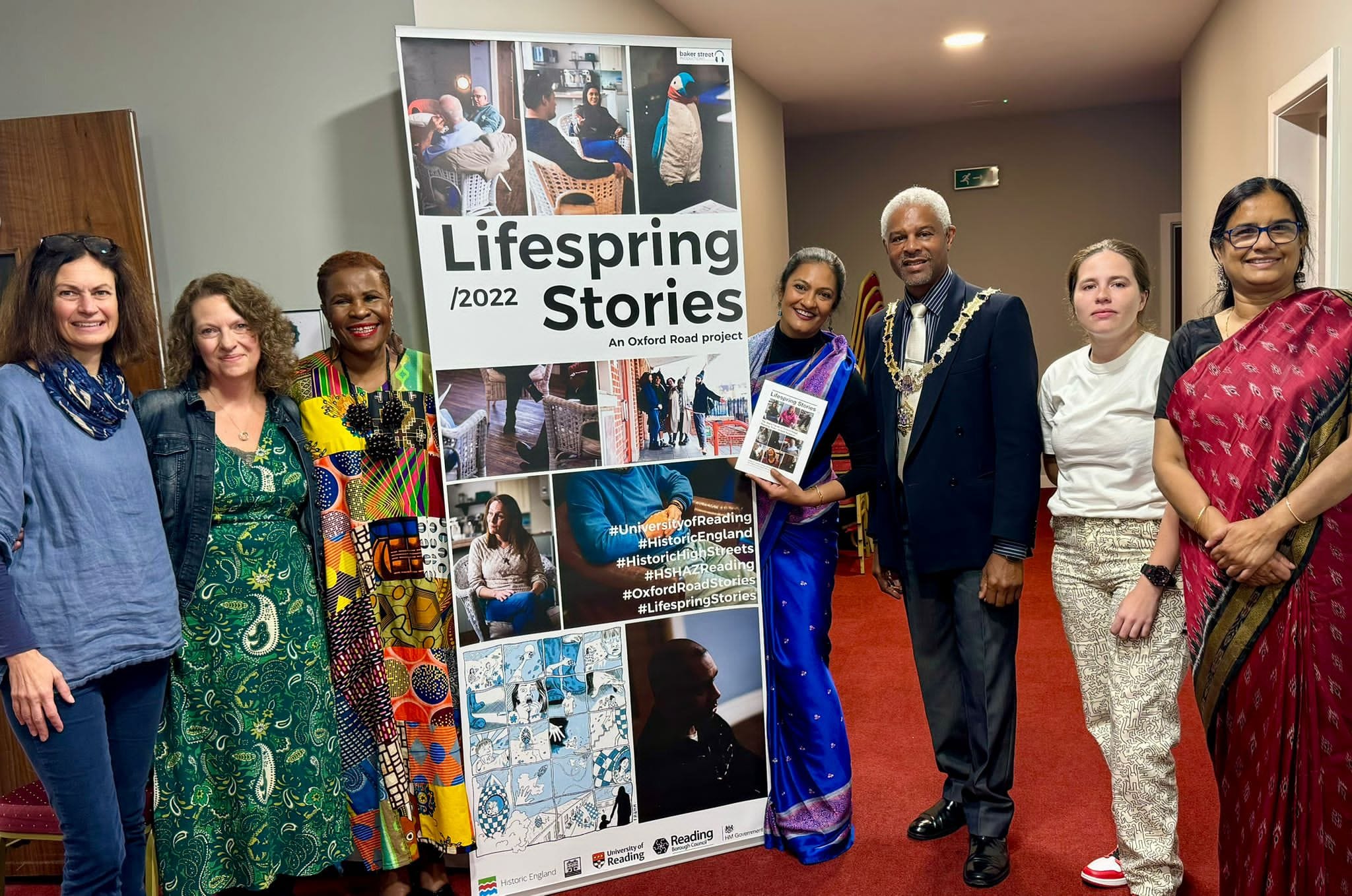
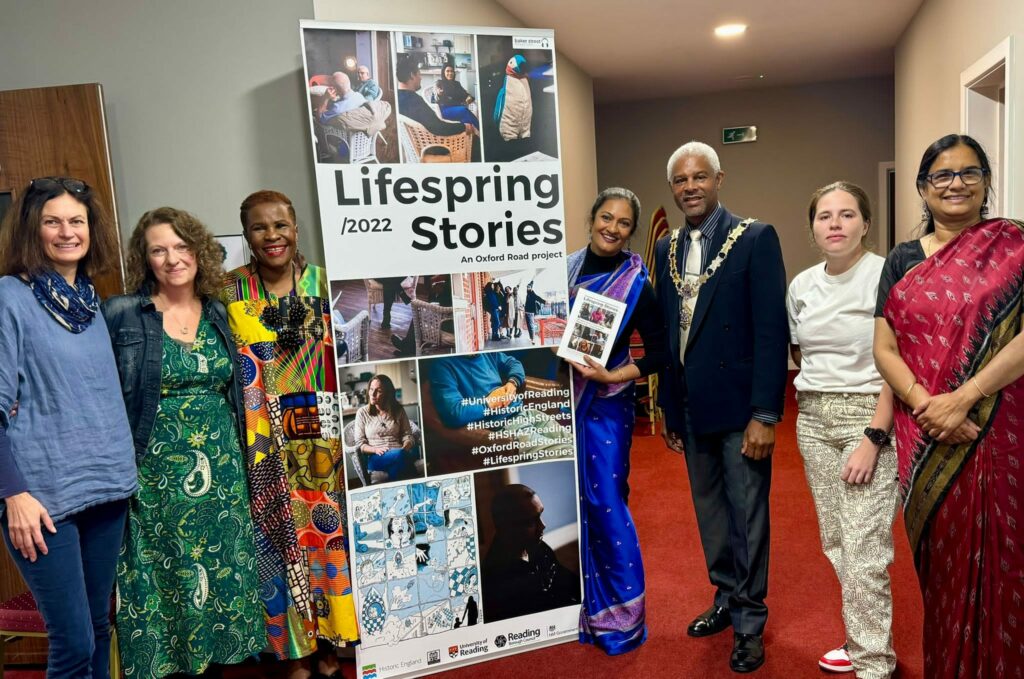
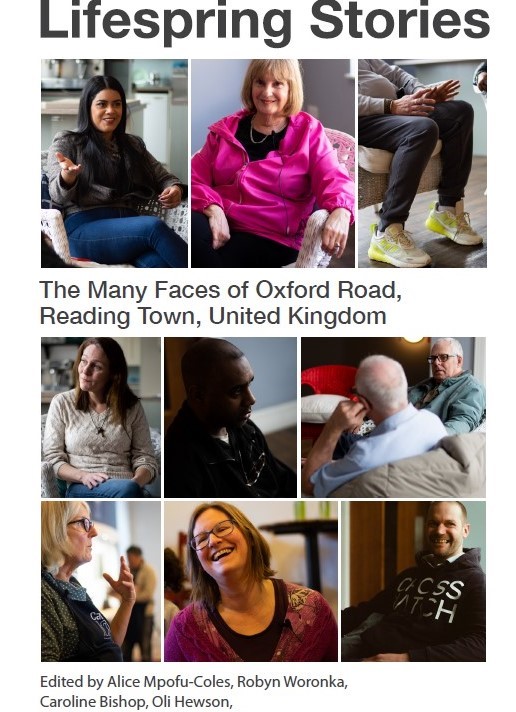
The Oxford Road research project that started in 2020 as a pilot project funded by Historic England and now has an open-access book ‘Lifespring Stories: The Many Faces of Oxford Road, Reading, UK’ which is available online, after hard copies were distributed to the participants, schools, charitable organisations and libraries across Reading. It has been key in how we decolonise research and dissemination through co-production with residents and participants. This work is associated with slow scholarship that argues and contributes to change in strategies that foreground collaborative, collective, communal ways forward to challenge and find solutions to growing inequalities (Mountz et al. 2015). In 2019, I led the participatory research for the Ageing Well – Place of Culture Programme, collaborating with residents aged 55 and over in Reading from the BAMER (Black, Asian, Minority, Ethnic, Refugee) community, as well as our Undergraduate Research Opportunities Placement students. I sought a better understanding of the challenges faced by local organisations and service providers in reaching this age group – what works and what does not, the logistical difficulties various organisations encounter, their experiences with networking, and the support these organisations would like to receive from local authorities.
“The work of the Whitley Researchers with older BAMER communities includes informing people of what ACH offers. Most crucially, the Cultural Champions, as part of the Ageing Well pilot, offer an on-the-ground, word-of-mouth route for potential new engagers. Local communities are most likely to listen to people they know and trust, so this offers a real opportunity for the Reading ACH sector if they work closely with these projects” (Reading, Place of Culture Final Report Ruth Melville, by MB Associates).
The “doing” of PAR and the importance of learning about the community and developing skills
Robyn Woronka, PhD Candidate Film Geographies
Working as a PhD student on the Oxford Road project has given me practical experience and, more importantly, a sense of purpose and meaning as a researcher. I have been fortunate to be involved in the Oxford Road Storytelling project since the beginning of 2020 when Alice Mpofu-Coles, Toby Barlow and I first walked Oxford Road during Covid, wondering where this project would take us. Little did we know that four years later, there would be a podcast and book sharing stories from Oxford Road. We have worked with so many different people: writers, artists, volunteers at Lifespring, designers, academics, local authorities and most importantly, the participants, who shared their stories of their struggles, hope, and connection to Oxford Road. I feel privileged that they trusted us with their stories. The importance of listening and learning from each other, our different skills and cultural backgrounds, for me, are the differences that have been the strength of this project.
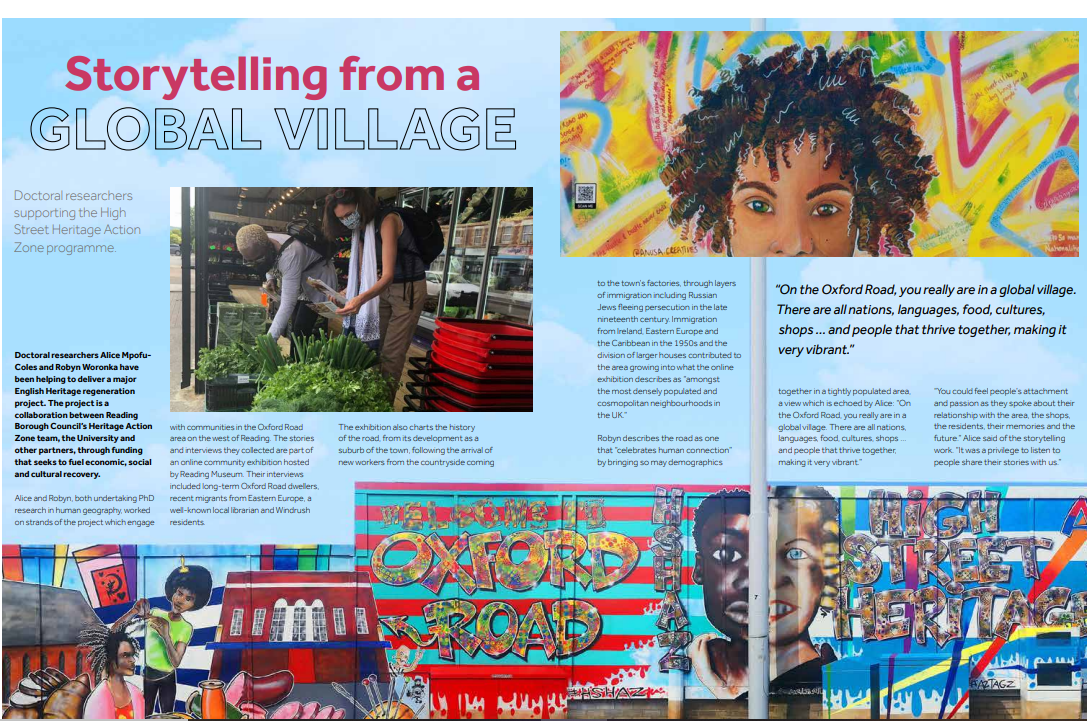
The success of these projects is all in the ‘practical doing’ that Undergraduates, Masters and PhD students got involved in the ‘learning by doing’ in the community. The PAR methods require familiarisation with the community, so researchers or students can build trust and collaborative relationships. Students can familiarise themselves with community groups through small acts of ethics that bring care and empathy into the conversations over a cup of tea, food, activities, language skills or simply listening.
What students say about working on UoR and BSA the Community Led Research Pilot
The students that have worked in these projects have been from different disciplines and wanted to learn different skills, life experiences and make a difference in communities.
Dimitra Zannidi – PhD student in Food and Nutrition, worked in an Early Career Researcher role for the CLRP
I have worked as an early career researcher within the Community Led Research pilot, together with my PhD at the University of Reading. My interest in working within the community and offering volunteering services whenever possible led me to apply for the role. I worked with community researchers and training partners during the process and gained significant knowledge about community-led and participatory research approaches. It was an interesting and different experience, which I am glad I joined, and it let me engage with the Slough community, join events and identify the needs of the underrepresented community groups. However, there were difficulties along the way, as expected, due to the pilot nature of the project, which at the same time led to questioning if the way I am working and approaching the project is correct and if what I am doing is enough. Regular meetings with the group and my community partner helped to let those feelings go; however, as in any project, some periods felt more uncertain than others. To me, ideas and projects like the Community Led Research Pilot need to be given the ground, the resources and the time to grow and evolve in order to be able to empower the communities and, most importantly, to engage in decisions and policy groups that would not have been heard otherwise.
Robyn Woronka, PhD Candidate Film Geographies
In addition to the Oxford Road project, I worked as an Early Career Researcher on the British Science Association (BSA) Community Led Research Pilot (CLRP). This provided the opportunity to navigate the challenges of working with multiple organisations, in particular institutional barriers to working with local communities. It highlighted the need to simplify the administration of community-led projects, ensuring the voices of communities direct the project.
Jen Stokes, PhD Candidate Film, Theatre and Television
I felt that although it was a challenging project, I learnt a lot about partnership working, and it gave me a greater understanding of how to support communities to design and lead their own research. There are elements of that project that I’ll be taking forward in my own research after my PhD.
What students say about working on the Oxford Road Lifespring Stories Project
Priya Hunt As – PhD student in Leadership and Organisational Behaviour
I thrive on projects that challenge my thinking, allow me to contribute to writing, and foster collaboration with diverse teams. The Oxford Road project not only fulfilled all this but also brought unexpected joy and valuable learning, enriching both my research and connection to the community. I loved gaining insights into the community we researched, and I felt both supported and challenged to think differently. I even explored new skills, like poetry writing, in a safe, collaborative environment with a very talented group. I am deeply grateful for this opportunity.
Maisie Crittenden – PhD English Language and Literature
I entered this project as a Masters student, now a PhD candidate, with a focus on poetry and writing fiction. Working on this book telling the stories of Oxford Road widened my view of Reading from the university campus to an entire town of people from so many different backgrounds and cultures. Being able to work for this community and create further representation in this way is a massive privilege. This may be the first project in which I am proud my voice as a writer has taken a backseat to telling the truths of the Oxford Road community.
Some international students learnt about Reading Town, its surrounding areas, and the community by participating in the PAR projects, which foster belonging.
Aparna Das – PhD student, Real Estate and Planning, worked on the Oxford Road project
My experience with this writing project allowed me to explore Reading town more intimately. I could almost smell the history at the Biscuit Factory, something I might have otherwise missed. The generic term ‘immigrants’ now has a face for me. I admire Ernesto’s carpentry skills, and I began to understand how Nikki, the English language teacher, uses Penguin to connect with her students. Through the narrations of the twin brothers, I learnt a great deal about the town itself. I would not have seen the town the way I did if it hadn’t been for those two brothers.
Annet Twinokesiga – Masters student, Real Estate and Planning, worked on the CLRP
These drop-in sessions made me feel like I was part of the community, and I quickly understood that different approaches to community engagement are more inclusive outside an academic setting. The community researchers in TERSL expressed that this level of engagement broke down existing barriers between the University and the community. The CLRP pilot has successfully included and empowered community members as co-researchers, shifting perceptions of university-led research and fostering meaningful collaboration. Participatory research should maintain this inclusive approach.
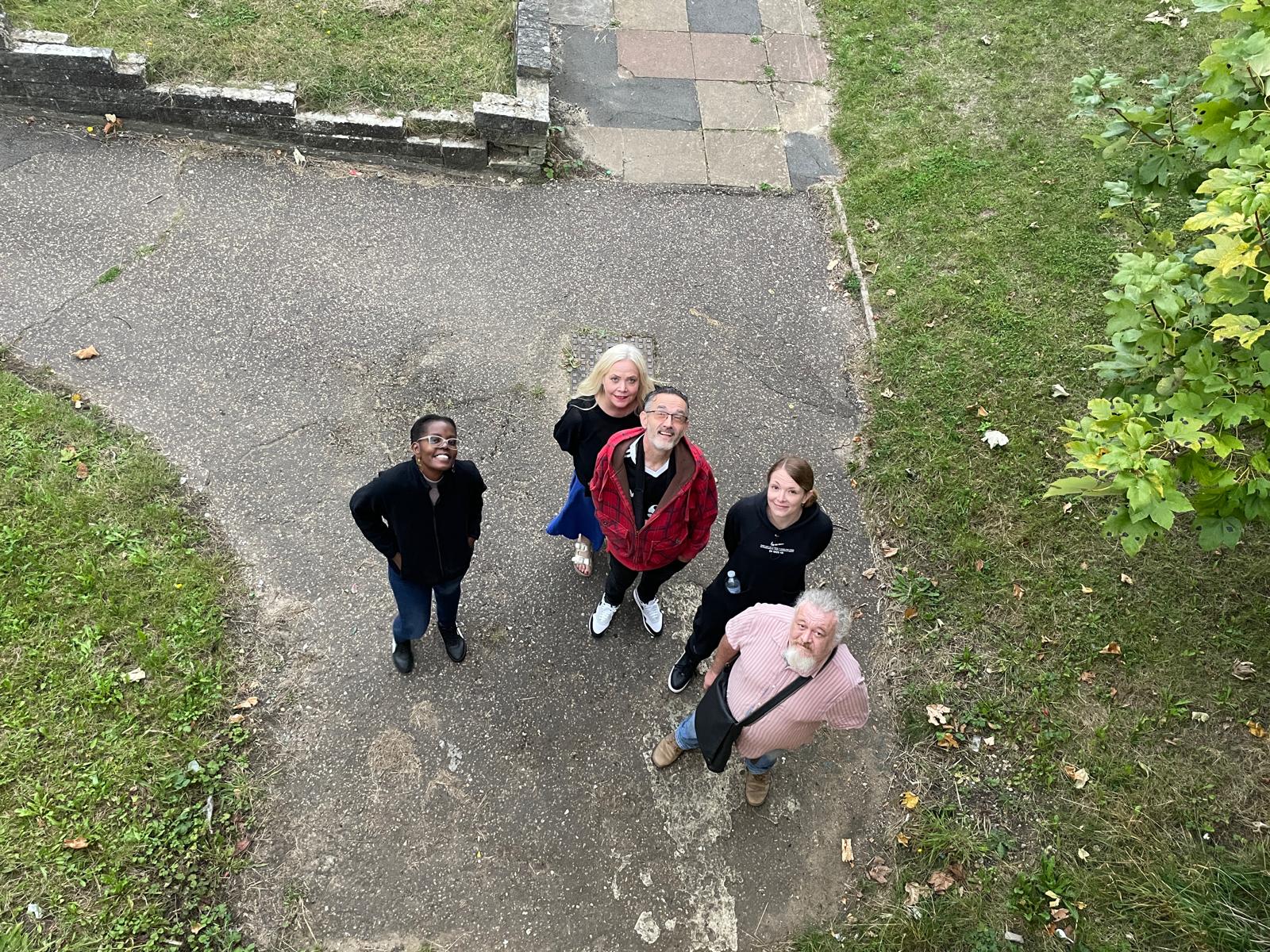
One of the groups for the CLRP was researching black hair and the chemicals used in products. This was led by the TRIYBE organisation and required black researchers with a chemistry and social science background who had lived experience of black hair. Finding black researchers at the University of Reading was challenging, and we had to source from external universities.
Symiah Barnett – PhD researcher in Chemistry – Loughborough University
Joining this project as a PhD student has allowed me to conduct research that serves my community, empowering me as a researcher. I bring knowledge and skills from my PhD and gained valuable insights throughout the project. This experience has created a symbiotic and cyclical process of learning and development.
The ‘doing’ of PAR and community engagement brings value to the interactions, trust, and emotions of the students, researchers and communities who are seldom validated or heard (Pain et.al 2013). The ‘doing’ of PAR and community engagement has brought value not only to students but also to researchers at the University. By dismantling the walls of the university campus, the students and academic researchers who are now using PAR with community engagement have learnt by doing in co-production, non-extractive methods, and working collaboratively with outcomes impactful to both. As Ellie says in the Oxford Stories book, “What is so important about appreciating these details – feeling them and understanding them beyond their existence as simple fact – is hearing them from those people who experienced them” (Mpofu-Coles et al. 2024). Students and researchers have learnt that beyond the university campus, there is Oxford Road in Reading, where over 72 languages are spoken, has diverse foods and is a United Nations. There are also Whitley community researchers and Whitley place, which is dynamically changing the landscape of them and us, to create belonging and connectedness.
Recommendations
Research projects using PAR methods enable the community to produce its own knowledge and lead in the dissemination of information that is relevant and beneficial to its overall aims and desired outcomes. For projects to be successful, we recommend:
- Get to know people in the community and what they do. Build trust.
- Recognise the importance of listening and learning from each other, our different skills, and cultural backgrounds
- Small acts of ethics can make a big difference in terms of bringing care and empathy into interactions with communities
- Include and empower community members as co-researchers to shift perception of university-led research and foster meaningful collaboration, maintaining an inclusive approach
- ‘Learn by doing’, through co-production, non-extractive methods, anti-oppressive practice, and working collaboratively to achieve outcomes that are impactful to all stakeholders
Resources
The Participatory Action Research toolkit, which community researchers, academics, and students contributed to in 2022-2023, has eight stages, with the first key stage being: Get to know people in the community and what they do and build trust. (Lloyd-Evans et.al 2023). This is essential for any student or researcher in any discipline to be able to understand the community they are engaging with. Universities are entrenched in elitist knowledge production; most of the time, it is a one-way process, as the University determines the knowledge (Pain et al.).
The Oxford Road book is available to read online, ‘Lifespring Stories: The Many Faces of Oxford Road, Reading, UK’ and the work curated is online at the Reading Museum, which is now an exhibition including the Reading Museum Hidden Lifespring Stories. The Whitley Researchers develop community-based research and collaborate with the University, organisations, and other voluntary sector organisations. The success of the research work has allowed the development of resources to form part of Decolonise, Innovate, Transform: Reimagining Local Education Policy through Research-led Curricula.
References
- Lloyd-Evans, S., Oenga, E., Zischka, L., Mpofu-Coles, A, Woronka, R., Oveson, M., Hookway, D., Cleaver, M., Duval, S., Karanja, E., Gomma, T., Neupana, K., Ashcroft, L., Clare, S., Ma, D., Sundhararanjan, H., Watson, P. and Tatys, K., (2023) Participatory Action Research: a toolkit. Other. University of Reading https://centaur.reading.ac.uk/113719/ (open access download)
- Mountz, A., Bonds, A., Mansfield, B., Loyd, J., Hyndman, J., Walton-Roberts, M., Basu, R., Whitson, R., Hawkins, R., Hamilton, T. and Curran, W., 2015. For slow scholarship: A feminist politics of resistance through collective action in the neoliberal University. ACME: An International Journal for Critical Geographies, 14(4), pp.1235-1259.
- Mpofu-Coles, A., Woronka, R., Bishop, C. and Hewson, O. (2024) Lifespring stories: the many faces of Oxford Road, Reading Town, United Kingdom. University of Reading https://centaur.reading.ac.uk/118420/ (open access download)
- Pain, R., Finn, M., Bouveng, R. and Ngobe, G., 2013. Productive tensions—engaging geography students in participatory action research with communities. Journal of Geography in Higher Education, 37(1), pp.28-43.