This post has been written by Ramandeep Nijjar, Final year BSc Zoology student at the University of Reading.
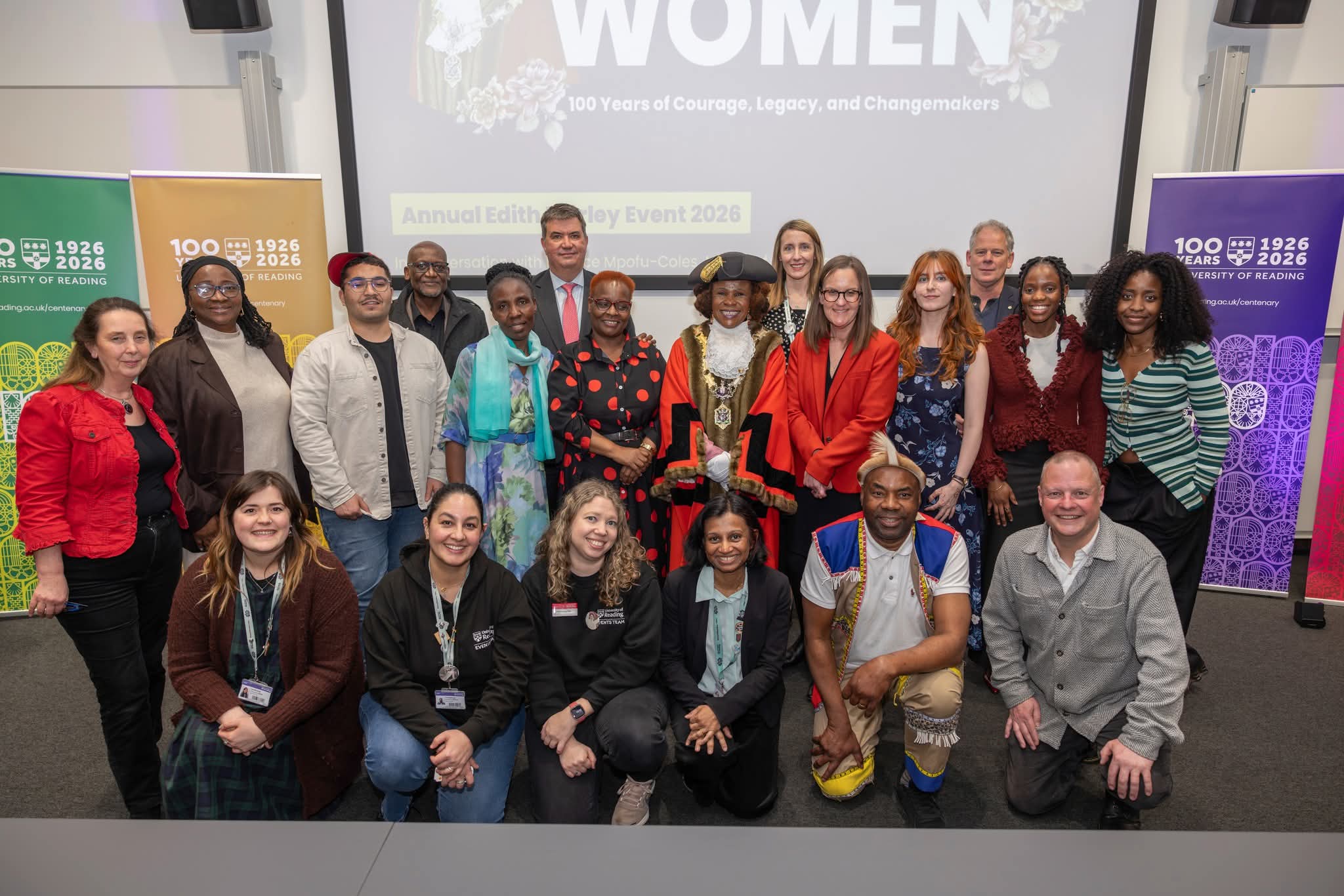
I had such a wonderful evening on the Thursday 26th March attending the University of Reading’s ‘A Celebration of Women – 100 Years of Courage, Legacy, and Changemaker,’ event with Dr Alice Mpofu-Coles, the current Mayor of Reading In Conversation with Professor Elizabeth McCrum Pro-Vice Chancellor (Education & Student Experience).
My name is Ramandeep and I am a final year BSc Zoology student and I am particularly passionate about nature connection, climate justice and social action. As I am developing as a leader, it is important to me to attend lectures on women so I can better comprehend different individuals’ perspectives and the challenges many women currently still face. Advancing equity is crucial so we can build a more prosperous, sustainable and brighter future for all.
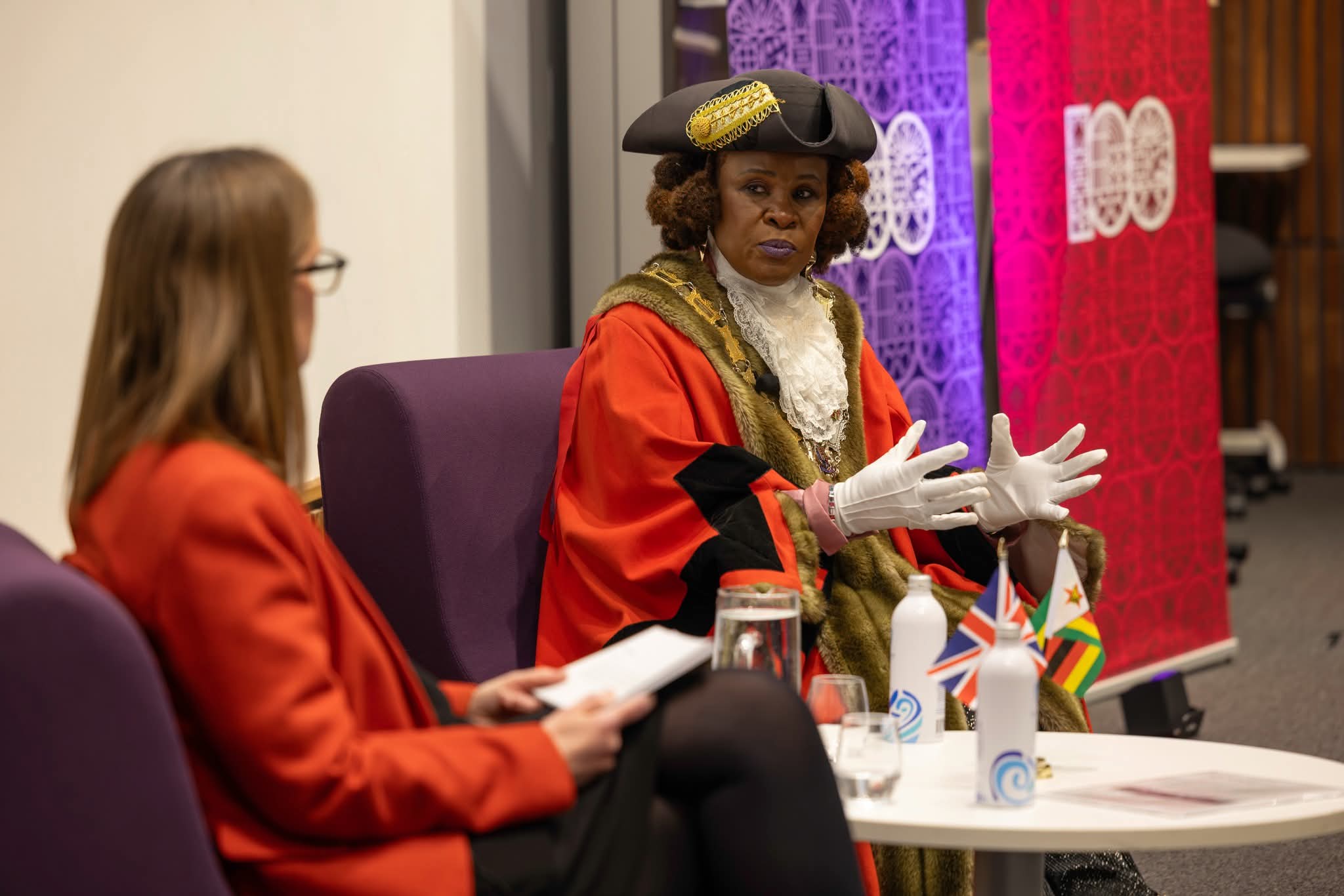
I first met Dr Mpofu-Coles at a University event four years ago and I was very nervous and she didn’t know who I was. She shared some very generous words with me and encouraged me to continue to shine my light, it was just what I needed at that moment and I will always be so grateful. I am constantly deeply inspired by how she is a committed leader and leads with passion, resilience and kindness.
Dr Mpofu-Coles is the first Black female Mayor of refugee background from Zimbabwe in Reading and is also a Senior Research Fellow in the Department of Geography and Environmental Science at the University. Her journey is truly extraordinary and the fascinating discussions covered her previous work as a diplomat, life in academia, social justice, volunteering and her experiences of facing challenges like breast cancer and losing family members, as well as the racial and gendered dynamics faced by Black women.
The event featured some moving performances, including Peter Doyle, a music professional in Reading and African Drumming by Tomson Chauke, who formed a vibrant Afro-fusion collective, Limpopo Groove. At the end we also heard some spoken word poetry by Serena Vanderpuye – ‘The Strength of a Woman’ – The strength of a woman is seen in how she can turn her pain into a trail of testimonies, and she can do it in whispers. But her voice will be loud when it needs to be.
Some of the insights shared that I personally took away:
- We all have a lot in common, as she observed, with Professor Edith Morley, whose lecture honours that she was a Fabian member and Dr Mpofu Coles is a Fabian member too. She added that how Professor Edith Morley was excluded and made to feel like she did not belong as a woman is also how Dr Mpofu-Coles experience with her intersectionality identity feels as a black woman.
- Feminism is for all of us to embrace, including men, as it is about caring and kindness in how we work or interact with each other. She was carried by many feminists, including her late mother, a matriarch, and by many other white feminist women in Reading – her ex-managers and her current line manager, Dr Sally Lloyd-Evans, whom she holds in high esteem.
- International Women’s Day should be a daily process, as many women’s bodies are still policed and it is important to not only celebrate women but highlight the challenges many women are still constantly facing by looking at the gaps in work, education and gender-based violence.
- It is always important to think how we can help as many people as we can and how can I light someone else so they can share their light to someone/somewhere else to initiate the positive ripple effects.
- We need to put dignity into humanity and not stereotype people so everyone can feel seen and heard.
- We need to work bottom to top not top to bottom. As many people are not hard to reach, the services or the language in documents are just not suitable for them. There are many different forms of interaction and research methods, and we need to build trust with communities to enable them to participate fully.
- Everyone has wisdom and knowledge, but women are often told to dim their light. Often, the ownership is on fixing women, but we need to focus on dismantling the systems that are oppressive. Feminism means caring, kindness, and driving social justice for all.
- Universities are embedded within local communities, so it is important that, as young people, we understand civic duties so we can understand multiple parts of society, experience different ways of living, and disparities in our communities, so that we can be better leaders.
- The myth about refugees is actually wrong, as you need to sit down with refugees and find out about their journeys and put dignity and humanity into them. Through her personal experience and as the previous Chair of Reading Refugee Support Group and now a trustee of City of Sanctuary, refugees seek sanctuary because of anarchy, persecution and wars which we should not start. They want to work and provide for themselves and their families. Kindness matters.
- When institutions are broken, it is harder for diverse voices to be heard so we can create new spaces where people can feel they truly belong and their voice matters.
- I particularly loved learning about the African philosophy of ‘Ubuntu’ – “I am because we are”, which teaches us that we are human only through the humanity of others!
As Mayor of Reading 2025/2026, Councillor Dr Alice Mpofu-Coles’ theme is inequalities and has chosen to support the following charities as Reading ranks as the third most unequal ‘city’ nationally in terms of wealth distribution.
- Faith Christian Group, the charity behind ReadiFood and Reading Pantries which has been working since 1996 to alleviate poverty and support individuals who are poor, vulnerable, or homeless in Reading.
- Utulivu Women’s Group, established in 2004, the charity is a frontline specialist organisation based in Reading to empower Black, Asian, Minority Ethnic and Refugee women.
Overall, I was drawn to this event as I often find it deeply motivating to hear about other individuals’ journeys and experiences. I also particularly love events like this that bring everyone together, including University students, staff and members of the community so we can all share our experiences, strengthening collective solidarity. Events like these are crucial as they continue to open conversations around these topics that later inspire action. This event led me to reflecting on my own experiences and journey so far and acknowledging that there will always be setbacks, but it is important to keep going and consider how many lives you can also lift as you rise.