
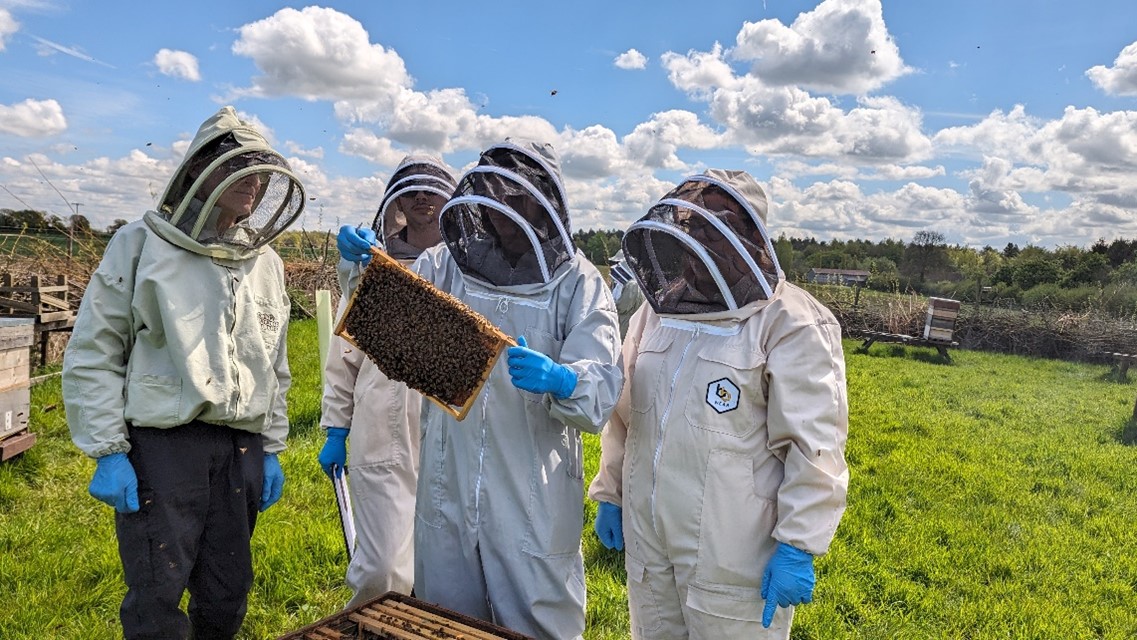
Together As One, previously known as Aik Saath (meaning ‘together as one’ in Hindi, Punjab, and Urdu), is a youth-led charity in Slough which was created to help combat prejudice and violence in the town in the mid-1990s. It aims to bring communities ‘together as one’ through training, youth work, and creative projects, led by and for young people from diverse experiences and backgrounds, including young carers.
“It has enlightened me in a way as I’ve learned more about bees and beekeeping, and I’ve also had more time to interact with nature and the environment itself. It’s given me a lot more passion and interest to look forward to.” Aarez, participant, Together As One
Aims
Core research theme: Exploring the link between engaging in environmental social action (beekeeping) to improve young people’s mental health.
The aims of this youth-led research project are closely connected with Together As One’s ethos of working together for social change, enabling young people from all faiths and backgrounds to make a positive impact in their communities. These aims were:
- Explore if and how urban beekeeping as environmental action improves mental wellbeing among young people experiencing low to moderate level mental health challenges
- Reconnect young people with nature through meaningful environmental engagement
- Establish the key factors (e.g., nature connection, skills development, social support) driving any changes in the wellbeing of young people
In the early stage of the engagement, through the activity testing phase, Together As One’s young volunteers explored a range of activities, which established the natural world and the environment as key areas of interest. The group tried upcycling clothes, canal cleaning, bat conservation, and beekeeping – with beekeeping emerging as the favoured choice among the group.
Methods, Principles & Practices
After the research theme and core question were established, Together As One was paired with Professor Ciara McCabe at University of Reading, specialising in Neuroscience, Psychopharmacology and Mental Health, and Post-Doctoral UoR researcher Sena Demir Kassem for research support. The group also partnered with Chalfonts Beekeepers’ Society, which provided mentoring and support in the beekeeping process.
Following the activity testing phase, it was clear that engaging in environmental activities could benefit the young people at Together As One. There were over 30 respondents to a questionnaire that provided a wellbeing score (on the Warwick Edinburgh Mental Wellbeing Scale), from which 16 young people were selected to participate in the project. The group came from 9 different ethnic backgrounds and had a balanced mixed of genders, with a wide range of abilities, backgrounds, and challenges. Some of the young people in the group were initially reticent about engaging with this methodology, which required adaptation of the research process to learn from more collective, youth-led approaches, where young people could relate their experiences peer-to-peer.
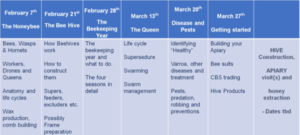
After the partnership with Chalfonts Beekeepers’ Society was established, a programme of training for the young people was designed on beekeeping and bees in general. This included sessions on different types of honeybees (Workers, Drones, Queens), their anatomy, and life cycles. This was followed by detailed guidance on the different elements of the beekeeping year, hive construction and maintenance, and honey extraction. Further sessions were delivered on the longstanding heritage of beekeeping, as a practice refined over millennia. This was designed and delivered by Sarah Peterson and colleagues at the beekeepers’ society, and can be viewed in more detail below.
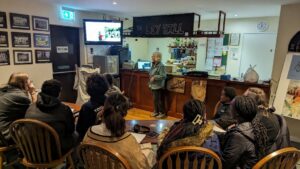
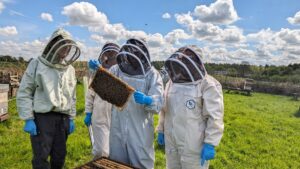
Following the six-week training programme, the young people then had a further three weeks of hands-on experience at the Chalfonts Beekeepers’ Society apiary (a place where beehives are kept).
Throughout this programme of work, Professor McCabe and Sena Demir Kassem conducted interviews and a focus group with 11 of the participants to establish the impact of these activities on the mental wellbeing of the young people. This revealed four key themes, which are shared in the ‘Outcomes’ section below.
To help facilitate this engagement, a steering group was established amongst Together As One staff, Chalfonts Beekeepers, and the UoR research team, who met on a monthly basis to guide the project’s design, delivery, and evaluation.
Outcomes
Through analysis and evaluation from Professor McCabe and Sena Demir Kassem, a number of valuable outcomes were observed amongst the participants related to their mental health and wellbeing. These included:
- Reduced stress, improved emotional health, and a routine which helped to build energy, through the beekeeping process
- A greater appreciation for bees and the natural environment, as well as an interest in adopting sustainable behaviours (although barriers to this were also identified)
- The young people highlighted that “stepping outside of their comfort zone”, “trying new things”, and “forming strong social connections”, all contributed to improving mental health
- The programme and the young people’s participation was enabled by their curiosity and a desire to try something new, overcoming initial doubts or anxieties
- Through overcoming doubts, anxieties, and/or a fear of bees, the young people were able to build confidence and resilience, enabling them to fully engage with activities such as hive inspections and honey harvesting
Beyond the positive impacts on mental health and wellbeing, the young people developed practical skills around beekeeping and hive construction, whilst also increasing their environmental and ecosystem awareness. This in turn contributed to a sense of shared endeavour and social responsibility, illustrated in one instance by the group harvesting honey and donating it to a local food bank.
Professor McCabe also commented on the data gathering process and its outcomes, saying: “We got lots of really interesting information about how fun it was, how good it was that they [the young people] felt more socially connected to their peers, and that they thought being taken out of their comfort zone was good for their mental health. They mentioned a lot of gains so far as thinking more about environmental issues, sustainability, but also social interactions and going outside of your comfort zone.”
Future Prospects
Having established that there can be a positive impact on mental health through such activities, a key outcome of this project for Together As One has been to delve further into the root causes of this impact. As CEO of Together As One, Rob Deeks, suggests: “Is that coming about because of the connection between people? Is it because in a world where we know that the environment is really suffering, that they’re doing something positive? Is it coming from perhaps taking a step out of our normal daily lives to learn something about beekeeping or visit the apiary or the beehives? We really want to pick out what the active ingredient is here that’s making a difference to mental health and wellbeing.”
This has also offered an example of young people providing the direction for research that is relevant and responsive to their interests, concerns, and motivations. With partnerships established between Together As One and the University, it could offer learnings for the development of future engagement with a similar purpose.