
The Community-Led Research Pilot (CLRP) was a programme of six projects which were co-created between community groups across Reading and Slough, the University of Reading (UoR), the British Science Association (BSA), and funded UK Research and Innovation (UKRI). The CLRP was designed to position diverse communities at the heart of the research process, shaping and developing their own research questions, hoping to address community need, priorities, and development goals.
In this case study, we share the project co-designed and delivered by Reading Hongkongers.
Reading Hongkongers is a Community Interest Company (CIC) based in Reading. The town is home to over 15,000 residents originally from Hong Kong, many of whom have moved to the UK relatively recently, so establishing a sense of belonging and social connection is crucial for integration into the local community. Reading Hongkongers is a platform which was set up to link Hongkongers in the Greater Reading area with local communities, aiming to:
- Support and empower Hongkongers in building their social capacity by creating strong and connected community networks which provide access to resources, information, and skills
- Share Hongkongers’ knowledge and skills in contributing to the local community
- Strengthen the understanding and appreciation between Hongkongers and their neighbours by facilitating cultural exchange and recognition of local community.
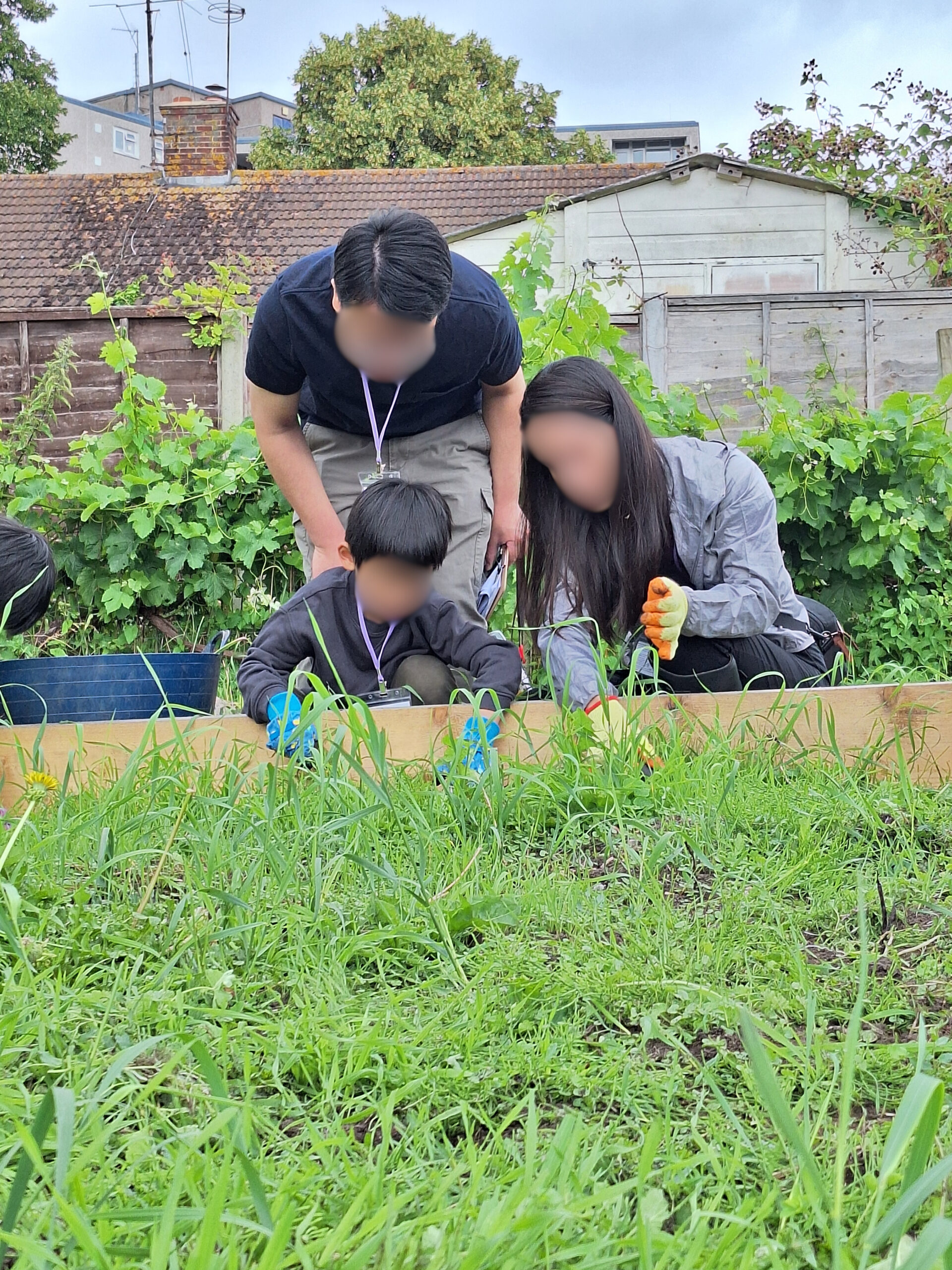
“We had 15 ambassadors who learned local gardening skills and knowledge, and they found that through the process, they can feel more integrated with the local community and they feel their wellbeing is improved. The sense of isolation is diminished and people feel more together as one.” Pandora Liu, Project Co-Ordinator, Reading Hongkongers.
Aims
Core research theme: Exploring the feasibility of growing culture-based crops and the impacts of social integration of new immigrants.
The aims of the Hongkongers’ project within the CLRP were closely related to its organisational aims, and are outlined below:
- Discover how the establishment of a community garden can enhance local wellbeing
- Assess the ecological benefits of a community garden, and how can it positively impact biodiversity, especially for oriental and indigenous crops
- Evaluate how community gardens serve as a tool for helping new immigrants integrate into the local community
- Highlight the role that access to fresh, locally grown produce can play in improving nutrition within the community
These aims were established in response to a number of challenges faced by Hongkongers on arrival in the UK. These challenges included: struggling to find a sense of belonging in a new cultural landscape; the challenges of integrating into a different culture; cultural differences, social norms and practices; and language barriers.
Methods, Principles & Practices
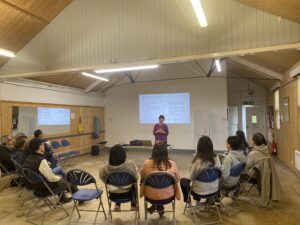
The Hongkongers’ project incorporated a number of different phases and activities. The group was supported by Dr Deepti Angra (UoR), a Post-Doctoral Research Associate specialising in Crop Sciences, Supasan Loketsatian (PhD Student, UoR), Sai Ram (Masters Student, UoR) as well as Dr Sally Lloyd-Evans and Dr Alice Mpofu-Coles from UoR, and Co-Facilitator Beth Sutton (Food4Families)
In the initial stages of the project, activities were carried out to develop the Hongkongers’ community, particularly in relation to its community gardening activities. This included developing an Ambassador Programme, in which 15 volunteers were recruited as Agricultural Ambassadors to lead on gardening activities, bridge communication and language barriers between community members, researchers and facilitators, and to disseminate knowledge amongst the group.
Further outreach activities included three community garden tours, horticultural classes, sensory experiences to explore gardens, a Family Fun Day, and a Mid-Autumn Cultural Festival. These all aimed to build knowledge around community gardening initiatives, cultural connection and exchange, and to feed into the research programme development.
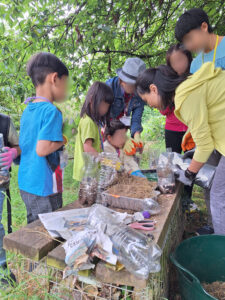
Building on this was the core research question of whether growing crop species native to Hong Kong would be possible in the UK environment, and the impacts of community gardening on social integration of new immigrants. For the project, the group selected a range of oriental vegetables – Chinese Kale, Milky Pak Choi, and Flowering cabbage – with support from Beth Sutton. The seeds were then split between those that would be grown outside at the group’s allotments, and those that would be grown under controlled conditions by Dr Angra in the University’s growth chamber facilities, replicating the environment in Hong Kong where the vegetables would normally grow.
In addition to oriental crops, participants also engaged in learning about and planting indigenous UK crops. This approach helps to enrich local biodiversity and preserve traditional agricultural practices. By understanding the significance of UK species, the group’s ambassadors are better equipped to contribute to the ecological health of the community.
Following the growth of the oriental vegetables across these different conditions, the group and Dr Angra then carried out comparative studies on survival rates of the crops, flavour profiles, and nutrient content, the results of which are summarised in the following ‘Outcomes’ section.
Outcomes
With support from Dr Angra, the group was trained to use a Brix Meter refractometer to measure the sugar levels of the plants, and a Soil Plant Analysis Development (SPAD) meter to measure chlorophyll levels.
The study revealed that chlorophyll levels in crops grown under UK weather conditions are lower compared to those grown in a simulated Hong Kong climate. However, the research found that the sugar content and flavour compounds are higher in samples cultivated in the UK, which suggests that crops grown in the UK offer enhanced flavour profiles despite appearing less vibrant and green.
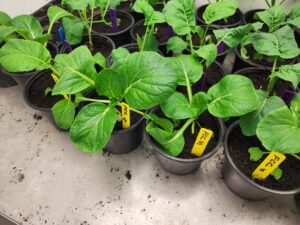
This is important from a horticultural perspective as, despite challenges such as pests, cold weather, and bolting (when a plant flowers and goes to seed to early), the crops successfully adapted to the UK climate, offering hope for sustainable food growing practices among new immigrants. In turn, this helps with integration and well-being, as when grown and then eaten, the crops can offer an experience similar to that felt ‘at home’ in Hong Kong, maintaining an element of Hongkonger heritage and culture, alongside a new British cultural integration.
Further data gathering also illustrated the impact of these activities on the wellbeing of group members. Post-activity questionnaires revealed than 96% of participants felt that horticultural activities had a positive impact on their mental wellbeing. The group ambassadors reported a significant reduction in feelings of isolation after joining the project, and shared that their social networks expanded as they connected with fellow participants, exchanging knowledge and experiences.
Dr Angra commented on findings from the growing experiment and the project as a whole, saying: “The project highlighted the deep connection between food, cultural identity, and emotional wellbeing for immigrants. Growing familiar crops created a tangible link to home, helping participants feel rooted in a new environment. Community gardening also emerged as an effective way to encourage language learning and confidence in using English among new immigrants.”
In terms of the influence on her own research practices, Dr Angra said: “Working with community ambassadors provided me with a model a model for participatory research that respects cultural knowledge, empowers community members, and enhances communication.”
The project also created a supportive framework for ongoing interaction among participants, with regular gatherings and follow-up activities helping maintain relationships, contributing to an enhanced sense of unity. A further benefit put forward by group members and ambassadors was increased confidence in their abilities to use English as a second language – as new immigrants to the UK, some group members were hesitant to speak in English, but through practicing in a group within a project setting, their knowledge, confidence, and understanding was improved, contributing to a stronger identity as UK Hongkongers.
As well as social interaction, these activities promoted physical engagement in gardening, helping to reduce stress and enhance mood, with participants finding solace in nurturing plants that can serve as a therapeutic outlet for emotions.
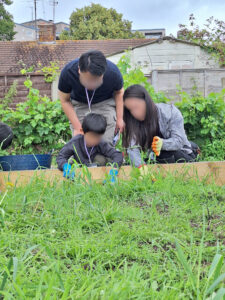
Shan Wong, Project Co-Ordinator for the Hongkongers, commented on the research process, saying: “This is an inspiring experience for us because usually when we think about research it’s top down from the university perspective, but this time it was to raise our research question from our community. The result itself is eye-opening because we hadn’t thought that oriental vegetables we grow could contain so much flavour! Our identity of being UK Hongkongers is stronger through this project, and the nature and gardening process is a healing process, so this is a very touching moment for us.”
Future Prospects
The Hongkongers are now aiming to introduce seven species of oriental crops into their garden, to not only support sustainability and biodiversity in their allotment, but to continue and grow the link with cultural heritage and sense of belonging within the community.
The group is committed to sharing its learnings with the wider Reading community and the Hong Kong diaspora across the UK to foster integration and social cohesion. Through continued focus on community gardening, Reading Hongkongers aims to reduce isolation, enhance wellbeing, and support a richer, more inclusive community for all.
The group continues to explore means of integration and improved wellbeing, linked to community gardening, to reduce a sense of isolation for members of its community.