
Project: ‘An Amorous Discourse: Remapping the World Through Cinephilia’
Funded by an RETF Grant from the University of Reading
Applicants: Prof Lúcia Nagib and Prof John Gibbs
This project builds upon the applicants’ previous experience of research through audiovisual practice, in particular Nagib’s award-winning documentary Passages (focusing on Brazilian cinema) and Gibbs’s acclaimed video essays (an audiovisual form of film analysis). Its ultimate aim is innovation in film research and practice through the production of a feature-length documentary ‘film on films’ and accompanying AHRC-funded research on this hitherto untheorised genre. Entitled Films to Die For, the documentary will offer a creative and exciting way of bridging academia and wider society. The AHRC project in turn will explore the relationship between the video essay, the essay film, the compilation film and other found-footage filmmaking, whilst creating strategic partnerships to maximise the academic and social impact of our practice as research.
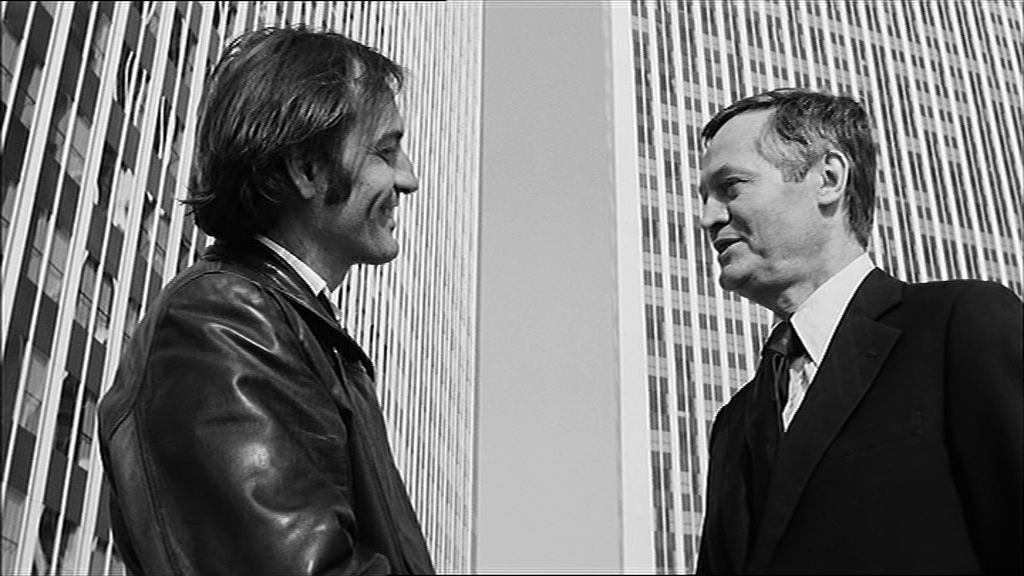
The project An Amorous Discourse aims to retell the history of cinema through a worldwide web of cinephilia that brings filmmakers together through their love for each other’s films. The project’s main output, Films to Die For, draws on Wim Wenders’s The State of Things (1982), an iconic cinephilic film launched at a significant historical juncture that marks, on the one hand, the end of the European new waves and, on the other, Hollywood’s move into a self-styled postmodern era, dominated by citations and self-reflexive remakes. As such, it allows for exploration of a web of intersecting films involving Brazilian, American, German, Portuguese and Chilean filmmakers. The film will travel back and forth in history and geography, from 1970s New Hollywood through to the sprawling study of the world’s colonial heritage, with locations in Portugal, Germany and the UK. In so doing, it will demonstrate the converging desire of filmmakers from the most disparate corners of the globe to combine their efforts into a ‘transartistic commons’ (Stam), or a realm without borders. As well as original footage, Films to Die For will include film excerpts and interviews with renowned filmmakers, such Wim Wenders, Walter Salles, Paulo Branco and Laura Mulvey.
As a whole, An Amorous Discourse will look at film as ‘a lover’s discourse’ (Barthes) that sees a work of art as a never-ending web of pre-existing artistic fragments of which the artist is nothing but an enamoured filter.

Read Realist Cinema as World Cinema Book – Chapter 1 – The Death of (a) Cinema
This is the source work by Lúcia Nagib for Films to Die For source work.