
|
|
 |
 |
Project Title:
Examination of the link between the gut MIcrobiome, Neurocognitive and Affective mechanisms in Host Sleep (MINAHS Study)
Project Partners:
- Professor Adele Costabile, University of Roehampton (PI)
- Dr Piril Hepsomali, University of Reading (Co-I)
- veMico Ltd (Industry Partner)
Research issue, problem, risk or opportunity being addressed:
Sleep is a physiological state intrinsically linked to the immune system, yet it remains understudied in the context of gut-brain-axis (GBA) interactions. Short sleep duration and poor sleep quality have been consistently associated with various aspects of cognitive and neurobehavioral performance, as well as several diseases affecting overall health. Notably, cytokines may represent a critical link between sleep physiology and gut microbiome composition. Supporting evidence comes from brain imaging studies, which show that individuals with high-quality sleep tend to have a gut microbiome dominated by bacteria from the Verrucomicrobia and Lentisphaerae phyla, which are associated with better cognitive task performance. However, the complex interactions between sleep, attention, emotional processing, and the gut microbiome remain poorly understood, and as a result, treatment options are limited. Recently, researchers have observed that the beneficial effects of probiotics may be attributed not only to the bacteria themselves but also to their metabolites or cell lysates, which are collectively referred to as “postbiotics”.
Current scientific literature supports the idea that postbiotics can mimic the fundamental and clinical roles of probiotics. Due to their unique characteristics, postbiotics can contribute to promoting host health, preventing disease, and offering complementary treatment options. Subsequently, they may be beneficial in treating or preventing a range of diseases, even those for which effective causative medications are lacking.
Our overarching translational research aims to address gaps in the current understanding of the mechanisms connecting the gut microbiome to sleep through the GBA and associated pathways.
Project Achievements/Outputs:
This multidisciplinary project has made significant progress in understanding the relationship between the gut microbiome and brain health. By integrating expertise in cognitive and health psychology, cognitive neuroscience, microbiology, human nutrition, biochemistry, and molecular biology, the project has provided groundbreaking insights into how the gut microbiome influences neurocognitive and affective health.
A major achievement of the project was the successful collaboration between veMico and Roehampton University, which could play a pivotal role in translating scientific findings into practical applications within the food industry. This partnership aims to develop microbiome-derived food products that promote gut health and mental well-being. These innovations hold considerable promise for widespread adoption, offering consumers healthier food options that support brain function and emotional health.
In addition to its practical contributions, the project has produced valuable scientific outputs, enriching the body of knowledge on gut-brain interactions. Publications resulting from this research provide a strong foundation for further studies in microbiome science, cognitive neuroscience, and mental health. They offer new insights into how diet and microbiota shape brain health, guiding future research and interventions aimed at improving both mental and physical well-being.
The scientific contributions of this project will continue to influence the field, providing new directions for research and the development of effective treatments for a variety of mental and physical health conditions.
Advancing Science:
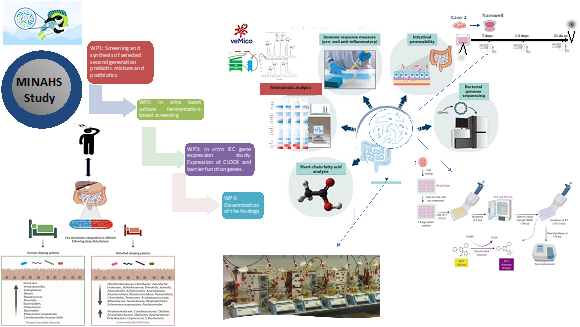
This project has significantly advanced the understanding of the GBA by developing and screening novel formulations aimed at enhancing gut health to improve sleep quality. The study revealed distinct differences in gut microbiota between individuals with good and poor sleep, further strengthening the connection between microbial composition, neurotransmitter production, and circadian rhythm regulation.
A key innovation was the development of prebiotic and postbiotic compounds that selectively promote Bifidobacterium and Lactobacillus species. These compounds enhanced specific microbial metabolic activity, increased neurotransmitter levels (serotonin and GABA), and improved gut barrier function— critical factors that may influence sleep and overall health.
The study validated its findings using in vitro gut fermentation models and tissue culture assays, demonstrating that the developed bioactives positively influenced gut microbiota diversity, SCFA production, and gene expression related to sleep and gut integrity.
This dual approach, targeting both microbiota composition and gut epithelial interactions, presents a promising non-pharmaceutical intervention for sleep enhancement. By integrating functional prebiotics and postbiotics, the project lays the groundwork for further development, paving the way for evidence-based functional foods and gut-health interventions.
The research aligns with the increasing consumer demand for natural sleep solutions, positioning it as a breakthrough in microbiome-based wellness innovations.
veMico Ltd Testimonial:
The INFORM Innovation Hub has been instrumental in advancing veMico’s research into gut-health-based enhancement. Through our collaboration with the University of Roehampton, we have successfully developed and validated a novel approach targeting the gut-brain axis, leveraging prebiotic and postbiotic formulations to improve overall health outcomes. INFORM’s support enabled us to conduct rigorous in vitro studies, providing essential insights into microbiota modulation, neurotransmitter production, and gut barrier function.
The expertise of the University of Roehampton has been invaluable in refining our scientific approach, ensuring that our formulations are mechanistically sound and evidence-based. This partnership has strengthened veMico’s innovation pipeline, validating our focus on gut health as a means to enhance physiological functions. The findings from this research provide a strong foundation for clinical translation, positioning us to conduct pilot human trials to determine optimal dosing, formulation, and real-world effectiveness.
This collaboration has not only accelerated our product development but has also reinforced our commitment to scientifically backed, microbiome-derived solutions. With further funding, we aim to translate this research into a commercial product, providing consumers with a natural, effective solution targeting gut-brain axis.
The INFORM Innovation Hub has played a pivotal role in bridging the gap between academic research and industry application, and we look forward to furthering this partnership to bring science-driven, health-promoting solutions to market.
January 2025