
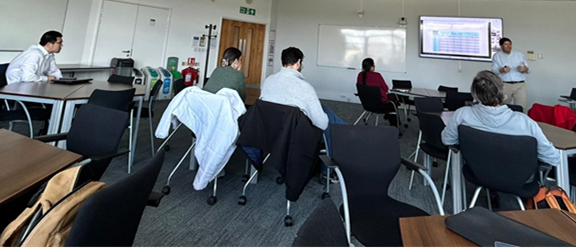

At a seminar hosted at the University of Reading on 26 March 2026, Diego Aulestia, Director of Human Settlements at the Economic Commission for Latin America and the Caribbean (ECLAC), presented a compelling analysis of the shifting urban landscape in Latin America and the Caribbean (LAC). He argued that the region has entered a new urban era, where population growth is slowing, households are shrinking, and cities are expanding physically even as demographic pressures decline.
Aulestia highlighted three structural transformations shaping the future of LAC cities:
- Demographic transition: rapid population ageing and a surge in one‑person households.
- Spatial paradox: urban land consumption continues to rise faster than population growth.
- Housing contradictions: despite more dwellings per capita, deficits persist, driven largely by smaller households, a substantial inactive housing stock (14–15%), and high levels of informality.
He stressed that these trends demand a fundamental shift: LAC must move from extensive, expansion-driven development toward improving and adapting existing urban assets, including housing, infrastructure, and governance systems.
Interdisciplinary Implications for Research on Latin America
The transformations outlined by Aulestia present a rich agenda for researchers working on Latin America, particularly those operating across disciplinary boundaries. His analysis highlights the need for integrated perspectives that bring together the built environment, social dynamics, governance, and climate risk. His presentation makes clear that the urban challenges facing LAC do not fit neatly within single disciplinary boxes. Instead, they call for interdisciplinary and problem‑focused research collaborations capable of responding to the evolving realities of a region where housing, land use, climate, and social change are deeply interconnected.