Who is the Open Research Community (ORC)?
Please note, the ORC is currently on hiatus while we recruit a new Local Network Lead. If you’re interested, contact Etienne Roesch on e.roesch@reading.ac.uk.
The Open Research Community (ORC) is a network of colleagues committed to fostering and sharing open and robust research practices, to overcome silos and embed a research culture based on open and reproducible/replicable practices. We host monthly events on a range of topics, with past formats including external speakers, solution brainstorming sessions and talks from internal support staff.
Join our MS Teams channel to stay in the loop about upcoming events.
The ORC is supported by the University’s Open Research Action Plan (2024-29), and draws heavily on activities and projects in collaboration with the UK Reproducibility Network.

ORC Open Research Week 2025 Winners
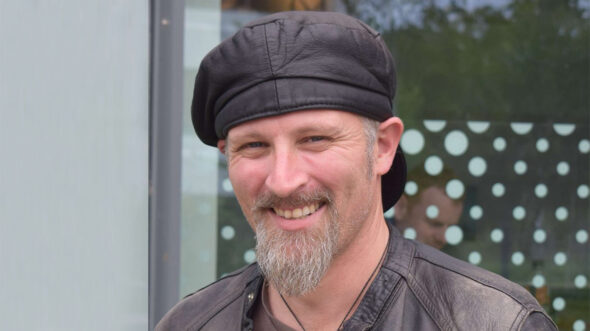
First Prize: Where Science Meets Art – Getting Green Bioengineering out of the Lab and into Homes, Duncan McMillan
A story of how a Reading scientist collaborated with colleagues across disciplines to get eco-friendly bioengineering out into the world. Duncan’s talk will be up soon!
Second Prize: The Whys and Hows of Narrative CVs, Tristan Glenn
Tristan spoke about the whys and hows of narrative CVs. Unfortunately, Tristan’s talk is not available, but we congratulate him on winning second prize!
Joint Third Prize: Open software: The Researcher’s Experience and Support Available at Reading, Robert Thomspon, Maria Broadbridge
Rob discusses his experience of sharing his software as, in his own words “an academic, not a programmer”. Maria then explains how Reading’s Research Software Engineering team can help you with this process.
Joint Third Prize: Secondary Data on Current Affairs, Mattias Kroenke
An introductory talk on how a Reading researcher found and utilised up to date secondary data on Africa.
A huge thank you to everyone who participated in Open Research Week 2025! Watch all the talks below:
Citizen Science Project Lightning Talks, Hong Yang, Mattthew Ordidge, Chris Wyver
Three short talks on how and why researchers at Reading utilised citizen scientists to answer their research questions. Projects are:
- Tackling Air Pollution, Hong Yang
- The National Fruit Collection, Matthew Ordidge
- Fruitwatch, Chris Wyver
Intro to Pre-Registration and Registered Reports, Evangeline Gowie
An introduction covering the whys and hows of Pre-registration and Registered Reports.
Where is Reading in Overcoming Publish or Perish? Robert Darby, Miranda Raven
This talk discusses the results of a self-assessment Reading ran to evaluate themselves against the
Recognising and Rewarding Open Research maturity framework.
The Integrity of AI in Research, Etienne Roesch
An introductory discussion about the ethics of using AI in your research process.
The Whys and Hows of Open Data, Robert Darby
An introductory session on why it is important to share your data wherever possible, and an overview of how Reading’s data management service can help you with this.
The Statistical Community of Practice, Daisy Powell
An introduction to why statistics are important for reproducible research, and an overview of how Reading’s statistical CoP can support you in this.
Concrete actions to overcoming barriers to open qualitative research: A tool, Evangeline Gowie
A look at when it’s appropriate to share qualitative data, and an introduction to a tool to help people decide if and how to do so.
Secondary Data Use in Social Sciences, Min Zou, Simonetta Longhi
An introduction for how and why to use secondary data in social sciences, from the perspective of two researchers who have done so.