
Resilience Rucksacks
Whilst mental health problems can affect us at any stage of our lives, there is a higher risk of, and rapid increase in, mental health difficulties during early adolescence (10-14 years). A universal approach that focuses on early intervention and prevention could provide a sustainable solution for promoting mental health and greater resilience in adolescents.
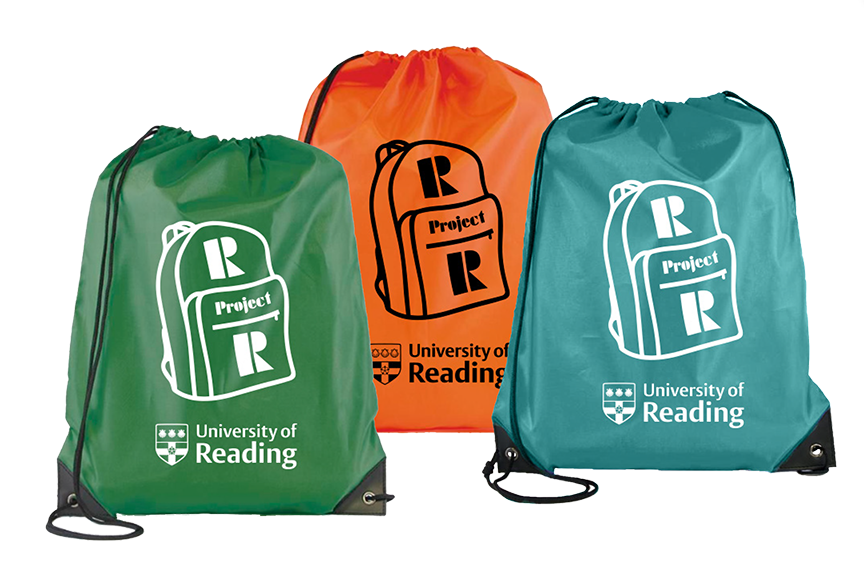
Our proposed solution is a new and exciting initiative called the ‘Resilience Rucksacks’. This project is inspired by the baby box in Scotland, in which every new born baby receives a box comprising essential items to support a healthy start in life. Akin to the baby box, our vision is that young people transitioning from primary to secondary school will receive a rucksack containing items that research has identified as beneficial for adolescents’ mental health and wellbeing.
Ultimately, we hope the Resilience Rucksack initiative will provide a unique opportunity to engage young people in dialogue surrounding mental health, as well as promoting greater mental health literacy and awareness. This project has connected the University of Reading with a wider community of people working to provide mental health interventions. Read more about the Resilience Community here.
The Resilience Rucksacks initiative consisted of five main stages which are outlined below
Stage 1: Literature Review
- The initial phase of the Resilience Rucksacks initiative involved identifying key research themes or ‘active ingredients‘ (specific aspects of an intervention that make a meaningful difference) that have been reported to prevent and/or manage anxiety and depression symptoms in young people.
- The majority of research themes were derived from the Wellcome Trust Report ‘What science has shown can help young people with anxiety and depression’ (Part 1 & 2) (https://wellcome.org/reports/what-science-has-shown-can-help-young-people-anxiety-and-depression)
- This was supplemented by an additional, exploratory literature search of existing research to capture any further themes.
- Subsequently, the team generated a long list of these research themes and conducted an initial evaluation based on the strength of the evidence base and appropriateness/practicality for co-production of specific well-being items for the rucksack.
Stages 2 & 3: Consultations- Steering Group & Online Survey
- Following this, a steering consultation group was convened which consisted of young people, school staff/teachers, and parents. This steering group helped to short-list the final research themes and provided invaluable feedback on other aspects of the project.
- An online survey (with 200 participants) was also circulated to gather feedback from a wider sample of young people, school staff/teachers, and parents.
- Based on responses from the steering group and online survey respondents, the following four themes were selected: Sleep, Movement, Friendships, and Self-compassion.
- The group met regularly to review the progress of the project.
Stage 4: Co-production Workshops with Young People and Professional Designers/ Artists
- We identified wellbeing tools that will best help support the four core themes.
- This involved co-producing and co-designing wellbeing items/tools with young people and their relevant representatives (school teachers/staff, parents/carers) using a robust research evidence approach.
- We recruited groups of young people to help us co-design and produce wellbeing tools for the rucksack based on each theme/active ingredient.
- We recruited 5-10 young people (in Year 6+) per theme, who attended four workshops per theme.
- For each theme, a member of our research team provided an evidence-based talk at the start of the workshop and supported the discussion.
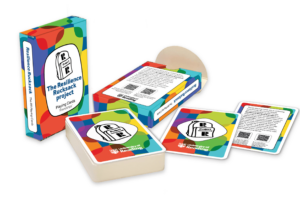
- We also held a series of three additional workshops for young people to guide specific tools with professional artists, including a colourful comic & song.
- We also ran a ‘Design the Resilience Rucksack competition’. Click here to find out more and view the winning design!
Stage 5: Launch of the Resilience Fairs and Well-being Tools
- Following the initial design and pilot stages, we then launched a series of Resilience Fairs in schools across Oxfordshire and Berkshire in which researchers and mental health professionals set up booths illustrating evidence-based approaches for building resilience and maintaining wellbeing.
- Each booth represented each of the central themes of this research, and contained wellbeing tools that young people were able to choose for their resilience rucksack.
- Click here to find out more about the fairs!
Stage 6: Evaluation & Monitoring
- Stage 5 has allowed for us to collect valuable data measuring the impact of the Resilience Fairs for pupils and teachers alike, through both a 3-stage quantitative evaluation and a qualitative evaluation.
See the ‘Project Flipbook’ for further details
The Central Themes
Click on each link below to find out more about each theme
Sleep, Movement, Friendships, Self-Compassion
The Wellbeing Tools
Sleep
Somni – The RR Sleep & Daylight song Click to listen now on Spotify!
Movement/ Physical Activity

Friendships/ Social Relationships

Self-compassion
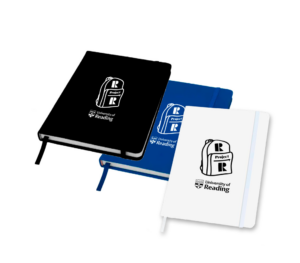
Other materials & tools
Stepping forward: our stop-motion animation: managing the Year 6-7 transition
RR Book List: fiction and non-fiction books from Edinburgh International Book Festival exploring themes of Wellbeing and Resilience
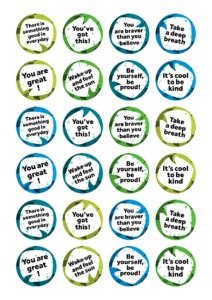
Customising the wellbeing tools: Making the tools your own! Children can choose from a range of stickers and keychains to customise their own rucksack

Click on the front cover below to see a colourful flipbook of our journey from the start!
The project has been featured on BBC News, CBBC Newsround and more!
Meet our Core Team

Prof. Stella Chan, Resilience Rucksack PI/Lead, Charlie Waller Chair in Evidence-based Psychological Treatment, University of Reading
Dr  Emma Tupitsa is a Postdoctoral Research Fellow at the University of Reading. Emma supports various research projects, including ‘Eden Bioflo: Bringing Nature to Schools’ and ‘Resilience Rucksacks’. Her research interests and expertise include brain-body interactions, mental health, emotion regulation, and emotional flexibility.
 Nevena Harris, Honorary Research Assistant, University of Reading
Megan Devereux, Research Assistant, University of Reading
Previous team members
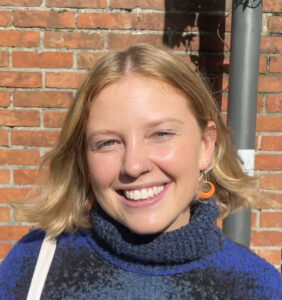
Agnes Tait, Resilience Rucksack Operations Manager and Fair Coordinator, Research Assistant, University of Reading
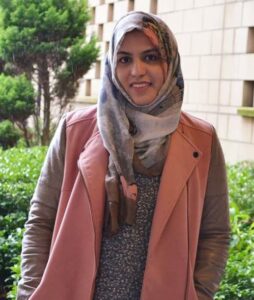
Dr Asnea Tariq, Postdoctoral Research Fellow, University of Reading
 Dr Clea Desebrock, Resilience Rucksack Lead Researcher & Project Manager, Postdoctoral Research Fellow, University of Reading

Toyosi Alake, Postgraduate Research Placement student, University of Reading
Suzanna Rose, Honorary Professor, University of Reading; Board Advisor, Charlie Waller Trust
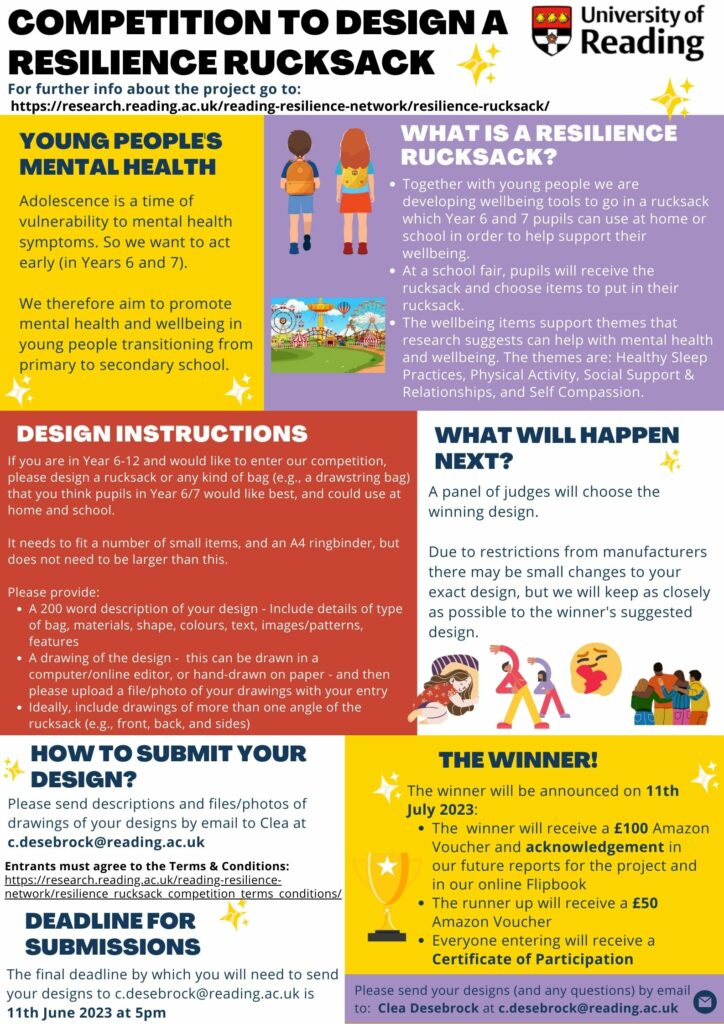
You can find more details and a presentation about the project below