
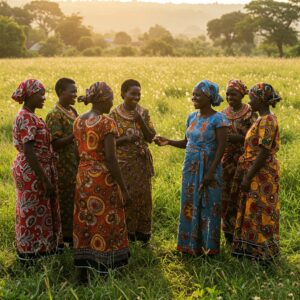
 Advancing Women’s Leadership in Climate Action
This project explores the intersection of gender and climate action, bringing together diverse stakeholder perspectives to build partnerships and strengthen collaborative research. By engaging multi-sector stakeholders, we aim to enhance women’s participation and leadership in shaping climate policies and solutions in Kenya.
Women are disproportionately affected by climate change, yet they remain largely excluded from decision-making in climate policy and action. In many cases, patriarchal structures continue to place men in leadership roles, limiting women’s influence in critical environmental decisions (UN Women, Africa, 2023). Efforts to bridge this gap have primarily focused on gender-inclusive employment policies and increasing female student enrolment in STEM fields to create a future pipeline of women leaders. Kenya’s National Climate Change Action Plan and Climate Change Act 2016 have acknowledged these challenges and incorporated gender-responsive strategies.
However, there is still a significant gap in implementation. Policies, programs, and projects often lack the follow-through needed to translate commitments into real impact (International Commission of Jurists, Kenya Section, 2021). Moreover, the pipeline approach alone has not yielded the desired results in STEM fields. According to the World Bank (2020), fewer girls pursue STEM degrees, and even fewer transition into STEM careers. Those who do often face barriers that prevent them from advancing into senior leadership roles.
Our engagement spanned multiple levels, including government agencies, civil society organisations working in local communities, private sector actors, academic institutions and young people in Higher Education. By fostering dialogue across multiple sectors and interacting with diverse age groups, genders, and professions, this project will create meaningful and sustainable pathways toward gender-equitable climate leadership.
Key Findings
Educational barriers to STEM
-
- Despite significant investment in education in Kenya, some girls’ schools lack qualified science teachers, particularly in subjects like Physics, and have limited access to laboratory facilities.
- Cultural norms discourage girls and women from studying science, pursuing science degrees, and entering science professions.
- Gender role stereotypes that depict science as a male field often lead to families discouraging girls from pursing STEM at the university level.
- Added, to this, lack of formative education in science restricts girls and women’s access to science degrees and careers in scientific fields. This restricts the pipeline of women who can enter climate careers.
- The minority of women who study STEM subjects at University report a lack of female role models and some reported feelings of isolation.
- Women studying STEM at university referred to cultural norms that encourage men to be more outspoken than women. This leads men to compete to overshadow each other in discussions. This highly competitive style of communication makes it difficult for women’s voices to be heard, especially when women are few in number.
- Male and female university students in STEM equally acknowledge the barriers women face accessing and flourishing in STEM fields. They also recognise that male dominance in climate research, decision making and policy has a significant detrimental impact on women and girls in Kenyan society as their needs are often misunderstood or overlooked in climate planning.
Women’s career advancement and leadership in STEM and climate careers
-
- Societal and institutional barriers rooted in patriarchy limit women’s leadership opportunities in Kenya. This challenge is particularly pronounced in male dominated professions, where the limited pipeline of female graduates results in women being a minority in their respective fields.
- Despite these challenges many women are at the forefront of climate action, for example, mitigating the effects of climate change in community adaptation efforts, leading world class scientific research, delivering sustainable transport solutions and adaptations to infrastructure in engineering projects, and integrating climate change into project planning.
- Despite women’s achievements, they face barriers advancing to senior leadership positions. A common issue reported by women is that voices are unheard, or their contributions minimised in workplace meetings, and male voices are given more weight.
- Women in STEM report a lack of visible female role models in their fields and highlight that the absence of women in policymaking and leadership negatively impacts climate action planning.
Engaging Men as Allies
-
- Male participants acknowledged the systemic challenges women face and emphasised the importance of addressing gender barriers.
- Participants broadly agreed that men should be involved in gender equality initiatives, and they should foster allyship.
- Intergenerational knowledge exchange and diverse engagement formats were some of the suggestions given, to ensure men’s inclusive participation in initiatives to achieve gender equality.
Capacity-Building for women’s leadership
-
- Alongside efforts to tackle systemic barriers to gender equality, women would value leadership capacity-building programmes and mentoring to build on their capabilities, skills, knowledge and extend professional networks.
- These programmes should include mentorship, targeted training, and strategies to support women’s progression to decision-making positions and senior leadership roles.
- Women would like their employers to offer stretching opportunities, such taking part in leadership conferences and policy negotiation tables.
Awareness Raising
-
- Awareness-raising efforts should highlight gender equality issues and promote women’s contributions to climate leadership.
- The involvement of the media and researchers is essential to amplify women’s stories and inspire future leaders.
- Women believed that care must be taken to avoid framing initiatives as solely advancing a “women’s agenda” to encourage broader support and prevent backlash. This was not mentioned by men.
Key messages
While strengthening personal resilience and leadership development are valuable, they are insufficient on their own in addressing deeply rooted structural barriers that limit women’s opportunities. Achieving lasting female empowerment requires systemic change.
Societal norms, institutional biases, and unequal access to education and resources must be challenged at multiple levels to create an environment where girls and women can thrive.
By integrating systemic reforms, such as policy changes, equitable education access, and organisational shifts, alongside awareness raising and male allyship, we can create sustainable pathways for women’s leadership and empowerment, rather than placing the burden solely on girls and women to overcome deeply ingrained inequalities.