
DEVELOPING AN EVIDENCE BASE TO SUPPORT APCNF’S WIDER APPLICATION
BACKGROUND
An interdisciplinary team of soil and social scientists from the University of Reading and Rythu Sahikara Samstha (RySS) are working to develop an evidence base to understand the strengths and weaknesses of the APCNF approach (formerly known as ZBNF), to what extent that success has come from context-specific conditions, and whether there are principles that could be useful in other geographic and cultural areas. Our research has four broad aims:
- Understanding whether APCNF works, how and why it is adapted to suit different contexts, leading to knowledge that can accelerate scaling up and out.
- Demonstrating the dynamics and outcomes of APCNF of a) the innovation system b) the socio-economic outcomes and c) the environmental outcomes.
- Understanding how and why the extension process promoting APCNF works (and hence leads to adoption) leading to knowledge that can inform the scaling up of the approach.
- Predicting and adjusting to possible changes in performance as APCNF is adopted for longer periods of time and at larger spatial scales.
A number of research activities have been underway since the project was established in 2019 you can download a summary here.
 WORKSHOPS
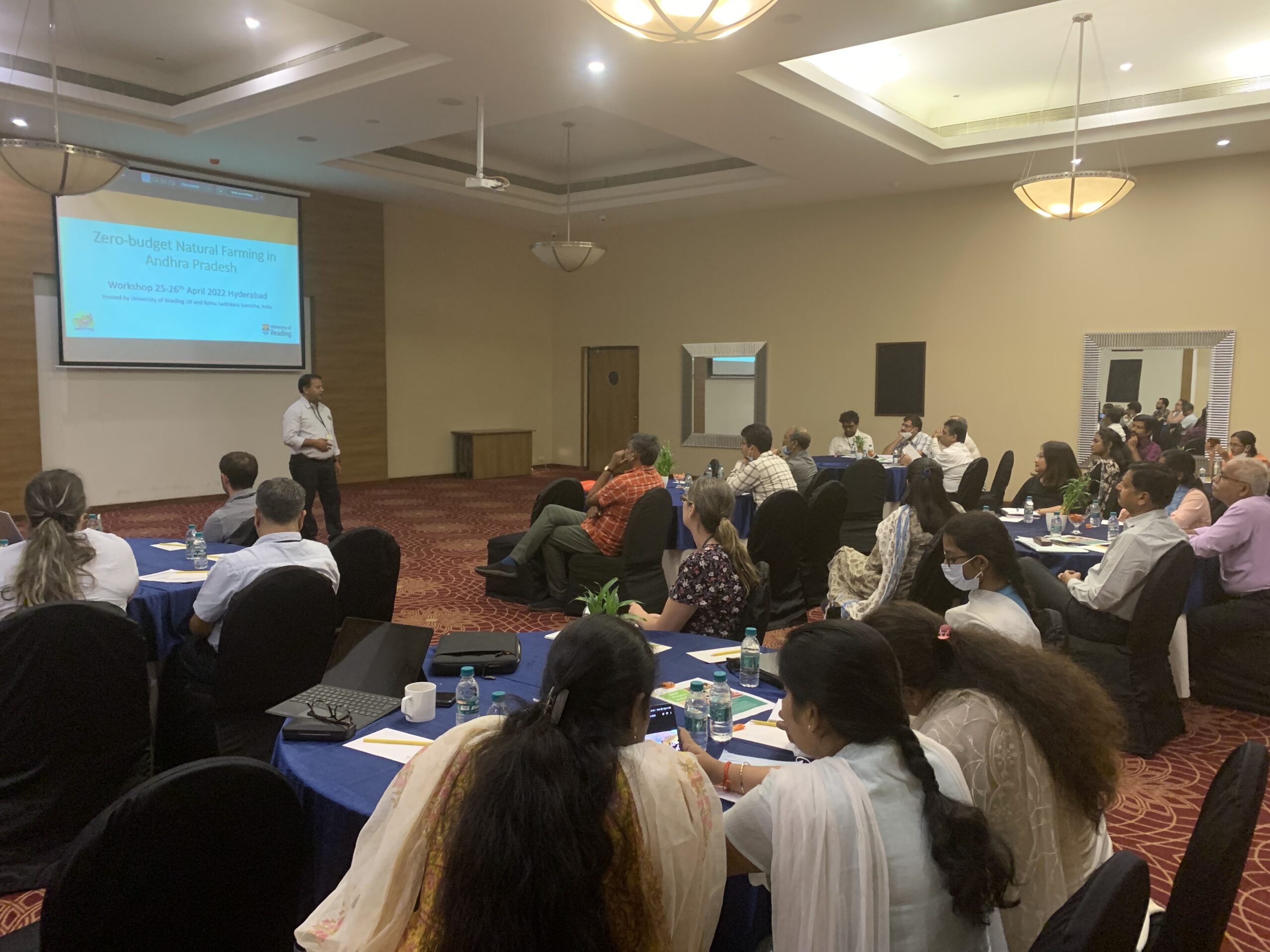
Workshops were held in April 2021 (online) and 2022 (Hyderabad) with respected Indian academics and practitioners in the fields of both soil and social science. During the first of which, participants were able to share an overview of current relevant research, and develop principles for a framework of biophysical evaluation and understanding communication processes at larger scale. The second workshop showcased the research findings from Phase I of our project and discussed the interdisciplinary research design for Phase II of the project. The proceedings of the second workshop can be found here. Phase III focuses on validating the biophysical experimental data and livelihood benefits, methodological capacity building, supporting scale-out lessons for APCNF. A workshop was held in Hyderabad in March 2025 finalise the implementation.
PARTICIPATORY PHOTOGRAPHY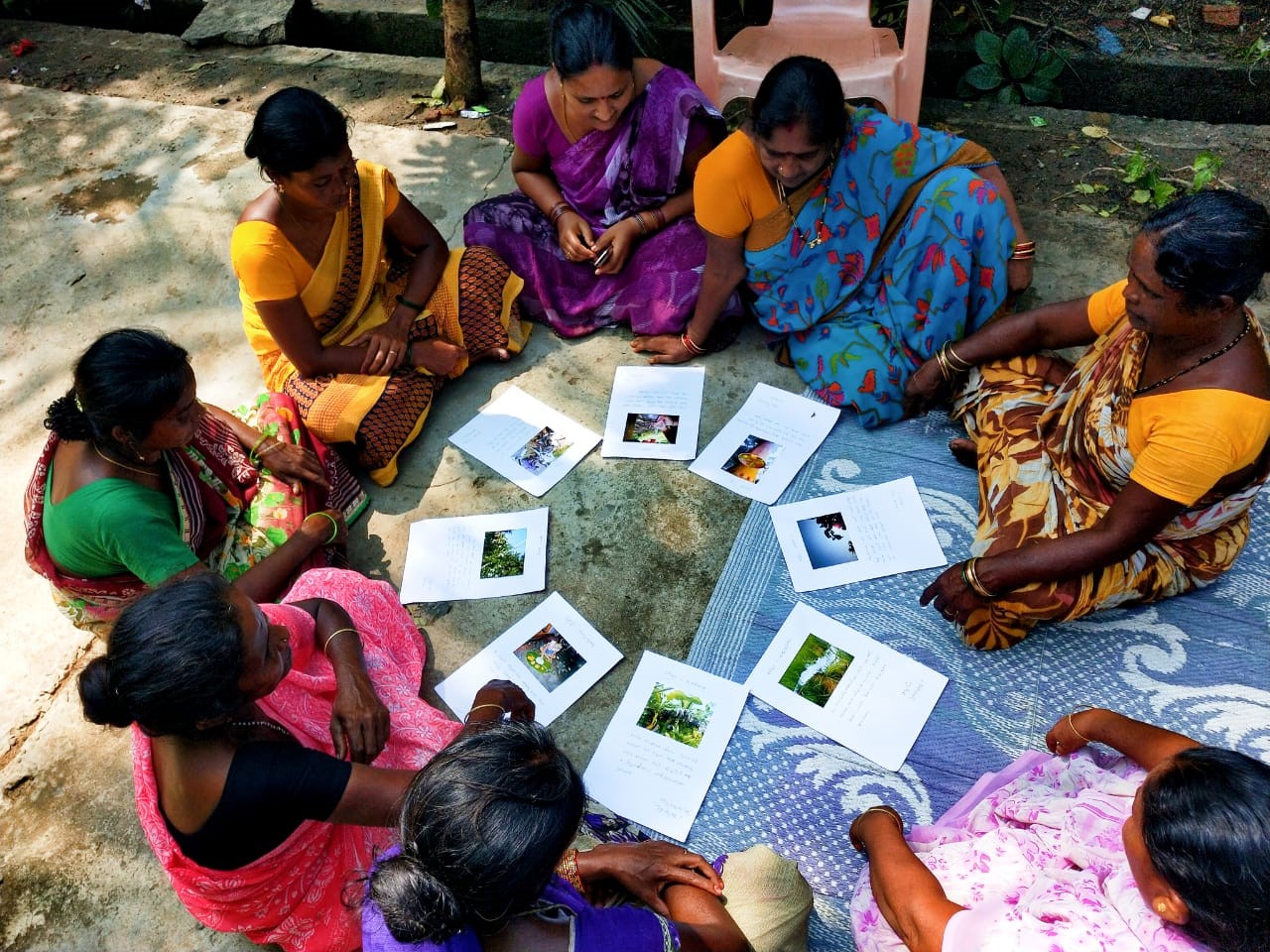
To analyse farmer decision making and innovations resulting from APCNF adoption. The research developed an innovative methodology using photography with the women in Self-Help Groups in the 3 locations to reveal their perspectives and rationales for adopting full or partial APCNF, and analyse processes of communication and innovation. These data were collected from 6 villages with the support of 3 researchers from RySS to generate a large data set of photo responses taken by the women farmers themselves and annotated with their associated narratives. This data set is now being analysed and prepared for journal submission. An additional paper on the methodology has been published:
A Secured Life: Photo stories of natural farming adoption in India
 MAPPING OF THE GENDERED INNOVATION SYSTEMS SUPPORTED BY APCNF
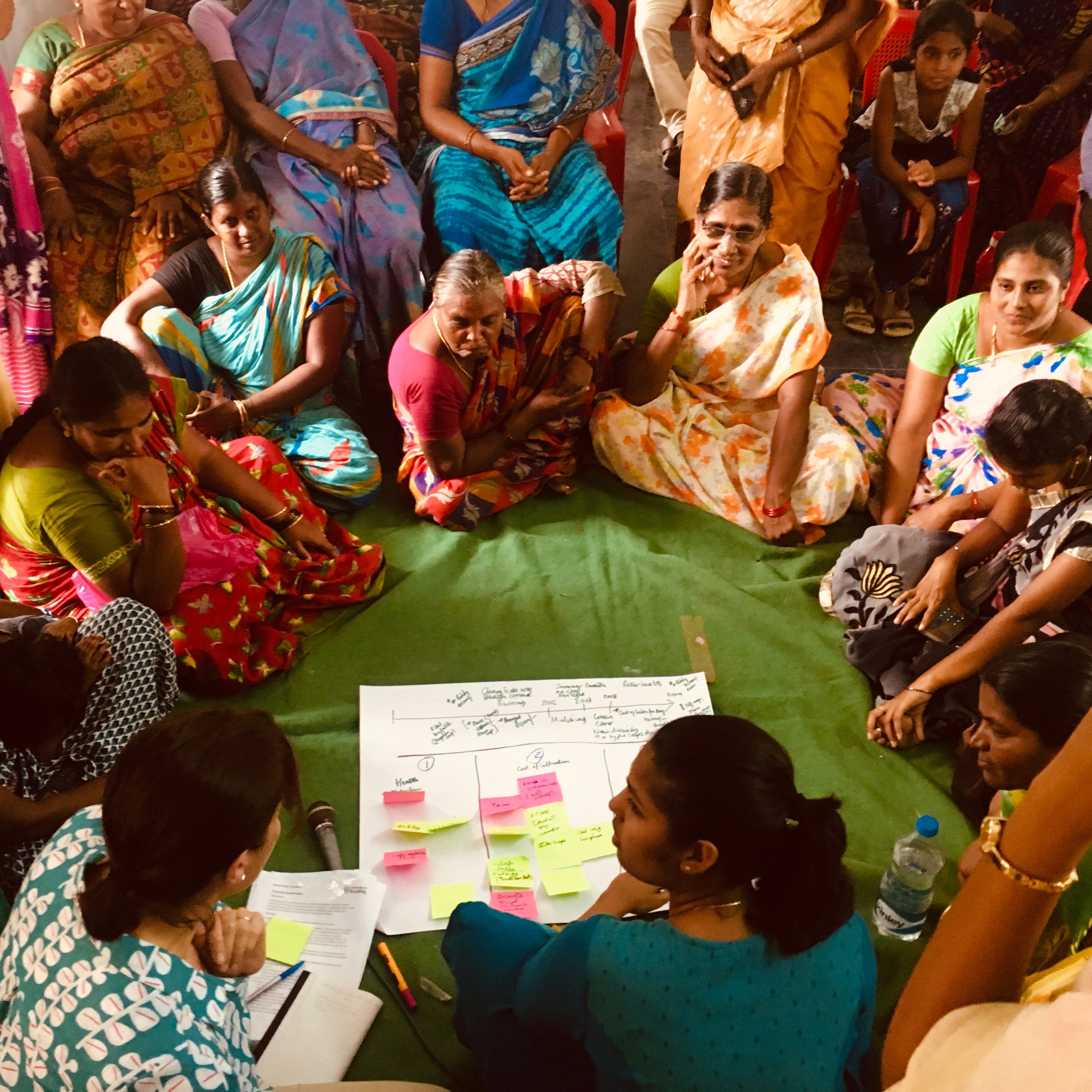
Aims to understand the knowledge exchange processes. The data collection for this task was completed in 2019 and analysis shows distinct innovation systems and process of knowledge exchange across locations. A paper is in preparation capturing the key findings, keep an eye on our news page for further developments.
ENVIRONMENTAL EVALUATION OF THE APCNF SYSTEM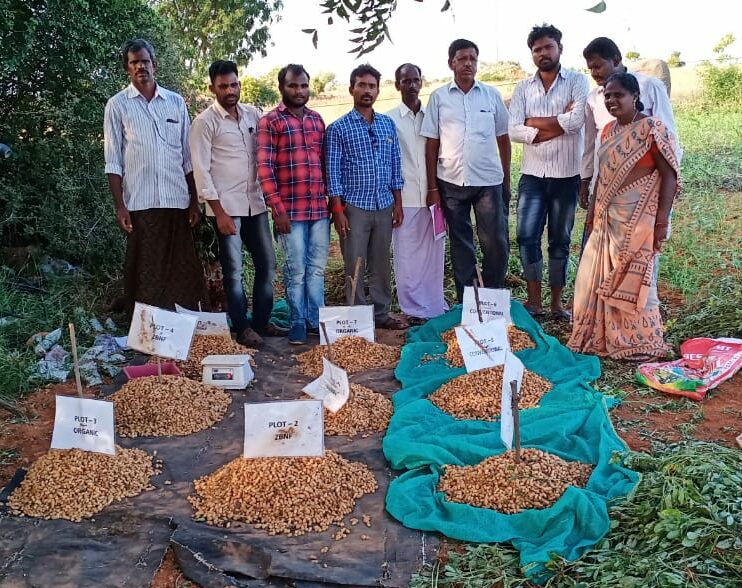
The aim is to provide scientific evidence underpinning the environmental benefits of the APCNF system under five broad themes for research: nutrient budgeting; carbon dynamics; resilience to climatic stress; soil microbial ecology; quantifying water use. Experiments have been run for 3 seasons, in 6 agri-climatic zones of Andhra Pradesh. The purpose is to evaluate the performance of APCNF contrasted with conventional chemical input and organic amendment systems. Day to day management is undertaken by the RySS Natural Farming Fellows (NFFs) with oversight from the Research Coordinators (RCs), RySS, and UoR team. Initial results indicate that there is no yield penalty associated with the first year of conversion to an APCNF system.
Impact of Zero Budget Natural Farming on Crop Yields in Andhra Pradesh, SE India
 ASSESSING THE INFLUENCE OF INDIVIDUAL COMPONENTS OF THE APCNF SYSTEM
Examining the effects of different inputs (Bijamrita, Solid Jiwamrita, Liquid Jiwamrita, and Achhadana) on crop yield and the relationship between soil physical, chemical and biological parameters. These experiments are managed by the RySS Research Coordinators (RCs) in consultation with RySS and the UoR team. Analysis of the first seasons data indicates that crop performance is improved if all components are used but no clear mechanism for what is driving this has emerged as yet. Keep an eye on our news page for new developments and publications.
Quantifying the contribution of individual inputs used in Zero Budget Natural Farming
UNDERSTANDING UPTAKE OF APCNF INNOVATION – 365 GREEN COVER
Focusing on the low rainfall district of Anantapur, we are surveying farmers who have adopted ‘365 green cover’ (live mulching/ green cover for 365 days of the year) as part of their APCNF practise. The survey aims to establish the General household profile (demography, land and location, livelihoods) and farming system (cropping, level of adoption of 365 innovation, food security /dietary diversity) of APCNF farmers in Anantapur.
We focus on a gendered analysis of the benefits to show how the approach build livelihood resilience and social change for marginalised women and their households.