
IoE Doctoral Supervisors
If you need any further assistance, please contact the Postgraduate Research (PGR) Administrator (Gaby Burford) at g.burford@reading.ac.uk in the first instance.
Music education, creative musicianship and choral education; leadership in music education including conducting training and music teacher education; music in schools with a focus on the creative learning environment and Arts Based Educational Research methodologies.
Technology; disability.

Dr Ilan Dwek
(Please note that this member of staff is only available for 2nd supervision)
Policy of inclusion within mainstream education and social life/media, Mental Health in primary/secondary school children, Impact of mainstream education on deaf linking to employability, social and mental wellbeing, Linguistics of BSL and its evolution over the years, Deaf-blind communication strategy and tactics [including Haptic method].

Educational leadership and doctoral education, including: Academic leadership, School leadership and Multi Academy Trusts (MATs), How people perceive and experience being in a leadership role, Distributed and collaborative leadership, Leadership development, Career trajectories, Leadership Identity, Insider research and associated ethical issues

Mathematics education; initial teacher education.
English as an additional language; pedagogy in multilingual classrooms; migration and education; policy and practice for the teaching of English; research-informed teaching.
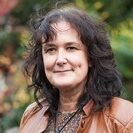
Gender; confidence; empowerment; identity; social inequality; self-efficacy; left-behind children.

LGBTQI+ issues; history education; action research; teacher agency.
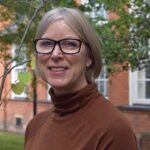
Education for sustainable development (ESD from 2026 onwards); comparative and international education; leadership and management in education.

Topics: Reading development and difficulties; multilingual language development; learning to read in adverse circumstances; family literacy. Methods: eye tracking, secondary data analysis (administrative data), participatory methods, community-led research.
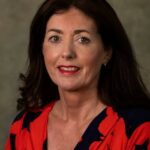
Women’s careers and leadership; diversity and inclusion in leadership, especially related to gender, ethnicity and intersectionality, identity; career capital, feminist and critical perspectives; leadership learning and development through informal and formal mechanisms; learning transfer and impact.

Classroom-based language learning and teaching; young learners; instructed second language acquisition; grammar teaching and learning; individual differences; computer-assisted language learning (including digital game-based learning); experimental studies and intervention studies.

Second language motivation; transnational education (TNE)/international education; second language teacher professional development; intercultural communication.

Second language acquisition, climate and sustainability education, educational leadership and management, secondary, primary and Early Years education, mentoring and coaching, initial teacher education.
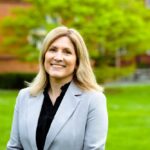
Teaching and learning in Higher Education; history education; teachers’ knowledge, beliefs, lives and careers; qualitative methods, narrative and life history.
Typical and atypical development of reading and writing skills; social and environmental factors (e.g., the home literacy environment; socio-economic status) in literacy acquisition; rapid serial naming and reading development; technology in literacy acquisition; literacy development in bilingual populations.

Mentorship; discourse in education; initial teacher education; L1 English pedagogy.

English pedagogy across the key stages, English and inclusion, Children’s literature, Developing English through the creative arts, Special Educational Needs and Disabilities, English and SEND in Initial Teacher Education, Qualitative research methodologies.

Values education, Mindfulness and education, Religious education, Creative approaches to educational research, Post-humanism

All aspects of mathematics education; comparative education; international educational development; international schools.
Gender, art education, creative education, identity, restorative pedagogies and visual methods for areas of research interest.

Identities of race/ethnicity, social class & gender; higher education, sociology of education.