


Picture the scene. You are a frequent flyer who passes through the same airport a dozen times a year. Or a cruise passenger disembarking at a busy port alongside two thousand other people. Every time, it is the same routine: join the queue, shuffle forward, present your document, look at the camera, wait. It takes what it takes.
Now imagine instead that you walk through a designated lane at normal pace, and the gate simply opens. No stopping, no fumbling for a passport, no eye contact with a screen. The system already knows who you are. This is the vision of the walk-through biometric corridor — and it is closer to operational deployment than most people realise.
How does it actually work?
The system works in two stages. First, a traveller who wants to use the corridor voluntarily registers their biometric data — a facial image and an iris scan — which is cryptographically linked to their identity document and stored securely. This enrolment takes only a few minutes and happens once. Every time the enrolled traveller subsequently approaches the fast-track lane, a network of cameras and sensors captures their face and iris on the move. The system matches what it sees against the stored template, verifies their travel entitlement, and allows them to simply walk across the border — all within seconds.
The technical challenge
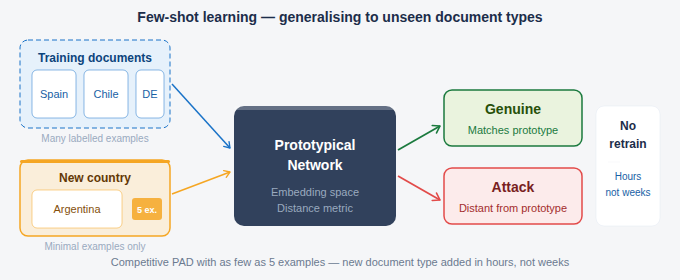
Cameras must capture usable facial and iris images from people walking at natural pace, at varying heights, in daylight and artificial light, through rain and glare. Head angle, walking speed, glasses, hats — all affect recognition accuracy. The EINSTEIN team has developed novel multimodal fusion approaches combining signals from multiple sensors to maintain high accuracy across all of these real-world variables. The corridor also incorporates Presentation Attack Detection (PAD) running in real time as the traveller moves through.
Participation is always voluntary
No traveller is required to enrol. Under GDPR, biometric data used for identification is classified as special category data — the highest level of legal protection — requiring explicit consent, secure storage of encrypted templates rather than raw images, and the right to withdraw at any time. Travellers who cannot be matched automatically are seamlessly directed to a standard border check without disruption or stigma.
The EINSTEIN Walk-Through Biometric Corridor application is led by Veridos GmbH, with the University of Reading and Hochschule Darmstadt, and is undergoing field testing at a port of entry in Southampton with the UK Home Office as end-user.
© 2026 EINSTEIN Consortium. EINSTEIN is funded by the European Union’s Horizon Europe programme (GA No. 101121280) and by UKRI (IFS 10093453). Views expressed are those of the authors only. www.einstein-horizon.eu