

No Queue, No Document, No Problem: How On-the-Move Biometrics Could Transform Border Crossings
Picture the scene. You are a frequent flyer who passes through the same airport a dozen times a year. Or a cruise passenger disembarking at a busy port alongside two thousand other people. Every time, it is the same routine: join the queue, shuffle f…
Teaching AI to Recognise Documents It Has Never Seen: Few-Shot Learning in Identity Verification
There are thousands of different identity document types in circulation worldwide — passports, national identity cards, residence permits, driving licences — issued by nearly two hundred countries, each with its own design, security features, and bio…
The Photo on Your ID Card: Why Image Compliance Matters More Than You Think
Every time you apply for an identity document — a passport, a national identity card, a residence permit — you submit a photograph. Most people give this little thought beyond ensuring the photo is recent and reasonably flattering. But behind that ph…
Foundation Models Come to Biometrics: What GPT-Scale AI Means for Identity Verification
The arrival of large language models fundamentally changed how people think about AI. Instead of training a specialist model for each task from scratch, a single enormous model trained on vast quantities of data could be adapted to perform a remarkab…
Building on What Came Before: How EINSTEIN Builds on a Decade of EU Border Security Research
Large-scale research and innovation in border security does not happen in a single project. It accumulates — through successive waves of EU-funded programmes, each building on the findings, datasets, prototypes, and partnerships of those that came be…
Training the Machine: Why Datasets and Benchmarks Are the Unsung Heroes of Biometric AI
When a new face recognition algorithm claims state-of-the-art performance, or a morphing attack detector reports a near-zero error rate, the natural question is: state-of-the-art on what? Error rate on which dataset, evaluated under which conditions,…
The Phygital Identity: Why the Future of Border Security Lives at the Intersection of Physical and Digital
For most of the history of travel, identity has been physical. The passport is a booklet. The visa is a stamp. The border check is a human being looking at a document and comparing it to a face. Even the biometric passport is fundamentally a physical…
From Lab to Border: What Does Technology Readiness Level 7 Actually Mean?
Research projects funded by Horizon Europe are required to specify the Technology Readiness Level (TRL) of their outputs — from TRL 1 (basic principles observed) through to TRL 9 (system proven in operational environment). Most security research proj…
Applying for a Passport Online: Why Fraud Detection Starts Before You Reach the Border
Most discussion of biometric fraud detection focuses on the border — the moment a traveller presents their document and their face to a verification system. But the most effective point of intervention is often earlier, at the moment when the fraudul…
Privacy at the Border: Can Security and Data Protection Coexist?
The deployment of biometric systems at borders involves a fundamental tension. On one side: the security interest in accurately and efficiently identifying individuals, detecting fraud, and enforcing border controls. On the other: the privacy interes…
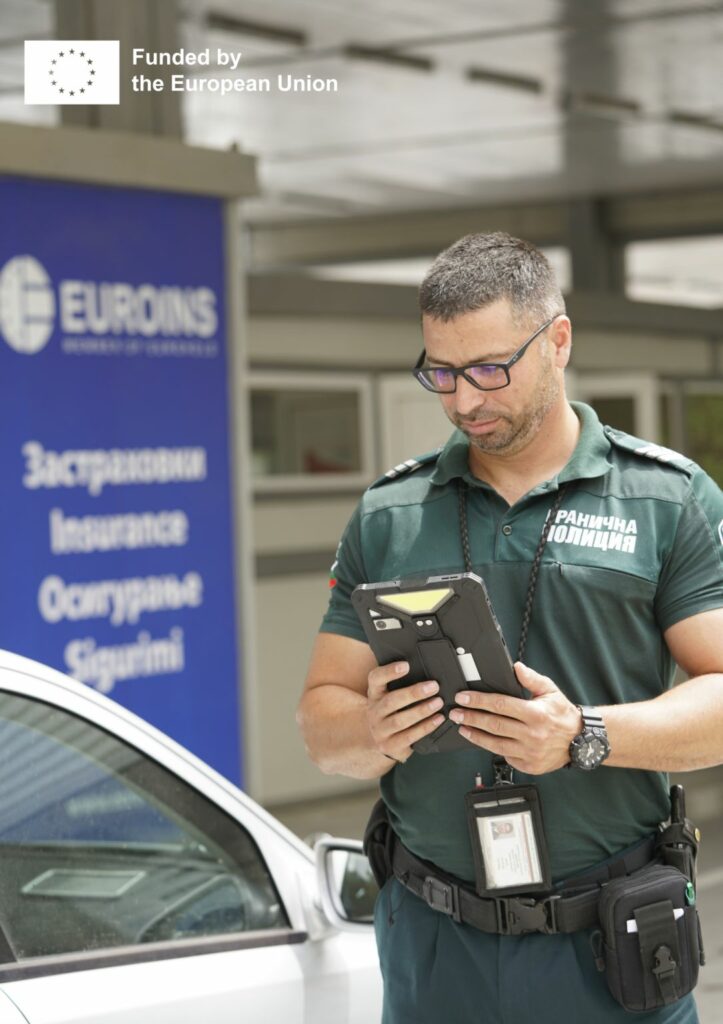
Successful trial held in Bulgaria
The EINSTEIN Project continued its Trial validation activities with a successful Trial held at 𝗕𝗖𝗣 𝗚𝘆𝗲𝘀𝗵𝗲𝘃𝗼, 𝗕𝘂𝗹𝗴𝗮𝗿𝗶𝗮, 𝗼𝗻 𝟭𝟰–𝟭𝟱 𝗝𝘂𝗹𝘆 𝟮𝟬𝟮𝟲. As the project’s Field Test and Trials Leader, the…Read More >
The EU AI Act is Here: What Does It Mean for Biometric Border Security Technology?
On 1 August 2024, the EU AI Act entered into force. Most of its provisions apply from 2 August 2026. For anyone developing, deploying, or procuring AI systems for use in border management or identity verification, the clock is ticking. The Act is the…
Register Once, Cross Faster: How Pre-Registration is Transforming Land Border Crossings
Land border crossings present border management challenges quite different from airports. There is less advance information about who is coming, when, and why. Traffic flows are harder to predict and manage. And the consequences of a slow crossing ar…
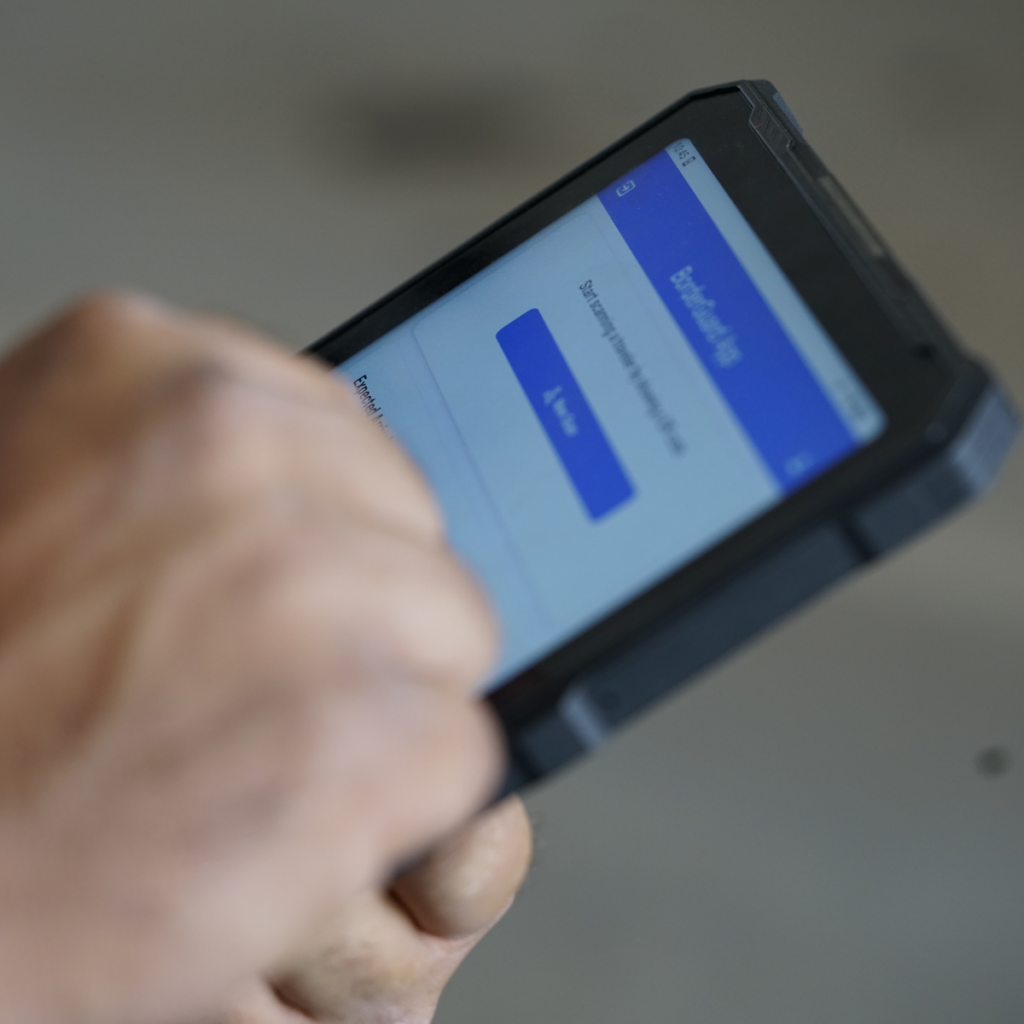
EINSTEIN conducts successful trial in Greece
The EINSTEIN Project successfully completed its GR Trial on 1–2 July 2026 in Alexandroupolis and BCP Kipoi, Greece. Led by the Center for Security Studies as the Trials Leader, the activity brought together our partners…Read More >
Your Phone as Your Passport: The Rise of Digital Travel Credentials
For as long as international travel has required documentation, that documentation has been physical. The biometric passport embedded a digital chip in that physical object but did not replace the object itself. The next evolution is more radical: a …
Smarter Borders: The EU Entry/Exit System and the Challenge of Real-Time Fraud Detection
When the EU Entry/Exit System (EES) is fully operational, it will represent the largest expansion of biometric data collection at European borders in history. Third-country nationals entering the Schengen Area will have their facial image and fingerp…

Bridging the Gap Between Research and Deployment: EINSTEIN Hosts First Innovation Procurement Webinar
On 22 June 2026, the EINSTEIN project hosted its first dedicated exploitation webinar, bringing together participants from across the Stopless Borders Cluster for a 90-minute session on innovation procurement —…Read More >
Border Control in Your Pocket: How Smartphones are Becoming Fraud Detection Tools
A decade ago, the idea that a border officer might conduct a biometric identity check using a standard smartphone would have seemed far-fetched. Border technology meant specialist hardware — dedicated fingerprint readers, RFID chip readers, document …
Is That Passport Real? The Hidden Science of Document Fraud Detection
A modern biometric passport is one of the most technically sophisticated objects in everyday circulation. It contains a chip with cryptographically signed biometric data, multiple layers of security printing, holographic overlaminates, laser-perforat…

EINSTEIN at Identity Week 2026
This week, the EINSTEIN project took to the stage at Identity Week Europe 2026 in Amsterdam, with a presentation and panel discussion bringing together technologists, researchers, and border authority practitioners…Read More >