
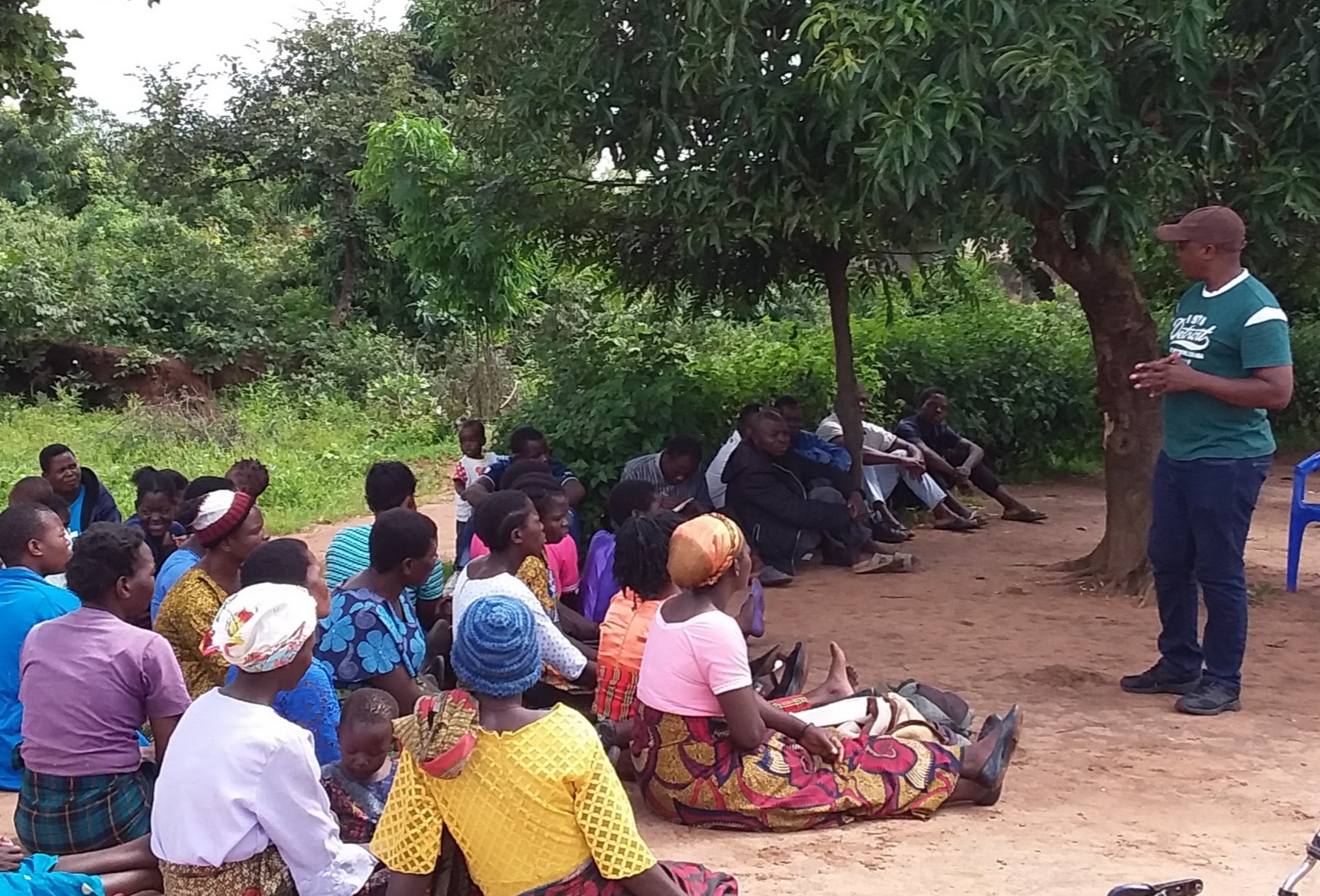
From the fertile research fields of Bvumbwe to the academic halls of Reading and beyond, Maurice Mantchombe stands at the intersection of science, development, and grassroots empowerment. With over two decades of experience in agricultural research and extension, his work continues to reshape how smallholder farmers in Malawi adapt to climate change using participatory, evidence-based solutions.
Mantchombe’s academic journey began at the University of Malawi’s Bunda College, where he studied Agricultural Extension from 2005 to 2009. A strong foundation in community-focused agriculture led him to pursue an MSc in Applied Development Studies at the University of Reading in the UK, made possible through the prestigious Marshal Papworth Scholarship. Since November 2021, he has been pursuing a PhD in International and Rural Development at Reading’s School of Agriculture, Policy and Development (SAPD), funded by a Commonwealth Scholarship.
His doctoral research explores a critical question: Can participatory climate services improve resilience among smallholder farmers in Malawi? Specifically, he is investigating the implementation of Participatory Integrated Climate Services for Agriculture (PICSA) through the lead farmer model. “Coming from a research background largely driven by top-down approaches, I wanted to understand how co-production of knowledge, bringing farmers into the process, can lead to better outcomes,” He explains.
The motivation stems from a long-standing challenge in agricultural development: the low adoption of technologies developed at research institutions. “Too often, innovations sit on shelves because they don’t reach the farmers they’re meant to serve,” he added.
From 2004 to 2014, he served as an Assistant Agricultural Research Officer in Malawi’s Ministry of Agriculture, stationed at Bvumbwe Agricultural Research Station under the Horticulture Commodity Group. His focus on tree nuts, macadamia, cashews, and others, and he successfully secured a small grant under USAID’s Horticulture Collaborative Research Support Program (CRSP) to promote tomato varieties resistant to Fusarium wilt and late blight among smallholder farmers.
In 2014, he transitioned to the Agricultural Research and Extension Trust (ARET), Malawi’s key tobacco research body, as an Extension and Communications Specialist. At the same time, he was serving as an adjunct lecturer at Lilongwe University of Agriculture and Natural Resources (LUANAR), teaching undergraduate extension courses since 2015.
However, it was during his PhD studies that his passion for climate resilience began. His research examines the PICSA model, initially piloted in Balaka in 2015 and later scaled across 14 districts through the Ministry of Agriculture and partners, including the UNDP and the Green Climate Fund, under the M-CLIMES project. The model leverages lead farmers to reach wider communities in the face of strained extension services.
Informed by theories such as Theory of Change, Social Learning Theory, and Agricultural Innovation Systems, their findings reveal a rich network of collaboration. Universities like Reading offer technical training; Malawi’s Department of Climate Change and Meteorological Services (DCCMS) generates climate data; extension departments and farmer organizations train lead farmers, who then cascade knowledge to their peers. The results lead to behavioral change and innovations that empower farming communities to make timely, informed decisions.
One such example comes from Mkwinda EPA, in Lilongwe, where a male farmer reported switching to early-maturing maize and sweet potatoes in response to a dry spell, an adaptation he attributes to PICSA training. “I made a lot of money from selling green cobs and sweet potatoes, and saved enough for my family’s needs,” he says.
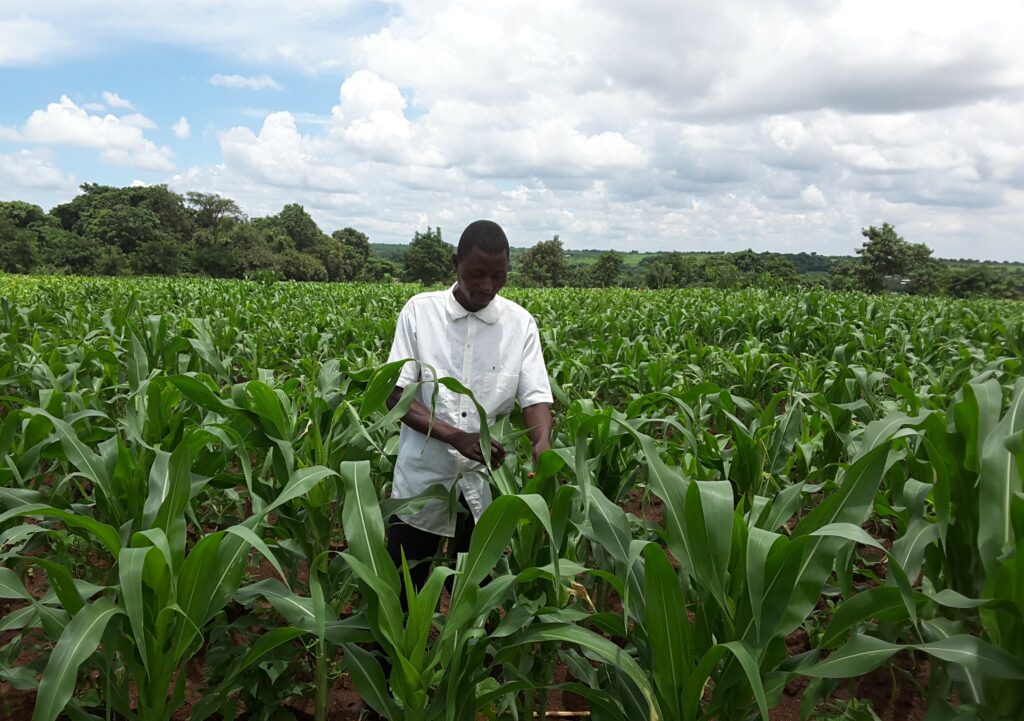
In Chigonthi EPA, a female farmer in Lilongwe started using Mbeya organic fertilizer, which was introduced during PICSA training, after rising fertilizer costs due to currency devaluation. Using local materials such as animal droppings, maize bran, and ash, she achieved a bumper harvest. These stories are not isolated. They represent a broader pattern of farmers modifying their practices based on accessible climate information and contextualized advisory services.
However, challenges remain. Lead farmers, while effective conduits, sometimes lack the technical depth of professional extension agents. Access to inputs and structural economic constraints also hinder the scaling of innovations. Still, farmers find creative financing methods, such as village savings and loan groups to implement these changes.
In 2023, Mantchombe’s introduced the PICSA approach to Mwimba College of Agriculture, where staff expressed interest in adopting it for outreach programs through the GIZ Green Innovation project. It is another sign that PICSA’s ripple effects are expanding beyond pilot communities.
Mantchombe’s professional impact also extends to advocacy. In 2017, he served as spokesperson for the Malawi Forum for Agricultural Advisory Services (MaFAAS) Extension Week organizing committee. Through this platform, he successfully lobbied the Parliamentary Committee on Agriculture to allocate more funding toward agricultural extension.
Internationally, he presented at the 2015 CORESTA Congress in Turkey and volunteered at the 2023 Development Studies Association annual conference, which was hosted by the University of Reading.
Looking ahead, he is determined to ensure the long-term sustainability of climate services for agriculture. “I plan to publish my findings to contribute to research in climate services, extension, and food systems. But more importantly, I hope to see participatory approaches like PICSA integrated into academic curricula, national policies, and innovation platforms,” he concludes.
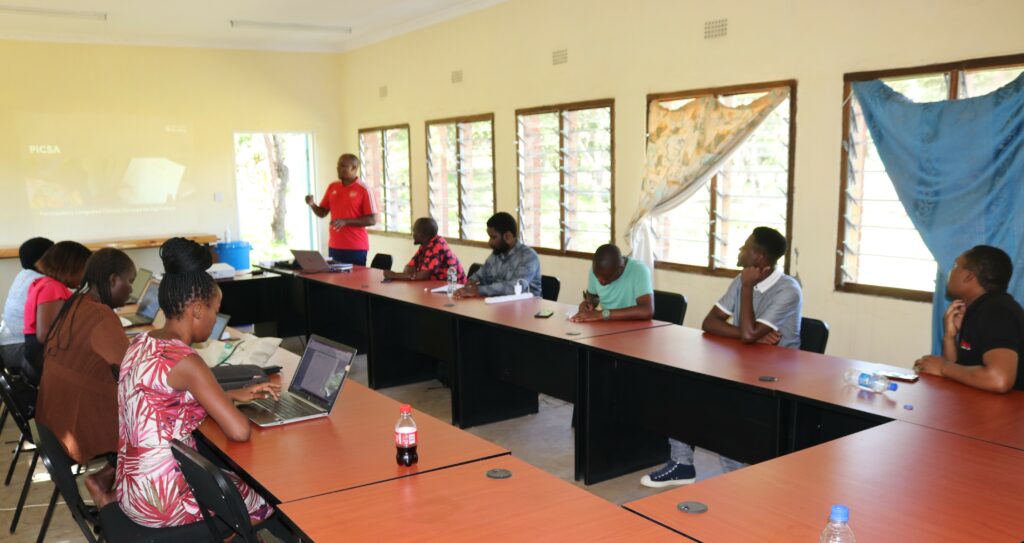
Manchombe is grateful for the invaluable support he has been getting from his supervisors Professor Peter-Dorward and Dr Graham-Clarkson,who also developed the PICSA approach which is now in over 30 countries globally.