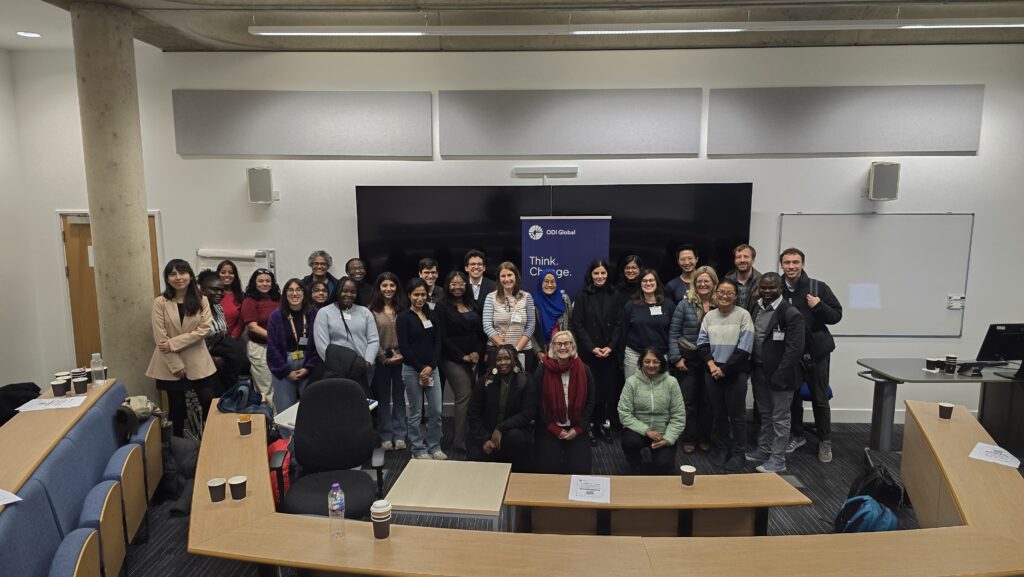
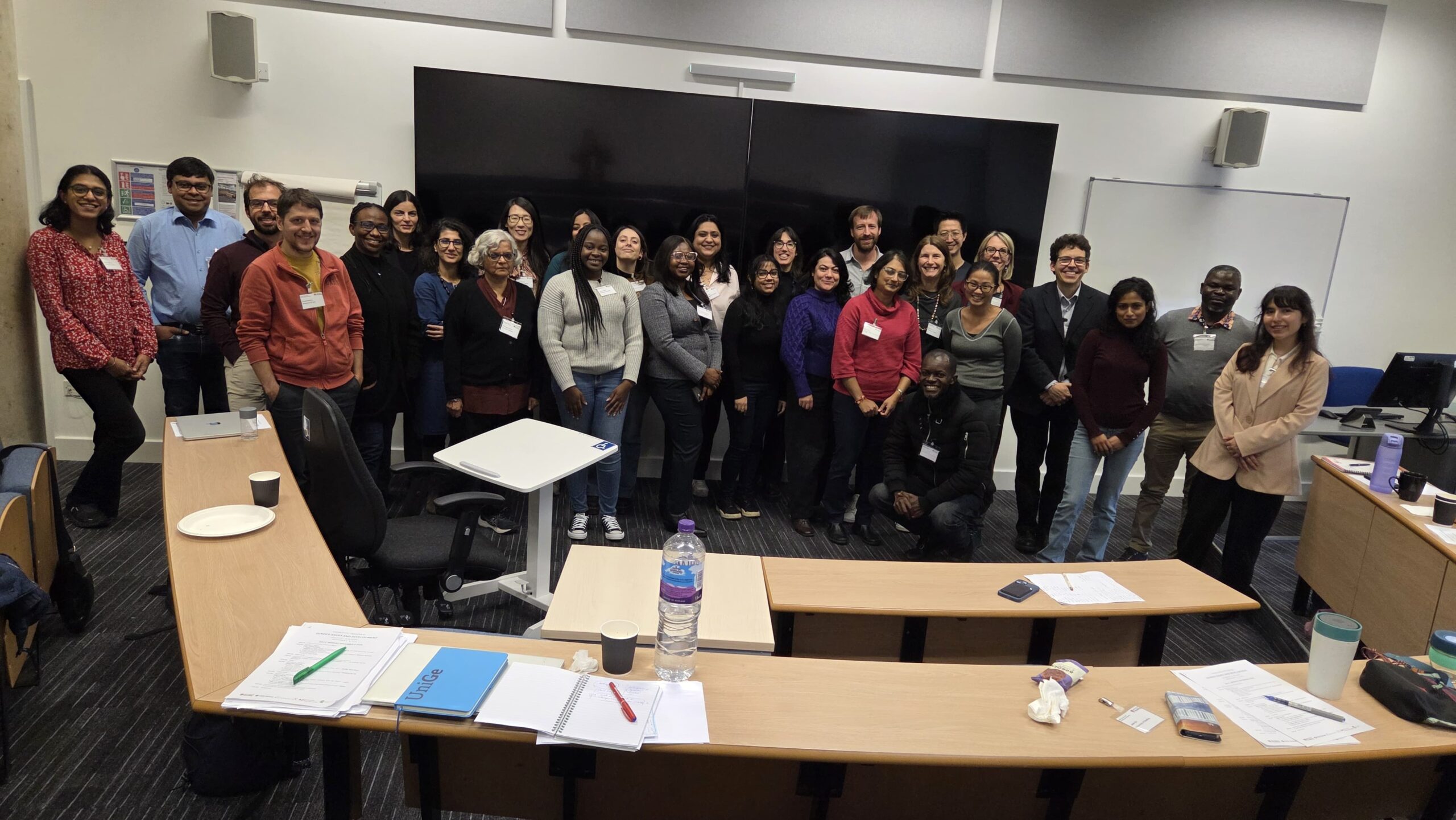
When scholars and researchers gathered at the Gender Issues Development Workshop at the University of Reading, their goal was not just to share data or debate theory. They came to ask a far deeper question: What truly shapes women’s lives?
Over the past weeks in November 2025, economists, social scientists, and policy thinkers joined in a two-day-long workshop to explore how history, law, and information continue to define women’s opportunities and what needs to be done to address the challenges.
Organised by Neha Hui, Uma Kambhampati, Stefania Lovo, Samantha Rawlings and Jade Siu of Reading’s Global Development Research Division, alongside collaborators Prachi Agarwal from the Overseas Development Institute (ODI), Eliane Badaoui (Paris Nanterre University), Florent Dubois (University of Turin), Stefania Marcassa (CY Cergy Paris University), and Laurine Martinoty (University of Paris 1); the workshop was more than an academic meeting. It was a call to action for evidence-based policy that can make gender equality not just a goal, but a lived reality.
The first keynote, delivered by Professor Climent Quintana-Domeque of the University of Exeter, explored how the criminalisation of non-fatal strangulation in the United States has influenced rates of intimate partner homicide. The talk argued that by explicitly recognising non-fatal strangulation as a serious offence, such laws enable law enforcement to better detect, prosecute, and prevent escalating violence within intimate relationships. The lecture concluded by emphasising that well-designed legal interventions can save lives and by calling for broader international adoption of similar legislation.
Professor Bishnupriya Gupta of the University of Warwick took the audience back centuries in time. Her presentation explored whether exposure to pre-colonial military conflict has left a lasting imprint on gender norms. The talk showed evidence of districts with greater exposure to historical conflicts having more male-biased sex ratios, stronger son preference, and higher rates of violence against women today, as warfare fostered male-favouring. These patterns have been documented through centuries of evidence, from colonial censuses and folk songs to the gender of deities worshipped in local temples. Her message was clear: to challenge gender inequality, we must first understand the cultural and historical forces that built it.
The final keynote, by Professor Christine Valente of the University of Bristol, examined how information and perception shape reproductive choices in high-fertility contexts. Drawing on both the wider literature and her own field-based research, the talk offered a comprehensive overview of current knowledge in this area. It explored how misperceptions about conception risk influence women’s demand for contraception, revealing that many women either underestimate their likelihood of becoming pregnant or overestimate the health risks associated with contraceptive use. Her keynote demonstrated how accurate and accessible information about fertility can have a profound impact on contraceptive uptake and women’s autonomy in reproductive decision-making.
The workshop concluded with a lively session led by Prachi Agarwal from ODI, who invited participants to reflect on how to link research and impact. The discussion centred on how researchers can communicate their findings more effectively to policymakers, given the differing timelines between research and policymaking. Participants shared ideas on making research more visible and actionable, emphasising that the path from study to policy must be intentional and strategic.
“As participants shared insights from their research projects, a clear theme emerged: advancing gender equality requires understanding both the immediate and the structural forces that shape women’s lives. The Reading workshop provided an invaluable forum for researchers and policymakers to exchange ideas on how best to translate that understanding into action,” Stefania Lovo, the Associate Professor in Economics, explained.