

Farming depends on the timing and reliability of the rains. But with the dual challenges of climate variability and climate change, many smallholder farmers face difficult decisions: when to plant, which crops to grow, and how to manage risk in increasingly uncertain conditions.
For more than a decade, researchers at the University of Reading have been working with partners globally, to address this challenge through the Participatory Integrated Climate Services for Agriculture (PICSA) approach. By combining climate information with participatory decision-making tools, PICSA helps farmers use data about their local climate to make informed choices about crops, livestock and livelihoods.
Over the past year, the approach has continued to expand its reach, strengthening partnerships, developing digital tools and supporting tens of thousands of farmers as they plan for increasingly uncertain seasons.
Scaling climate services through national systems
A major focus during 2025 has been strengthening the capacity of national extension systems to deliver digital climate services through E-PICSA, the digital version of the approach, supported by the Fund for the Promotion of Innovation in Agriculture (i4Ag) of Deutsche Gesellschaft für Internationale Zusammenarbeit (GIZ).
During June and July 2025, the PICSA team worked with partners in Zambia to deliver a Master Trainer workshop, designed to equip national and provincial government staff with the skills needed to support large-scale implementation. These master trainers then cascaded the training through the agricultural extension system.
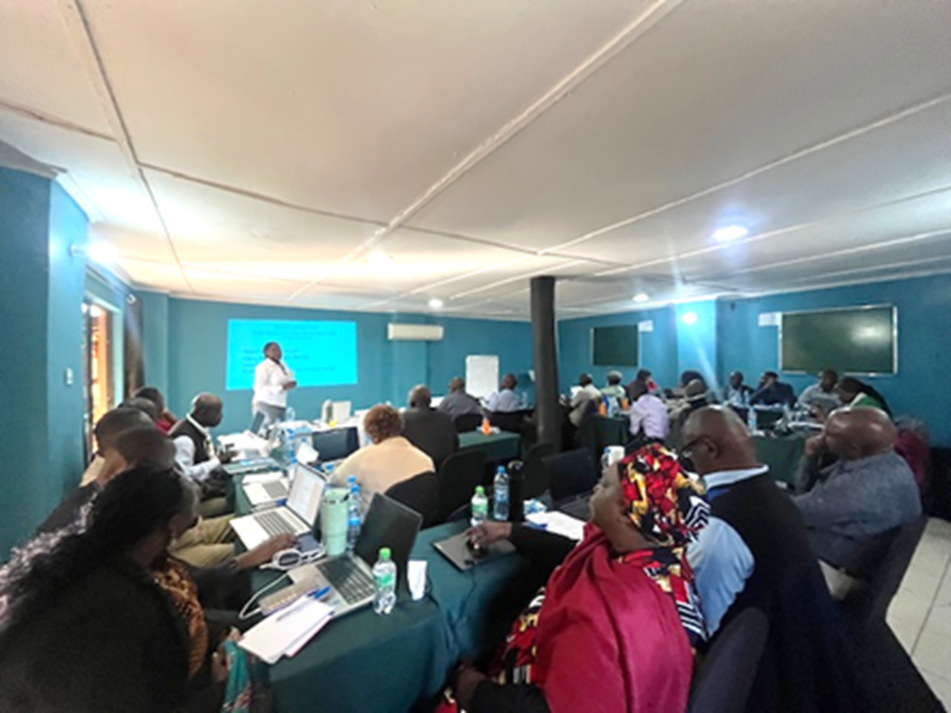
In total, 150 Camp Extension Officers were trained, who subsequently delivered E-PICSA training to around 7,500 farmers ahead of the 2025–26 agricultural season in Zambia. This brings the total number of extension staff trained in E-PICSA in Zambia and Malawi since 2022 to 424, and the total number of farmers that have benefited to almost 30,000.
This training model remains central to PICSA’s scaling strategy. By embedding climate services within national extension systems, the approach can reach far larger numbers of farmers than stand-alone projects.
Expanding digital climate information and including local languages
Alongside the training programme, the digital tools supporting PICSA have continued to develop.
The E-PICSA mobile application now provides farmers, extension officers and policymakers with access to historical climate data across a much wider range of locations. In Zambia, the number of available climate stations has grown from just two locations in 2023 to 41 locations by 2025, while 33 stations are now available in Malawi.
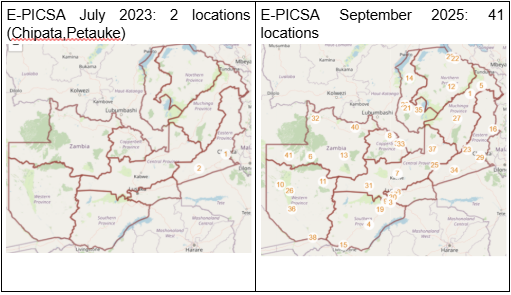
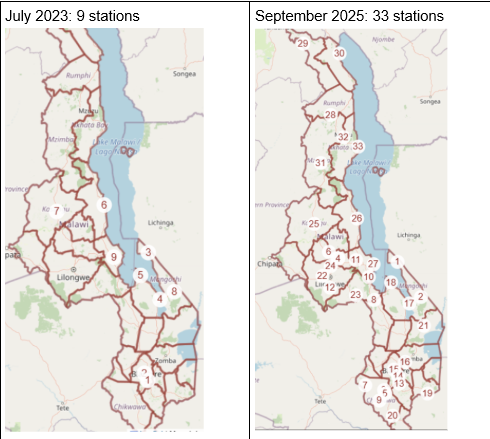
These datasets generate practical climate products such as rainfall graphs, start-of-season charts and temperature trends. Farmers use this information to better understand rainfall variability in their area, helping them decide which crop varieties to plant, whether to diversify livestock, or when to begin planting.
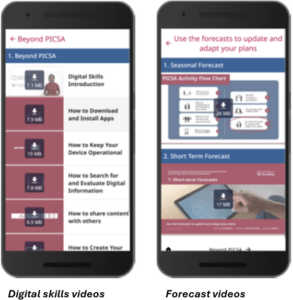
To make the tools more accessible, the app now includes step-by-step training videos with participatory tools and digital skills guides. These resources are available not only in English but also in seven Zambian and two Malawian languages, helping ensure that the information can be used by farmers and extension officers across different regions.
Evidence that the approach is working
Alongside scaling and digital development, the team has continued to gather evidence on the impact of E-PICSA.
A recent evaluation conducted in Malawi and Zambia in 2025 surveyed more than 500 farmers who had received E-PICSA training through extension officers.
In Malawi, 91% of farmers reported making at least one adaptation change following the training, including adjustments to crop choices, livestock management or diversification into other livelihood activities. Many also reported improvements in household wellbeing, with 88% indicating improved food security and 86% reporting increased household income.
In Zambia, 83% of trained farmers reported making adaptation changes, while 83% saw improvements in food security and 79% reported increased household income.
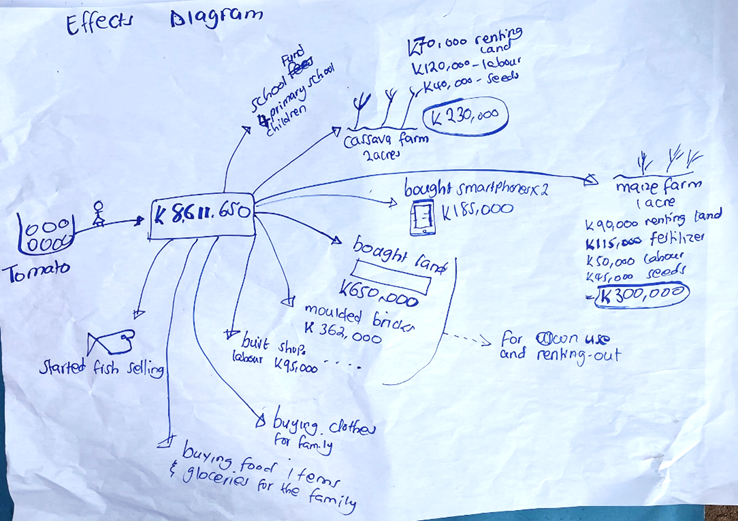
Using participatory study tools such as effects diagrams, qualitative evidence has been collected to understand farmers’ adaptation processes resulting from engagement with PICSA. For example, a woman in Nkhotakota District, Malawi, started a tomato trading business as a result of her participation in E-PICSA training in 2024. With the profits from her tomato business over the previous 13 months, she purchased two smartphones for herself and her husband. She also bought a piece of land, moulded bricks, and built a shop which she now rents out. Using part of the profits, she sent four children to primary school and expanded her farming activities to introduce more drought-tolerant crop, cassava.
These findings reinforce the importance of making climate information accessible and usable for farmers’ everyday decision-making.
Sharing lessons internationally
During 2025, researchers from the University of Reading also shared insights from PICSA at major agricultural and climate events.
Graham Clarkson and Rieko Shibata participated in CGIAR Science Week, where they presented lessons from the implementation of PICSA and E-PICSA to international research organisations and development partners.
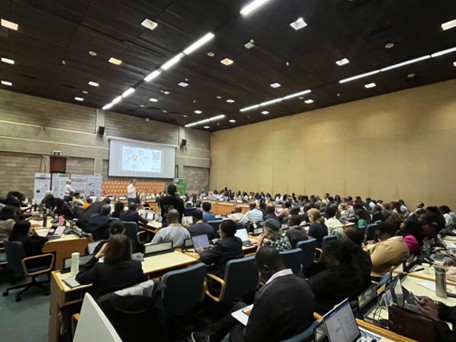
The team also contributed to discussions at the Africa-Wide Agricultural Extension Week, organised by the African Forum for Agricultural Advisory Services (AFAAS), where stakeholders explored strategies for scaling participatory climate services across the continent.
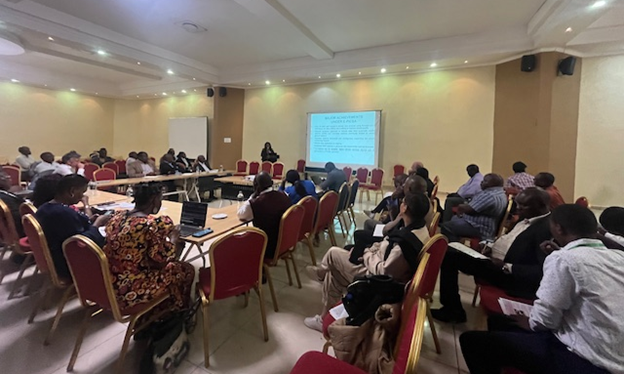
The event’s communiqué recognised E-PICSA as a recommended approach for integrating climate services into agricultural extension systems in Africa.
Testing new ways to reach farmers
Looking ahead, the team is exploring new ways to deliver PICSA tools directly to farmers.
In early 2026, researchers Rieko Shibata and Amanda Caine followed up with smallholder farmers in Zambia who had been trained using a direct-to-farmer version of the E-PICSA app ahead of the latest agricultural season.
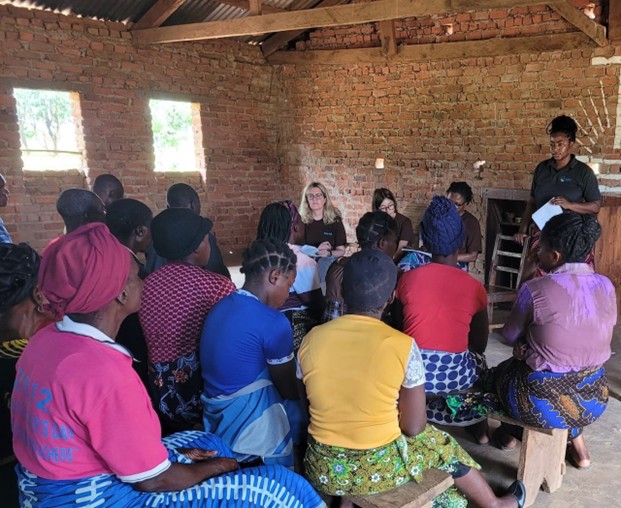
This monitoring study is helping the team understand whether digital tools can complement current extension systems by enabling farmers to access climate inormation independently.
Supporting climate-informed farming decisions
The continued development and expansion of PICSA and E-PICSA demonstrate how research partnerships can translate climate science into practical tools that support strategic and everyday decisions on farms.
By combining data, training and local knowledge, the approach is helping farmers move from uncertainty to informed planning, strengthening resilience one season at a time.