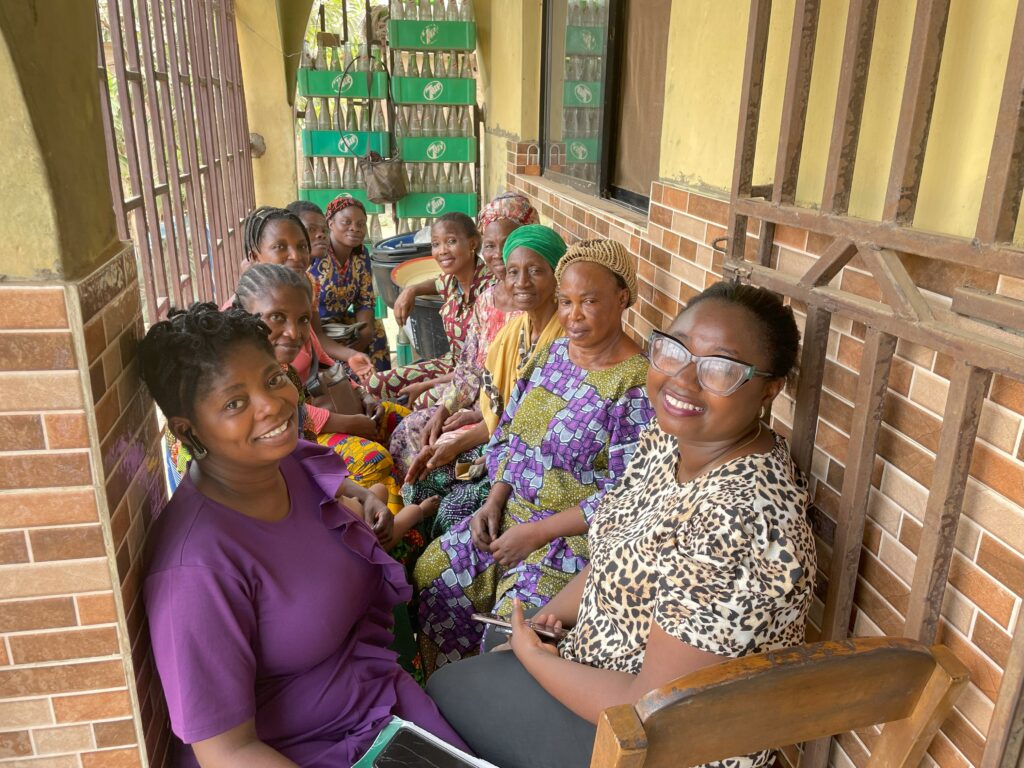
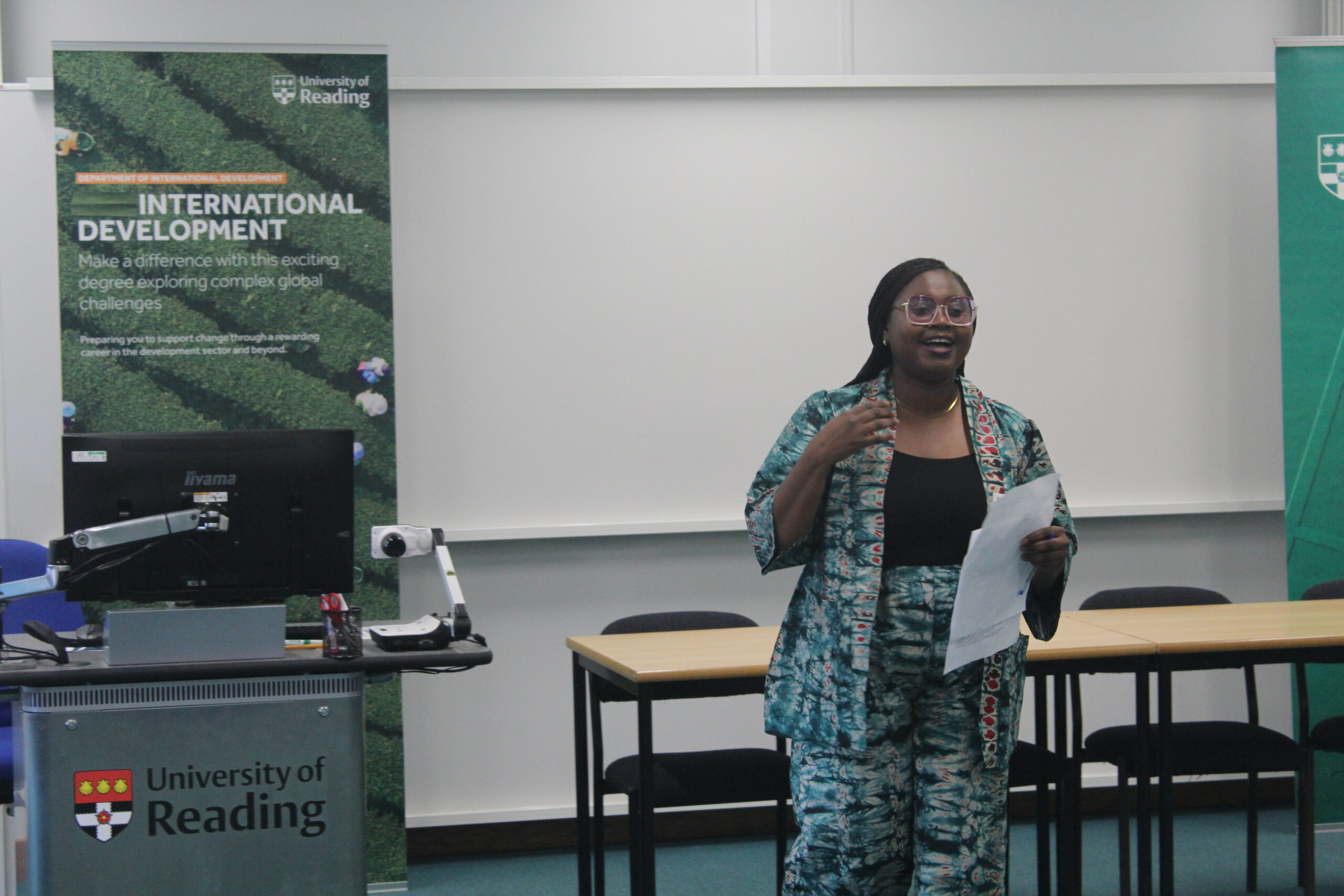
University of Reading PhD Scholar Abiola Oyeboade Ayodeji explores how household power relations shape food access and security in rural farming communities.
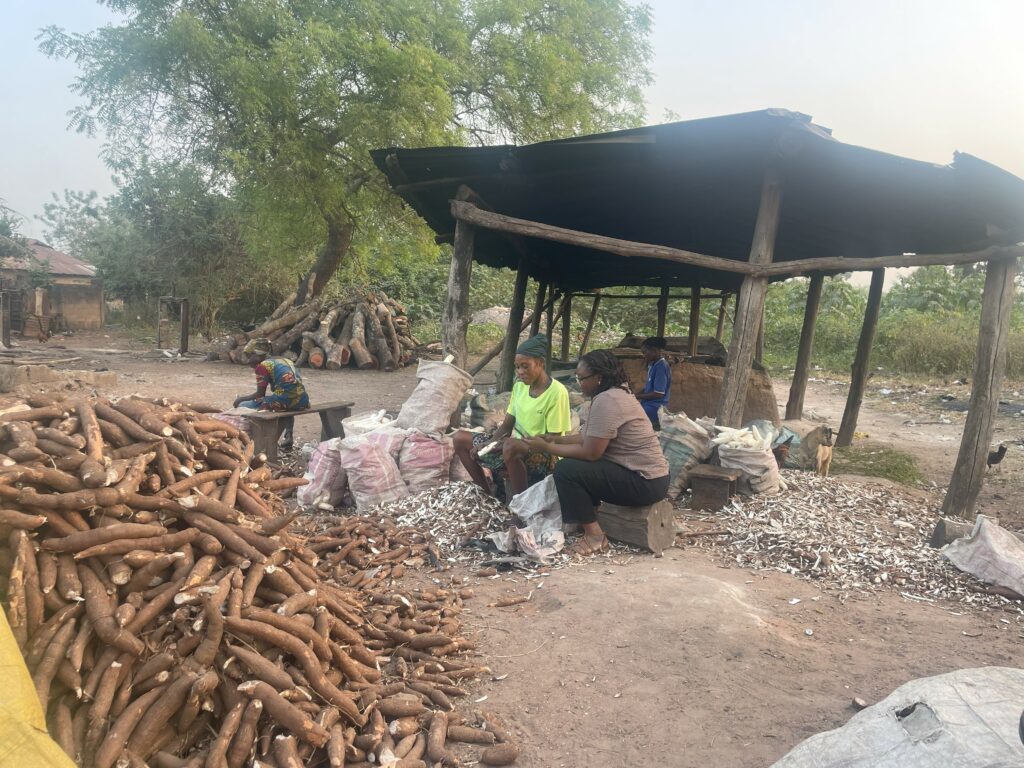
When Abiola Oyeboade Ayodeji began her academic journey in Agriculture, she believed the path to ending hunger lay in improving food production. Growing up in a small town in South-west Nigeria, she was determined to help address the hunger she had witnessed firsthand. However, she soon realised that the problem wasn’t just about how much food was grown, it was about who had access to it and who made the decisions at home.
Now a third-year PhD Scholar in International and Rural Development funded by the Commonwealth Scholarship Commission at the University of Reading, Abiola researches the silent, often overlooked gender dynamics within rural households that influence food access, control, and consumption, especially for women. Abiola began her PhD studies in 2022 and is expected to complete it by next year.
“Many development programmes fail because they overlook the power structures that exist within homes,” Abiola explains. “We must look beyond increasing yields to understand how gender roles and decision-making affect food security, she explains.
Abiola’s research focuses on ‘intrahousehold gender dynamics’ in South-West Nigeria, a region where agriculture remains the primary source of livelihood. Her work examines the disparities in decision-making, resource allocation, gender roles, and bargaining power between men and women in farming households, and how these differences impact food security outcomes.
A significant part of her study also examines gendered food consumption patterns, investigating whether men and women have equal access to food in the same household. This inquiry builds on her master’s research at the University of Exeter, where she explored the effects of women’s empowerment in agriculture on household food security in rural households in Oyo State, Nigeria. That early research sparked a deeper question: what happens within the household when women are empowered?
“This is what ultimately led me to focus my PhD research on the intersection of gender dynamics and food security in rural Nigeria,” she explains.
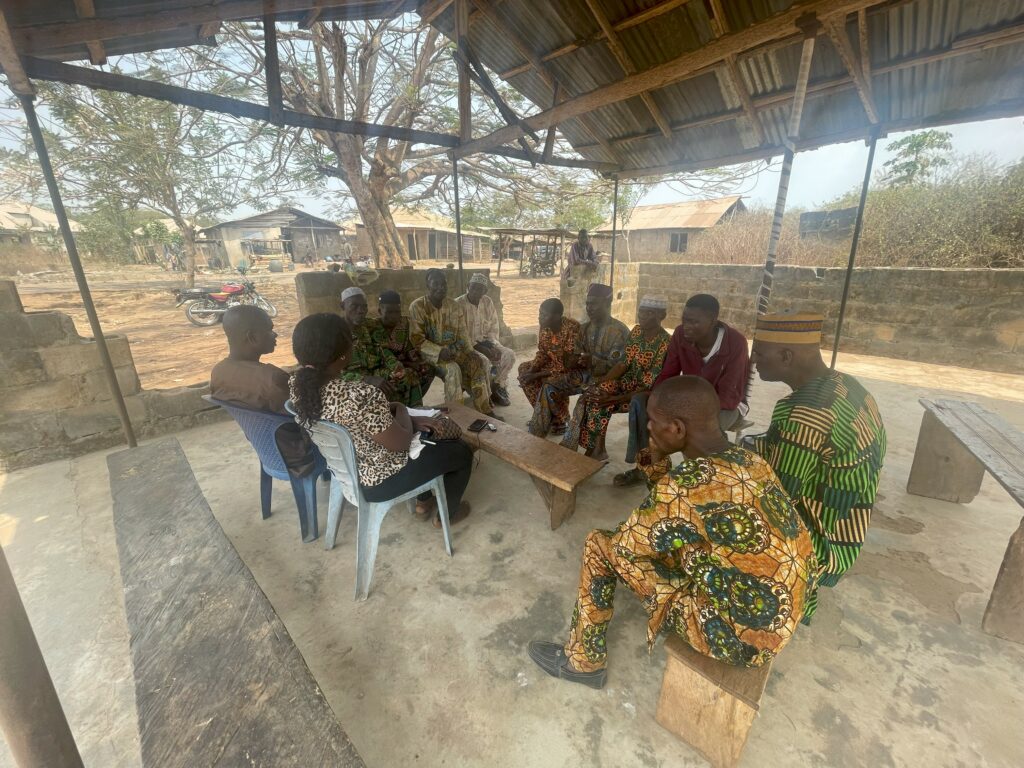
Before diving into her PhD, Abiola worked as a lecturer at the Federal University of Agriculture, Abeokuta, in Nigeria, where she taught students in agricultural administration modules and supervised final-year students’ projects. Her professional journey also took her to Rome, Italy, where she joined the Food and Agriculture Organisation (FAO) of the United Nations headquarters as an Intern to support the global response to Fall Armyworm, a pest which threatens food systems across Africa.
She also worked with the Monitoring and Evaluation team that produced the Project Completion Report for the African Development Bank’s $40 million Technologies for African Agricultural Transformation (TAAT I) project, contributing to performance tracking across 36 African countries.
These experiences, Abiola says, sharpened her understanding of how gender and institutional structures influence development success.
After months in the field gathering quantitative and qualitative data from over 570 households across 36 rural villages, Abiola is now deep into analysis. But her work doesn’t stop at the data.
In June, Abiola presented her findings at several academic events, including the prestigious Development Studies Association Conference at the University of Bath and the University of Reading Doctoral Research Conference, where she creatively used a food tray to simulate gendered eating patterns, earning her the People’s Choice Award for Research Object category.
“Data is powerful,” she says. “But when you translate it into everyday experiences, like how food is shared at dinner, it connects emotionally and brings new understanding.”
For Abiola, the goal is not just to publish, it’s to influence. She plans to use her research to inform gender-responsive policies by engaging ministries, NGOs, and local institutions. Policy briefs and stakeholder dialogues are already underway.
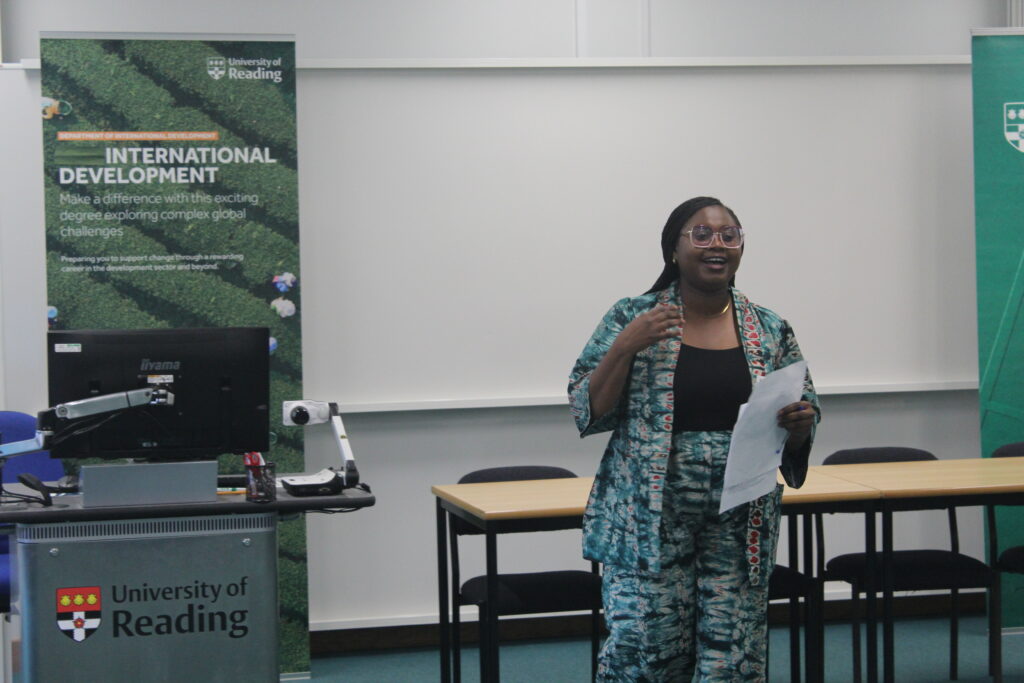
She also wants to take her findings back to the rural communities that participated in her study.
“This feedback loop is crucial. I want the people who shared their stories with me to see how their voices are shaping change and hopefully, their own futures too.”
Abiola’s passion is deeply personal. As a child, she witnessed families in her hometown struggling with food insecurity, especially women who often bore the brunt of sacrifice in silence. Her curiosity about those early experiences has evolved into a lifelong mission to uncover and address the structural causes of gender-based food insecurity.
Through her research, she has uncovered some key insights: households with shared decision-making tend to be more food secure, and rural men are increasingly outsourcing traditionally assigned tasks (e.g., land clearing, preparing, harvesting), while women’s traditionally assigned roles (crop processing, sales, domestic duties) remain unchanged. Perhaps most importantly, she has found that male inclusion is essential for women’s empowerment to be effective in contexts where cultural and religious norms require male approval.
Looking ahead, Abiola hopes to bridge the gap between research and action, advocating for sustainable policies that empower women, engage men, and build resilient rural food systems. She envisions a career at the intersection of research, advocacy, and capacity building.
“Development that ignores gendered power relations is like building a house on sand. It might look good at first, but it won’t last. If we want real, sustainable change, we must start at the roots within households”, she explains.
With a sharp mind, a compassionate heart, and a commitment to amplifying often-ignored voices, Abiola Oyeboade Ayodeji is redefining what it means to fight hunger, not only with tools in the field, but with truth, evidence, and empathy.
Abiola is especially thankful for the support and guidance of her supervisors Dr Andrew Ainslie and Professor Uma Kambhampati.”Their expert advice,encouragement and belief in my work have made a big difference on this journey,” she says.
She is also grateful to the Commonwealth Scholarship Commission for funding her doctoral research.