Fintech is often celebrated as a powerful tool for financial inclusion, particularly in countries with large unbanked populations, such as Indonesia. In this blog, PhD in International Development student Aria Widyanto shares insights into his research, which critically looks at how digital technology, particularly fintech, contributes to the empowerment of women and micro, small, and medium-sized enterprises (MSMEs) in Indonesia.
Beyond Access: Rethinking How Fintech Empowers Rural Women in Indonesia
Having worked for more than 15 years at the intersection of technology, finance, and development, I was motivated by a clear purpose: to expand access to financial services for women who run micro and small enterprises in rural Indonesia. My professional journey has been shaped by a deep commitment to improving women’s financial well-being and economic resilience, work that now directly informs my academic research.
Alongside my professional career, I am pursuing a part-time PhD in International Development at the Department of International Development, School of Agriculture, Policy and Development, University of Reading. Currently in my fourth year, my research explores a critical and timely question: How does digital technology, particularly fintech, contribute to the empowerment of women and micro, small, and medium-sized enterprises (MSMEs) in Indonesia?
Looking Beyond Access
Fintech is often celebrated as a powerful tool for financial inclusion, particularly in countries with large unbanked populations, such as Indonesia. Mobile payments, digital credit, and online marketplaces have opened new possibilities for rural entrepreneurs. Hence, my research challenges a common assumption that access to technology automatically leads to empowerment.
Drawing on my vast experience, I have witnessed how digital tools sometimes fail to deliver meaningful benefits to women entrepreneurs. Access alone is not enough because, without considering users’ behaviour, readiness, and context, technology may fall short of its empowering potential.
My research places women’s lived experiences at the centre, seeking to understand what empowerment truly means to them. Early findings reveal that empowerment is not a one-size-fits-all concept. Instead, it varies widely across communities, and even among individuals within the same village. Using the socio-ecological model, my study examines empowerment across multiple layers of influence. Family expectations, peer networks, community norms, and broader institutional structures all play a role in shaping how women adopt and use digital technology. The outcomes are different, some women can leverage technology to expand their businesses and improve their financial security, while others struggle to move beyond basic or occasional use. These differences directly affect women’s ability to build capabilities, confidence, and long-term economic well-being. Effective use of technology, not just access, is what makes the difference.
Fieldwork on the Frontlines
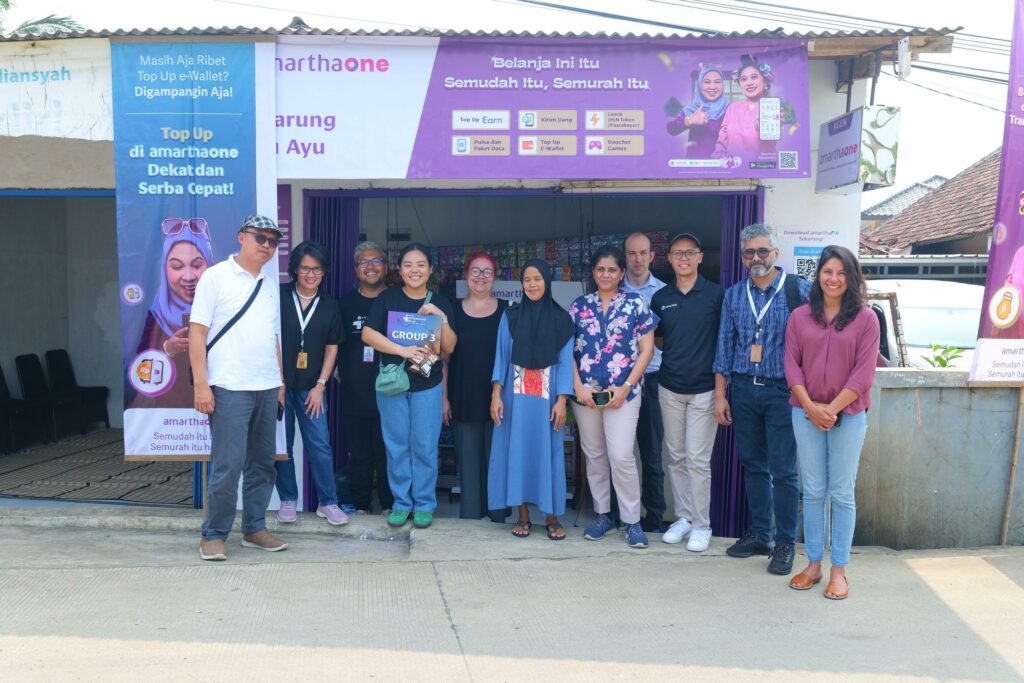
Conducting research in rural Indonesia comes with its own set of challenges. Geographical distance, limited connectivity, and complex logistics require patience and adaptability. Fieldwork often means aligning research activities with local rhythms, harvest cycles, market days, and community events, while navigating infrastructure constraints.
Despite these challenges, the work has been deeply rewarding. Engaging directly with women entrepreneurs has reinforced the importance of designing interventions that are grounded in reality rather than assumptions. Although the research is still ongoing, it is already laying the foundation for more tailored and impactful interventions.
A Vision for Inclusive Digital Development
I envision digital technology that is genuinely inclusive, especially for rural communities and low- to middle-income households. By expanding access and supporting effective use, I hope to help reduce economic gaps between rural and urban populations. I also believe digital tools can help narrow gender gaps, enabling women to thrive when they receive not only access to technology but also the supportive interventions necessary to use it effectively.
By bridging research and practice, my work aims to influence how governments, private-sector actors, and development organisations design digital financial solutions, ensuring that technological innovation translates into meaningful, sustainable empowerment.
Lastly, I would like to thank my supervisors, Professor Sarah Cardey and Dr Amanda Caine, for their guidance and support throughout my doctoral journey. They have been very instrumental in shaping both my research and my professional growth.