
By Hannah Newton (hyperlink: https://www.linkedin.com/in/hannah-newton-6a96713a8/)

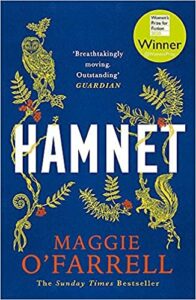
Maggie O’Farrell’s bestselling book, Hamnet, and its BAFTA-winning 2026 film adaptation, bring to life with heartbreaking poignancy what it was like to nurse a child through a fatal illness in early modern England.[i] The story pivots around the sudden sickness and death of William Shakespeare’s eleven-year-old son Hamnet in 1596, a real event that some believe may have been the inspiration behind the tragedy, Hamlet.[ii]
Traditionally it’s been assumed that early modern parents didn’t show a great deal of concern when their offspring were unwell, nor did they grieve deeply upon their early deaths. Aware that childhood was a dangerous time, parents are said to have protected themselves from searing sorrow by remaining emotionally distant from their children.[iii] O’Farrell’s book challenges these ideas, portraying the intensity of parental love, care and grief in early modern England.
This blog draws on historical memoirs, letters, eulogies and other sources to show that the imagined experience of Shakespeare’s family closely resembles what many parents endured during fatal illness in the early modern period (c.1580-1720). I discuss three areas of similarity before turning to one significant point of difference.
1) Exhausting care
Tending a sick child is portrayed in Hamnet as exhausting and all-consuming. In the novel, Hamnet’s twin sister Judith falls ill first. It is chiefly the twins’ mother, Agnes Shakespeare, who looks after the children. She sits day and night at Judith’s bedside: she ‘will not rise, she will not eat, she will not sleep or rest’, and eventually slumbers at the girl’s bedside. When Hamnet falls ill, and Judith makes an unexpected recovery, the mother ‘does not leave his side. She ‘swabs his brow, his limbs, with a damp cloth’.
Early modern sources indicate that round-the-clock nursing was a normal part of parenting in this period. When Elizabeth Walker’s thirteen-year-old daughter fell into a ‘great Fit of sickness’ in 1671, she recorded, ‘In the whole time of her sickness I was not from her but one night, not being well’.[iv] Upon returning to her daughter’s bedside, the girl ‘was very glad when she saw me again’, clearly appreciating her mother’s presence. Fathers as well as mothers nursed their sick children. In the 1680s, eight-year-old Sarah Camm, ill with smallpox, ‘lay…in her Fathers arms’, and thanked him for taking ‘great pains with me in my Sickness’.[v] Thomas Brockbank from Lancashire was so ‘overcome for want of sleep’ from nursing his son in 1687 that he laid his ‘head on the [child’s] bed’ and let ‘sleep come upon me’.[vi] Such entries reveal the physical toll of nursing a sick child, and the vigilance of both maternal and paternal care.
Watching at the bedside was only one part of the labour involved in caring for a sick child. Parents were also responsible for preparing and administering medicines and foods. In Hamnet, Agnes gives her son a purgative, as well as ‘jelly of rosemary and mint’, and a poultice made of boiled milk and bread, which she had also used for her daughter Judith. Household recipe books and diaries show this role was widespread in the early modern period, especially for mothers. Jane Josselin from Essex provided 73 percent of the medicines mentioned in her husband’s diary in the mid-17th century. Sometimes fathers also administered treatments. The gentleman Ralph Verney from Buckinghamshire laid ‘a thick plaster’ to the ear of his seven-year-old daughter Peg in 1647, which was made from milk, grated bread, egg yolk, and saffron.[vii] Thus, like Agnes in Hamnet, early modern parents were deeply involved in both the nursing and treatment of their ill children, a responsibility that demanded constant attention, practical skill, and physical endurance.
2) Sensing sickness and death
A second point of resonance between Hamnet and early modern accounts of childhood illness and death lies in the sensory experience of the sickroom. Agnes realises the danger of her daughter’s condition through eyesight and touch: her ‘eye falls on the swelling at Judith’s neck…She reaches out and touches it gently…It feels damp and watery, like marshy ground’. The swellings or buboes ‘are what people most dread’, and ‘occupy such a potent place in everyone’s fears that she cannot quite believe she is actually seeing them’. At this sight, the mother’s heart ‘gives a great thud in her chest’, like ‘an animal hurling itself against its cage of bones’. Judith has contracted the bubonic plague.
Hamnet develops buboes as well. Through touch, sight, and movement, Agnes perceives the extent of his suffering – his body ‘is in a place of torture, of hell’: she holds his ‘shivering body’ and feels the ‘buboes swell tighter and tighter’. She watches his body writhe, buckle, and strain, and supports him by the shoulders, ‘by the chest, to keep him still’. There is even an imagined (or real) olfactory dimension: as death approaches, a ‘musty, dank, salty smell’ fills the room. It is all too much for Hamnet’s older sister Susanna: she ‘presses fierce fists to her eyes. She cannot look any more; she cannot bear it…her hands [are] over her ears’. Finally, death itself is experienced as the sudden termination of sensory stimuli: ‘All at once he stops shaking and a great soundlessness falls over the room’.
Early modern accounts of illness describe similar sensory experiences. A journal of the plague year, published in the early eighteenth-century, describes one mother’s imagined reaction to the sight of the buboes on her daughter’s body: ‘looking upon her body with a candle, immediately [she] discovered the fatal tokens’, the buboes, on her thighs. In terror, this mother ‘threw down her candle and shrieked out in such a frightful manner that it was enough to place horror upon the stoutest heart in the world’.[viii] The girl died two hours later. This account shows how a parent’s own exclamations and gestures add to the sensory intensity of the sickroom.
The most ubiquitous sensations from the sickroom were the cries and groans of the suffering child. In 1652, eleven-year-old Martha Hatfield contracted a disease of the spleen: her ‘doleful cries’ filled the ‘ears of her dear relations’ with ‘extreme sadness’, and were ‘very grievous and afflictive to the spirits of all that heard her’.[ix] During the illness of his baby daughter Mary a few years later, Isaac Archer bewailed, ‘Oh what a grief it was to me to hear it groan, to see it’s [sic] sprightly eyes turn to me for help in vain!’[x] These parents felt as though their child’s cries pierced their hearts, eliciting anguish. This idea was meant literally as well as metaphorically: Jennifer McDermott has shown that anatomists considered the recently discovered Eustachian tube as a direct link between the ear and the heart, the seat of the emotions.[xi]
As well as sensing the child’s suffering, parents sensed the signs of death. Philip Henry recorded the ‘intermittent pulse, blackness of nails’ and ‘shortness of breath’ of his five-year-old son John, acknowledging that these were amongst the ‘many symptoms of Death’ perceptible to his senses.[xii] So upsetting were these sensations, they sometimes became forever seared on the parent’s memory. ‘Remember dying looks and parting sigh’, bewailed the doctor James Clegg at the death of his twelve-year-old daughter Margaret in 1723.[xiii] This initial grief was often expressed through tears rather than words: when John Vernon from London observed his twelve-year-old son’s ‘alteration in countenance’, he ‘gushed out into tears’, sensing that death was imminent.[xiv] Thus, like Agnes in Hamnet, early modern parents experienced the illness and death of a child through a flood of sensory impressions.
3) Distracted grief
For Agnes, grief starts even before Hamnet dies, as she begins to lose hope of his recovery. She feels ‘her hope for him begin to leak from her, like water from a punctured bucket’. Such a description would have made sense to early modern people, since the emotions – known as ‘passions’ – were envisaged as powerful liquids, which gushed around the body, and could exit via the eyes in tears.[xv] Personal memoirs reveal that mothers and fathers also felt this loss of hope – they depicted a battle in their hearts ‘betwixt hope & fear’, with the latter passion gradually gaining ascendency.[xvi]
When death finally arrived, Agnes feels disbelief and incomprehension: ‘This cannot happen, it cannot, how will we live, what will we do…how can we continue’. The three words – ‘he is dead’ – ‘contain no sense for her. She cannot bend her mind to their meaning’. Upon seeing Judith ‘racked with grief’, Agnes weeps: her tears ‘fill her eyes without warning, blur her vision, pouring forth to run down her face…Her whole being longs for, grieves for her son’. She cannot speak, does not seem to hear others talking to her, and sits deadly still, hardly breathing. In the days that follow, Agnes is described as ‘broken into pieces, crumbled and scattered around’. She is emotional all the time, and will ‘weep if she cannot find a shoe or overboils the soup’. She no longer derives any pleasure from the things that used to interest her, and she sees no point in cooking or cleaning. As time passes, Agnes begins to function again, but it is clear that Agnes will never be the same again: she is ‘utterly changed’, and will forever mourn her son.
Turning to our historical sources, Agnes’ experience echoes the reactions of many early modern parents. The term used by contemporaries to describe early grief was ‘distraction’: it meant the breaking up of the mind, and was characterised by periods of delirium, weeping, and shaking.[xvii] When Simonds D’Ewes’ baby son ‘had given up the ghost’, he ‘could not refrain from many tears, sighs and mournings’, while his wife ‘fell a-shaking, and scarce being able to speak in respect of the abundance of tears that issued from her intermixed with many sobs’.[xviii] Like Agnes, grief-stricken parents often found it difficult to speak, think, or engage in any activity. Recounting her own reaction to the death of her seven-year-old daughter Peg, Mary Verney told her husband, ‘I was in soe much affliction…that I was not in a condition to write or do anything else, and truly at present I am soe weak that I am scares able to go up and down in my chamber’.[xix] Contemporaries were familiar with the debilitating nature of grief – they attributed it to the fact that ‘all the powers of the soul’ are ‘busied in the functions’ of this passion, so that the soul ‘cannot attend anything else’.[xx]
Over time, grieving was believed to have an ageing effect. Three years after the death of their son John Brockbank, his parents were still ‘mightily broke’: the grandfather informed John’s brother ‘you would scarce know [i.e. recognise] your dear Mother if You saw her’.[xxi] Sometimes, parents felt they would never be entirely free from sadness: speaking of her grieving sister, Ann Fanshawe wrote, ‘she never much enjoyed herself [again] since the death of her eldest daughter’.[xxii] Fathers’ grief could be equally enduring. ‘Here ends the joy of my life, & for which I go even mourning to the grave’, bewailed John Evelyn after the decease of his five-year-old son Richard in 1658.[xxiii] In this way, Hamnet captures something familiar to early modern parents: the death of a child could produce a state of distraction, in which grief overwhelmed the mind, disrupted everyday life, and lasted for years to come.
Area of difference: faith
So far, we have seen that the experiences conveyed in Hamnet closely resemble those described in primary sources from the time. However, here I would like to highlight one notable area of difference: religious faith. Early modern society was deeply spiritual, and even those occasionally accused of ‘atheism’ usually retained some belief in an afterlife. Parents confronted with illness commonly turned to God, begging Him to heal their child and give them strength to cope. When death occurred, many found at least some comfort in the conviction that their child had gone to heaven, a place of eternal bliss, where eventually the whole family would be joyfully reunited.[xxiv] Agnes, by contrast, does not appear to pray for Hamnet’s recovery, nor does she derive any consolation from the possibility of heavenly reunion. The novel’s portrayal of grief is therefore strikingly secular, presenting the loss of a child as an almost entirely earthly experience. Of course, the surviving sources from the early modern period are often religious in character, and they may therefore over-emphasise spiritual responses. Yet taken together, the sources suggest that O’Farrell’s depiction of parental experiences is rather bleaker than the one which emerges from early modern accounts.
In short, Hamnet captures many of the physical and emotional realities of childhood illness in the early modern household, yet its striking absence of religious consolation reminds us that the past interpreted suffering through a far more explicitly spiritual lens.
[i] Maggie O’Farrell, Hamnet (London, 2020).
[ii] Stephen Greenblatt, ‘The Death of Hamnet and the Making of Hamlet’, New York Review of Books, October, 2004.
[iii] This interpretation is most famously associated with Lawrence Stone, The Family, Sex and Marriage in England 1500–1800 (London and New York: 1990, rst publ. 1977).
[iv] Elizabeth Walker, The vertuous wife: or, the holy life of Mrs. Elizabeth Walker, ed. Anthony Walker (London, 1694), 111.
[v] Thomas Camm, The admirable and glorious appearance of the eternal God. . . through a child. . . upon her dying bed (London, 1684), 6.
[vi] Thomas Brockbank, The Diary and Letter Book of the Rev. Thomas Brockbank 1671–1709, ed. Richard Trappes-Lomax, Chetham Society New Series, vol. 89 (Manchester, 1930), 5-7.
[vii] Frances Parthenope Verney and Margaret M. Verney (eds), The Verney Memoirs, 1600–1659, vol. 1 (1925, first publ. 1892), 376.
[viii] H.F., A journal of the plague year (London, 1722), 67-8.
[ix] James Fisher, The wise virgin, or, a wonderfull narration of the hand of God (London, 1653), 138-41.
[x] Isaac Archer, Two East Anglian Diaries 1641–1729, ed. Matthew J. Storey, Suffolk Record Society, vol. 36 (Woodbridge, 1994), 120.
[xi] Jennifer Rae McDermott, ‘“The Melodie of Heaven”: Sermonizing the Open Ear in Early Modern England’, in Wietse De Boer and Christine Gottler (eds.), Religion and the Senses in Early Modern Europe (Leiden, 2012), 177–97.
[xii] Philip Henry, The Diaries and Letters of Philip Henry of Broad Oak, Flintshire, A. D. 1631–1696, ed. M. H. Lee (1882), 198.
[xiii] James Clegg, The Diary of James Clegg of Chapel-en-Frith 1708–1755, vol. 1 (1708–36), ed. Vanessa S. Doe, Derbyshire Record Society, vol. 5 (Matlock,1978), 20.
[xiv] John Vernon, The compleat choller; or, a relation of the life, and latter-end especially, of Caleb Vernon (London, 1666), 73.
[xv] See for example, Gail Kern Paster, Humoring the Body: Emotions and the Shakespearean Stage (Chicago, 2004), 17
[xvi] See Hannah Newton, The Sick Child in Early Modern England (Oxford, 2012), 138.
[xvii] Newton, The Sick Child, 139-40.
[xviii] Simonds D’Ewes, The Autobiography and Correspondence of Sir Simonds D’Ewes, Bart., ed. J. O. Halliwell, 2 vols (1845), vol. 2, 45–6, 147.
[xix] Verney (ed.), The Verney Memoirs, vol. 1, 144.
[xx] Francois Coeffeteau, A table of humane passions (London, 1621), 330-1.
[xxi] Brockbank, The Diary, 12.
[xxii] Ann Fanshawe, Memoirs of Lady Fanshawe, ed. Richard Fanshawe (1829), 303,
[xxiii] John Evelyn, John Evelyn’s Diary: A Selection, ed. Philip Francis (1963), 388.
[xxiv] On the hope from prayer, see Newton, The Sick Child, 95-7, 111, 113-15; on comfort from belief in heavenly reunion see, the same book, 152-4.