
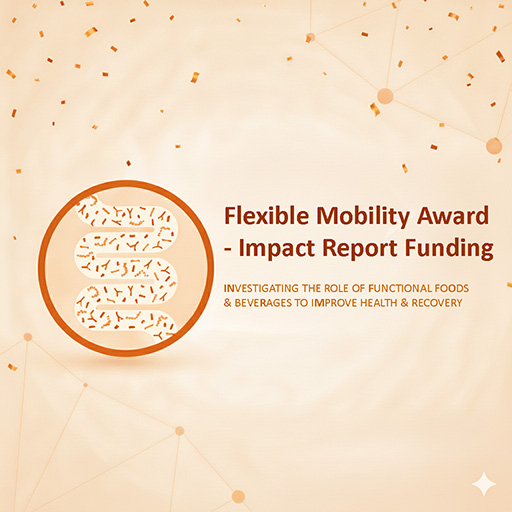
INFORM are delighted to announce the funding award for an FMA Impact Report “The role of the Gut Microbiome in Cognition & Dementia risk“, led by Dr Harry Jarrett, Head of Science & Research, Heights.
Project Team:
Dr Harry Jarrett – Heights (PI)
Dr Catherine Hughes – NICHE, Ulster University
Dr Ryan McNally – Kings College London
Ms Sophie Medlin – City Dieticians
Ms Lisa Holton – Heights
This project focuses on Dementia, a progressive cognitive disorder affecting nearly 982,000 people in the UK. With one in three individuals expected to develop Dementia and 45% of cases considered potentially preventable, the proposal highlights the urgent need for strategies that target modifiable risk factors.
A key area of interest is the age-related decline in gut microbiome diversity, which has been linked to poorer cognitive outcomes and increased Dementia risk. The project also addresses the heightened vulnerability of women due to menopause-related hormonal changes that further reduce microbiome diversity.
The project aims to:
-
Conduct a comprehensive systematic review and meta-analysis of randomised controlled trials assessing the impact of gut-modulating products (probiotics, prebiotics, synbiotics) on cognitive function.
-
Examine subgroup differences, including age, sex, ethnicity, health status, and disease state.
-
Investigate the relationship between the gut microbiome, oestrogen concentrations, and cognition, with a specific focus on female Dementia risk.
-
Develop an accessible impact document summarising current evidence for healthcare providers and policymakers.
-
Produce two peer-reviewed publications to advance academic knowledge.
-
Estimate economic savings using health-economic modelling to evaluate how gut-modulating interventions could reduce the national Dementia burden.
Potential Impact:
The project has the potential to advance understanding of how gut-modulating products support cognitive health and reduce Dementia risk, with particular relevance for women’s brain health during and after menopause.
Its accessible impact report will help inform policy and clinical practice, while fostering stronger collaboration between academic, clinical, and industry partners.
By modelling potential cost savings to the UK health and social care system, the project also provides important economic insights. Additionally, the findings will assist the development of future gut-brain health interventions aimed at improving wellbeing across the population.
The project will run from June through to the end of 2025.
 |
 |
 |
 |