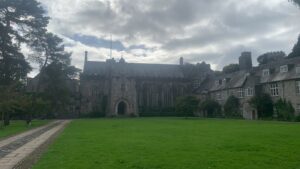
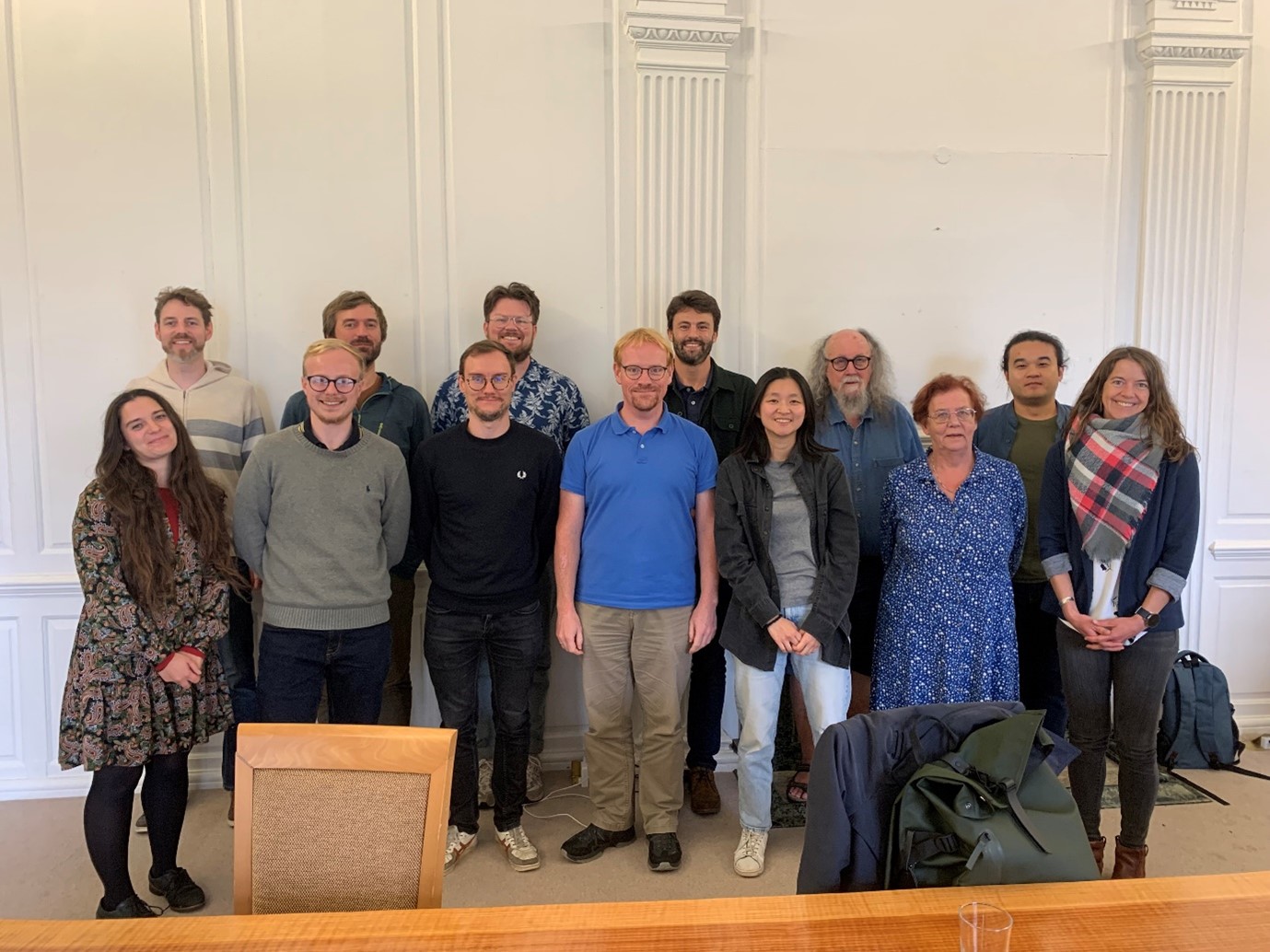

The IMFIREDUP (Improved Modelling of FIRE: Development, Understanding and Prediction) consortium came together once again in September 2025 (see here for the blog on our original meeting last year) for a workshop funded by the LEMONTREE project. The meeting brought together researchers from across the wildfire modelling community for three days of presentations, discussions, and brainstorming sessions. The aim was to share progress, spark new ideas, and push forward collective efforts to better understand and model the complex dynamics of fire.
Day 1 began with a series of presentations and updates from both original, and new, consortium members. We heard from Stijn Hantson on FireMIP updates, providing a jumping-off point to reflect on model performance and intercomparison. Matthias Forkel then shared results from FireMIP 3, followed by Joe Melton on the CLASSIC model (the Canadian Land Surface Scheme with Biogeochemical Cycles), and Ana Bastos on implementing SPITFIRE into QUINCY/ICON-LAND. These talks highlighted important progress in model development and assessment. Later, we heard about various option to incorporate machine learning and AI into our work with Yuchen Bai presenting work on downscaling short-term wildfire risk, and Andrew Clelland showcasing machine learning approaches for fire forecasting. Lastly, Matt Jones rounded off the day with insights from the State of Wildfires report placing the consortium’s work in the wider context of global fire science and policy.
Day 2 of the workshop was built around four themed sessions, each tackling a key challenge in fire modelling.
- Session 1 (led by Olivia) asked: How do we account for temporal and spatial scale differences in drivers, fires, and impacts? The group explored how factors such as fuel loads and wind operate differently depending on scale, and why getting this right is essential for realistic modelling.
- Session 2 (led by Sandy) turned to the question: How do we incorporate structural biodiversity in a modelling context? Here, the spotlight was on understorey vegetation and fine-scale forest structure. The consensus was clear—capturing the roles of shrubs and small trees is critical for predicting fire behaviour.
- In Session 3, Colin guided a discussion on How do we link fire occurrence, duration, and emissions? VPD (vapour pressure deficit) and wind speed emerged as particularly important drivers for connecting when fires happen, how long they last, and what they emit.
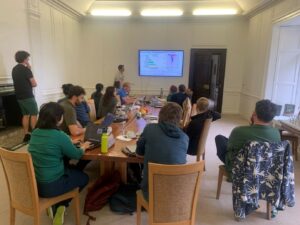
Image 2: Matt Forrest presenting on the existing work on anthropogenic and crop fires. - Finally, Session 4 (led by Matt Forrest) asked: How should we model anthropogenic fires and pre-fire management? Alice introduced her prescribed fire dataset, which new prescribed fire dataset, sparking discussion about how land-cover differences and management practices could be better reflected in models.
Day 3 brought two final sessions and a wrap-up.
- Session 5 (led by Lucas) asked: How can we make best use of climate/fire ensembles? Participants agreed that ensemble approaches are a powerful way to capture both within-model variability and differences across models. Theo Keeping’s North American ensemble analysis provided a great example, showing how distributions from ensembles can help to contextualise “extreme” fire events. What might initially look like outliers may, in fact, fall well within the plausible range once climate variability is properly accounted for.
- Session 6 shifted the focus with the question: How do fire regimes drive plant adaptations? The group discussed how species traits might shift in response to changing fire patterns, and how these dynamics could be incorporated into models. As one case study, the team considered emerging on black spruce in Canada—a species usually associated with moist ecosystems—yet one that shows signs of fire adaptation under drought conditions. This highlighted how real-world plant strategies challenge assumptions and demand more nuanced modelling. The day concluded with a collaborative brainstorming session and allocation of tasks, ensuring that ideas discussed will translate into concrete follow-up work.
Conclusions
This workshop reinforced the strength of the IMFIREDUP community and the value of bringing together diverse perspectives on fire modelling. By combining updates on current model developments with in-depth thematic discussions, the meeting helped identify both challenges and opportunities for future research. Key themes included the importance of scale, biodiversity, and human activities, alongside new tools such as machine learning and ensembles. We are looking forward to seeing the developments across the group and are excited about our collaborations we have established moving forward.
Blog by Sophia Cain