Skip to content
University of Reading logo
  • Home
  • About Us
    • The LEMONTREE team
    • Associated Projects
  • LEMONTREE Research
    • Working Groups
    • Implementation – Challenges
    • Glossary
  • Our Publications
  • Experiments
  • Blogs
  • Events
  • Work with us

Blogs

Filter:

Coordinated leaf trait responses to elevated CO₂: experimental evidence from crop species

Written by
Natalie Sanders
Posted on
5th May 20261st May 2026

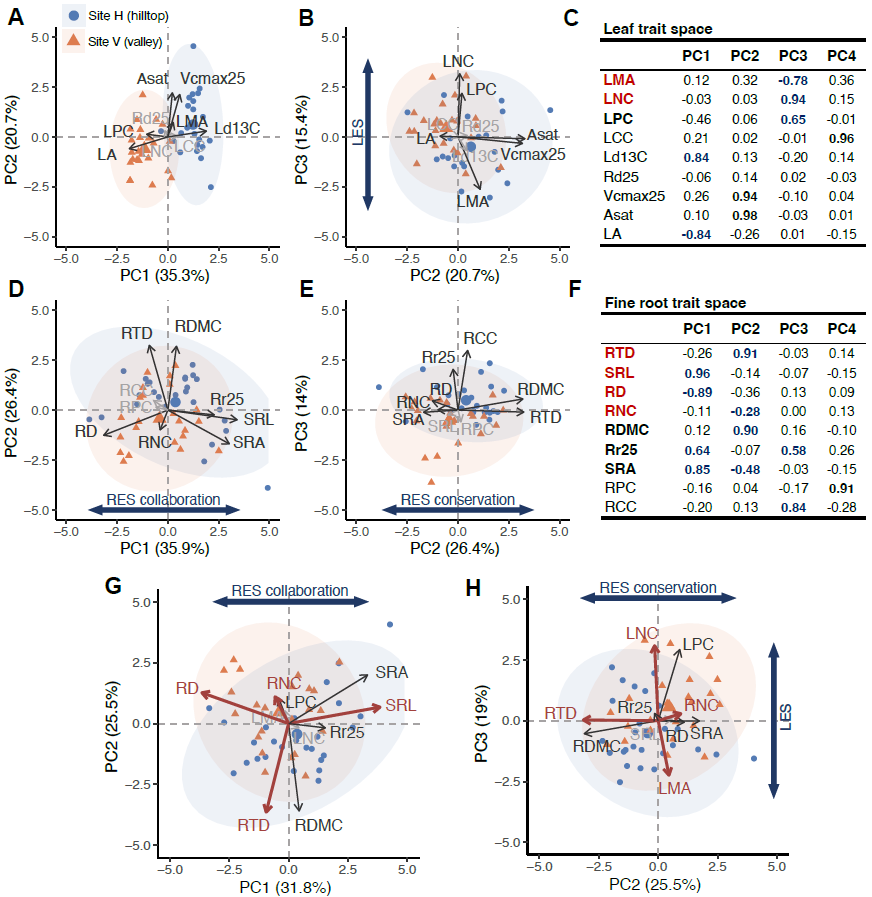
In order to thrive in a changing climate, plants must adapt their physiology. These adjustments are not just about individual traits changing in isolation, plants must balance multiple processes at…Read More >

Coordinated leaf trait responses to elevated CO₂: experimental evidence from crop species

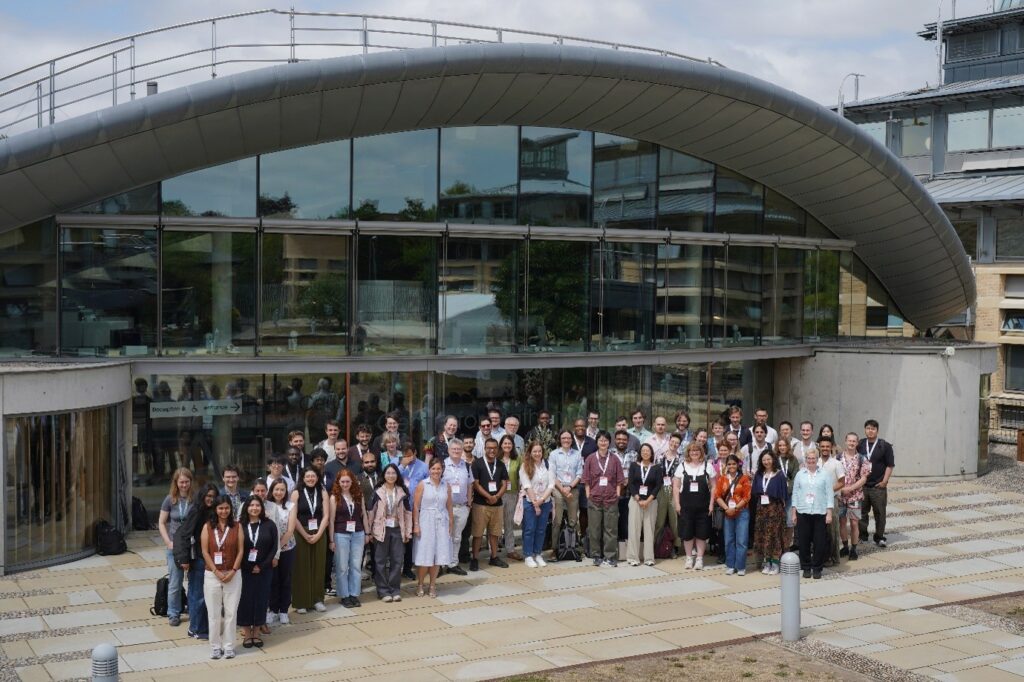
LEMONTREE AT EGU 2026

Written by
Natalie Sanders
Posted on
29th April 2026

It’s almost EGU time — always a highlight of the year! And as always, the conference is set in beautiful Vienna. The team will arrive on Sunday 3rd May for…Read More >

LEMONTREE AT EGU 2026

LEMONTREE Science Meeting: Perspectives on Evapotranspiration

Written by
Natalie Sanders
Posted on
27th April 202624th April 2026

In March’s LEMONTREE science meeting we heard from three Early Career Researchers from our working group E: Ecohydrology on the theme of Evapotranspiration (ET). From theoretical advances in carbon–water coupling,…Read More >

LEMONTREE Science Meeting: Perspectives on Evapotranspiration

Can Changing When We Plant Wheat Help Feed the Future? Insights from Eco-Evolutionary Optimality

Written by
Natalie Sanders
Posted on
20th April 2026

As climate change continues to reshape agriculture, one of the biggest challenges we face is how to sustain crop production under increasingly unpredictable conditions. Wheat, which provides around a fifth…Read More >

Can Changing When We Plant Wheat Help Feed the Future? Insights from Eco-Evolutionary Optimality

A new explanation for how photosynthesis acclimates to warming

Written by
Natalie Sanders
Posted on
14th April 2026

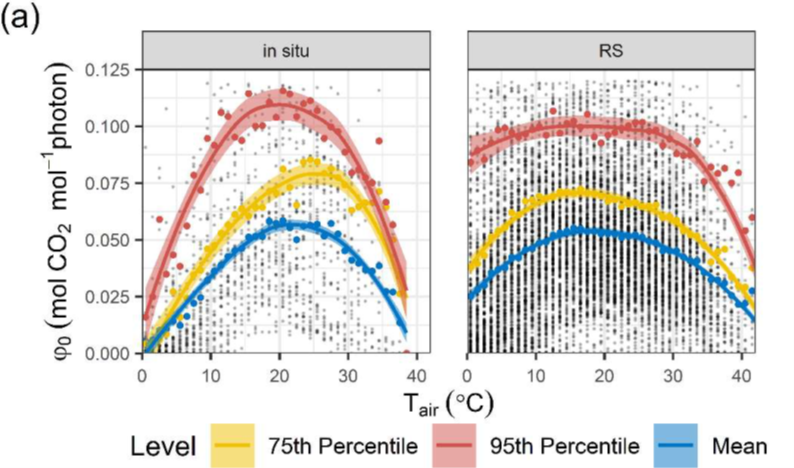
For decades, vegetation models have described photosynthesis using temperature response curves derived from the Farquhar model. These curves typically assume that parameters such as Vcmax and Jmax respond to temperature…Read More >

A new explanation for how photosynthesis acclimates to warming

Plant Respiration: Research Updates from the LEMONTREE Science Meeting (Jan 2026)

Written by
Natalie Sanders
Posted on
23rd February 2026

Plant respiration is a central yet uncertain component of the terrestrial carbon cycle. While photosynthesis has received sustained theoretical and observational attention, how and why plant respiration acclimates to long-term…Read More >

Plant Respiration: Research Updates from the LEMONTREE Science Meeting (Jan 2026)

Wildfires on a changing planet

Written by
Natalie Sanders
Posted on
16th February 202616th February 2026

Wildfires are already transforming ecosystems and societies worldwide. From record-breaking boreal fires to devastating events at the wildland–urban interface, recent years have heightened concern that fire activity will continue to…Read More >

Wildfires on a changing planet

How much of evapotranspiration is actually transpiration?

Written by
Natalie Sanders
Posted on
11th February 2026

Evapotranspiration (E) sits at the centre of the water–energy–carbon relationship. Yet a fundamental question remains unresolved: what fraction of ET is due to plant transpiration? Published estimates of the transpiration…Read More >

How much of evapotranspiration is actually transpiration?

How plants balance water transport and photosynthesis across the globe

Written by
Natalie Sanders
Posted on
30th January 2026

Plants face a fundamental coordination problem: how much carbon to invest in water transport tissues to support a given leaf area. Too little sapwood, and water supply limits photosynthesis; too…Read More >

How plants balance water transport and photosynthesis across the globe

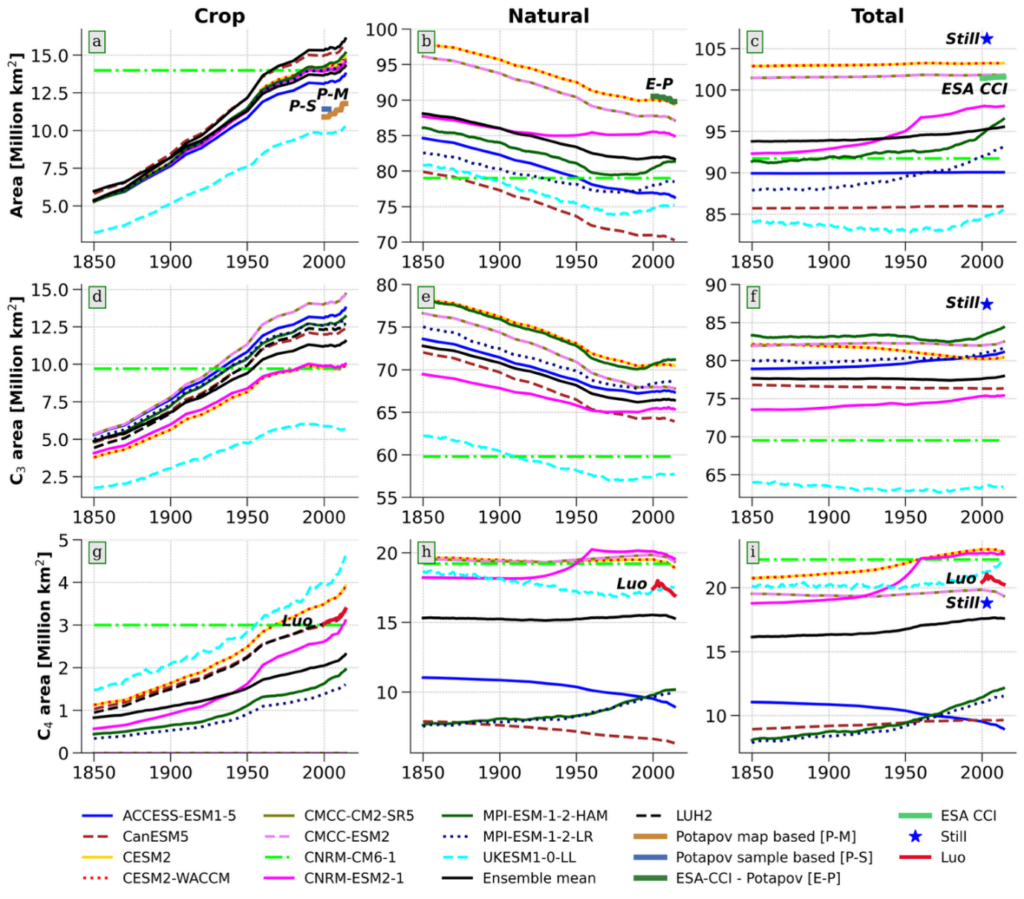
What the global decline in C4 plants means for the carbon cycle and why it doesn’t fully explain atmospheric isotope trends

Written by
Natalie Sanders
Posted on
13th January 202613th January 2026

As atmospheric CO₂ rises, ecosystems around the world respond in complex and sometimes surprising ways. One such response involves the balance between two major types of plants on Earth: C3…Read More >

What the global decline in C4 plants means for the carbon cycle and why it doesn’t fully explain atmospheric isotope trends

Posts navigation

Older posts
© Copyright University of Reading
Facebook YouTube Instagram Twitter

University of Reading cookie policy

We use cookies on reading.ac.uk to improve your experience. You can find out more about our cookie policy.
By continuing to use our site you accept these terms, and are happy for us to use cookies to improve your browsing experience.

Continue using this website