
By Theo Keeping Last month, I attended the first week of COP29 in Baku, Azerbaijan. In format, it was much like other conferences I have been to, but more overwhelming…Read More >
PhD Student


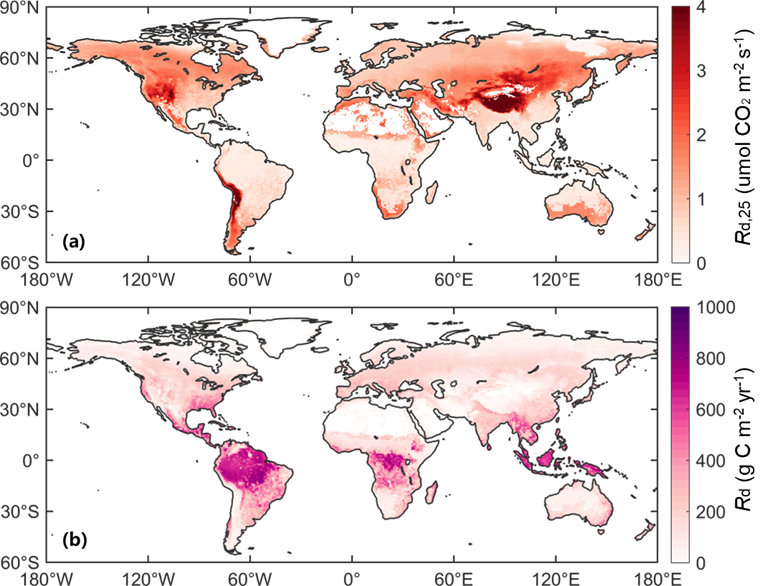
Plant respiration: the role of night-time temperature and Vcmax

Introduction We are excited to share ground-breaking research published in the New Phytologist that explores the intricate world of leaf respiration in plants. This research, led by PhD student Yanghang…Read More >
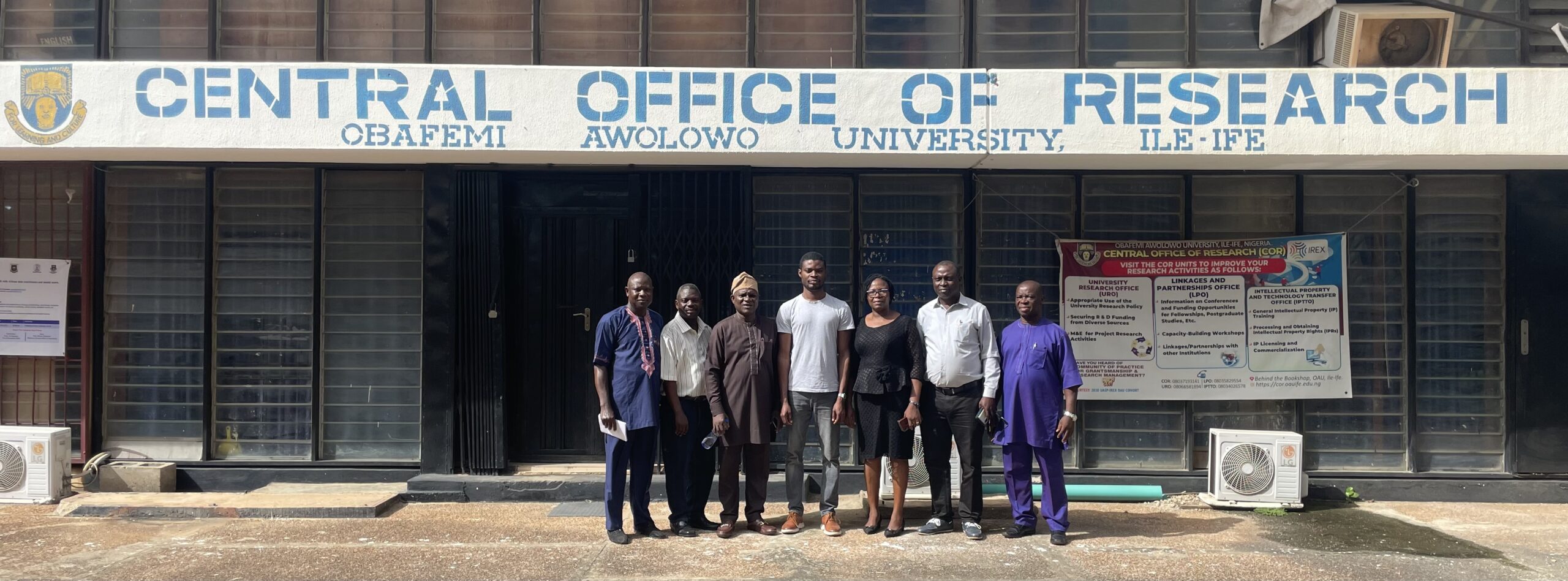
Bridging the gap in terrestrial ecosystem research between the UK and Africa.
By Joseph Ovwemuvwose Introduction The world of scientific research is marked by its desire for data, the lifeblood of knowledge. However, a glaring disparity exists when it comes to data…Read More >
A global function of climatic aridity accounts for soil moisture stress on carbon assimilation. By Giulia Mengoli
Little pores on the leaf surface called stomata regulate the carbon intake and the water loss making these two tightly coupled. Plants assimilate carbon dioxide from the atmosphere to grow…Read More >
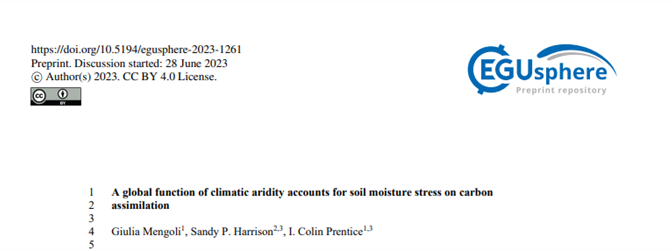
Resprouting in fire-prone ecosystems: Quantifying the connections
A paper titled “Community abundance of resprouting in woody plants reflects fire return time, intensity and type” was recently published in the journal Forests by LEMONTREE’s Yicheng Shen and colleagues….Read More >
Lewei Jin

Lewei Jin is a PhD student in Wang Han’s group at Tsinghua University this year. Lewei is is interested in theoretical ecology and vegetation simulation. She is currently working…Read More >
Wenyao Gan
Wenyao Gan is a PhD student working under the supervision of Sandy Harrison and Pier Luigi Vidale at the University of Reading. Wenyao’s work will focus on implementing eco-evolutional…Read More >
EEO explains the simultaneous greening and browning in the Tibetan Plateau

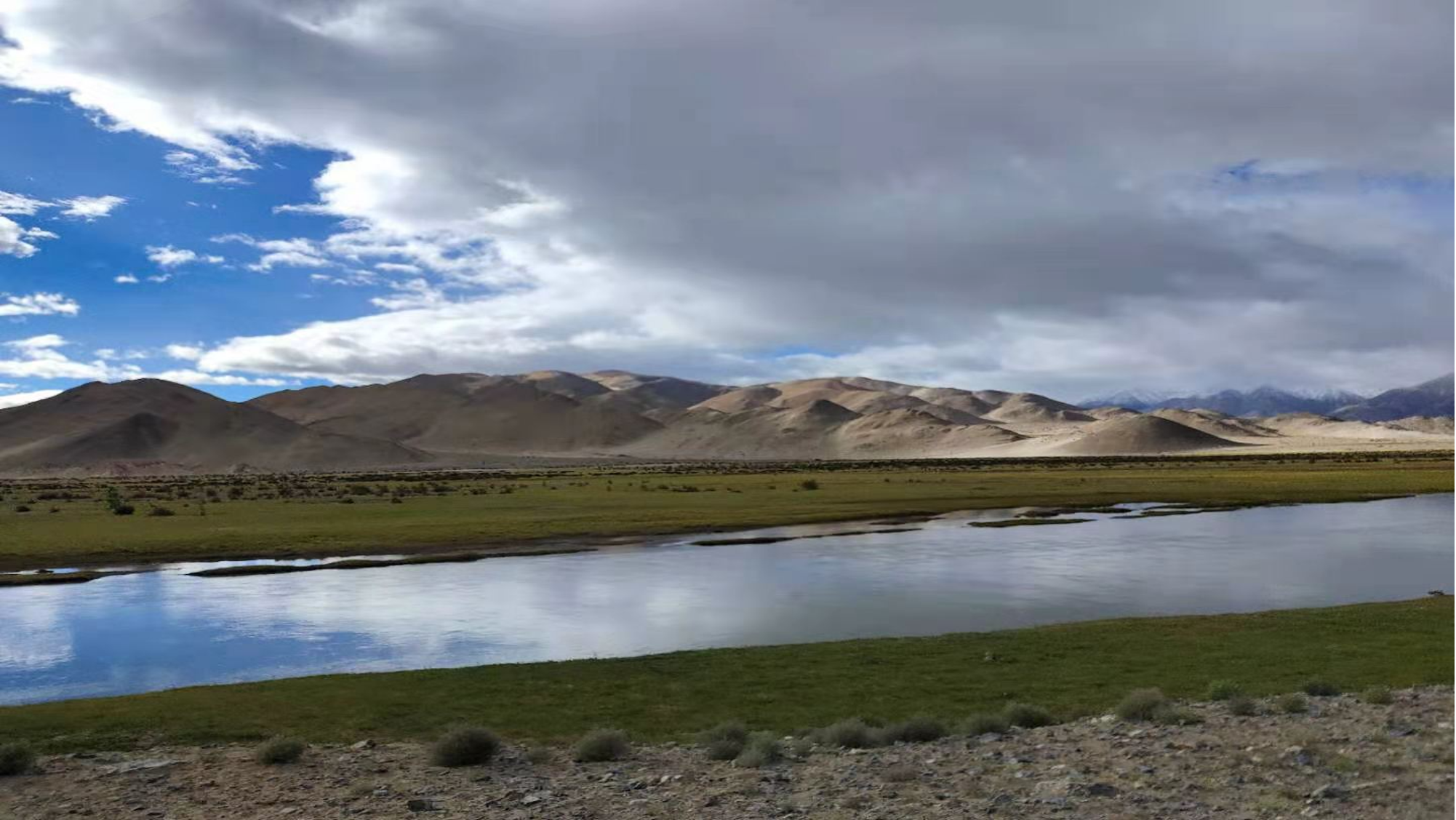
The Qinghai-Tibet Plateau ©Ziqi Zhu. The Tibetan Plateau, also known as the Qinghai-Tibet Plateau, or ‘the roof of the world,’ is a vast plateau that lies between the Himalayan range…Read More >
Award-winning optimality talks at the Ecological Society of China Conference, 2022
On the 21st of September 2022, three members of the LEMONTREE team presented their optimality-based talks at the 21st China Ecology Congress held by the Ecological Society of China. This…Read More >