
By Sophie Cabot, Norwich Young Archaeologists Club Leader
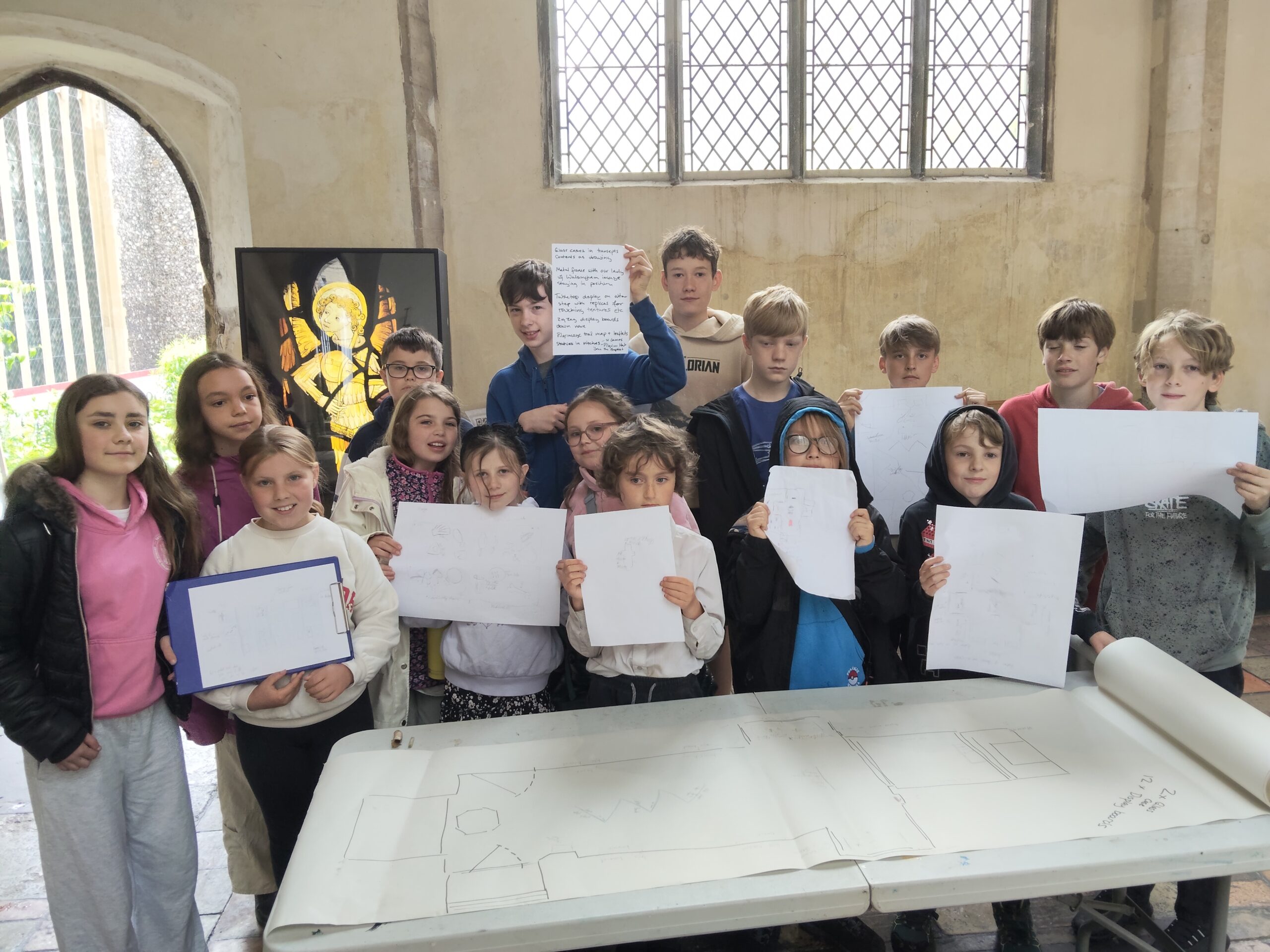
IMAGE: Members of Norwich YAC with their display plans at Hungate.
Following an earlier Young Archaeologists Club session with Michael Lewis (British Museum, Co-Investigator of the MeRit Project) and Tim Pestell (Norwich Castle Museum) looking at objects at Norwich Castle Museum, we went on to spend the rest of the winter on activities responding to the themes of the Medieval Ritual Landscape Project.
In our November meeting we asked ‘what are the special objects in our lives?’. Members brought in small objects which are special to them – talismans, souvenirs, lucky charms or reminders of a special time, place or person. We discussed why we make and keep small portable things in this way, and we met some very cute teddies!
In January we started looking at how a lot of small metal finds are made. First we tried casting in jelly, using polymer clay to make models then pressing those into cornflour to make moulds. It was a lot of fun, but not terribly successful – it turns out that might have been because we were using vegan jelly!
In February we had a guest session about Roman artefacts from Caistor Roman Project, where we also looked at small metal objects, votives and talismans, which the Romans really loved and used a lot, just like medieval people did. Many of the things shown to us were cast copper alloy.
In March we returned to casting with more ambition, using actual metal. We borrowed the churchyard at St Peter Hungate in Norwich so we could work out of doors, and following a full health & safety briefing we pressed our polymer clay items into damp casting sand, then we heated hobby casting metal in a ladle over a gas flame until it melted and poured it into the voids. Some of our casts were good, but we soon learnt the challenges faces by past craftspeople. The more complicated shapes and anything with very thin parts were a struggle, and it made us appreciate the pilgrim badge moulds we’d seen.
Finally, in our April session, we worked out what a museum display of our project would look like. Using the footprint of the two glass display cases at Hungate we planned how we would lay out the historical, modern and reproduction objects and we wrote labels and interpretation to go with them. Although we couldn’t actually make the display, there were visitors in Hungate whilst we were doing the plan, so we got to see how well the public would understand our display.
As a result of these sessions, several members recorded enough hours of work to qualify for Bronze or Silver level Heritage Hero awards.