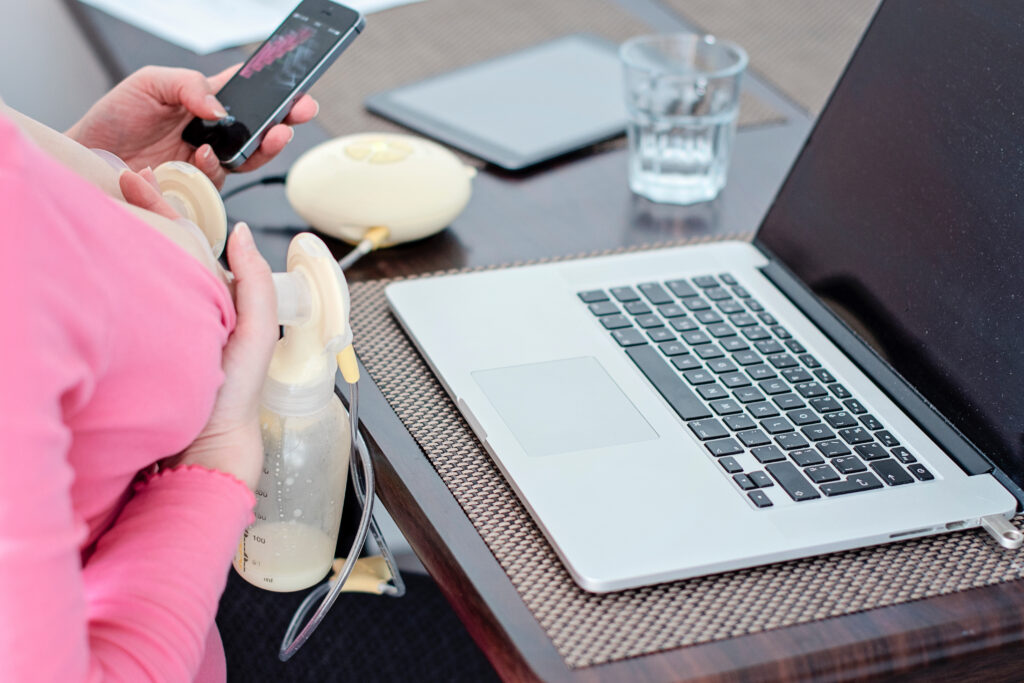

Making adjustments to working patterns may help if you want to adjust feeds/expressions around working hours and may also help facilitate expressing breastmilk / feeding during work hours. In this guide we suggest ways, where possible, in which adjustments to working patterns / location could help facilitate meeting your infant feeding goals.
Flexible Working Requests
Could you request to work from home – either some or all of the time? Working from home may make it easier to express breastmilk (in the comfort of your own home) or breastfeed your child directly (if your childcare provision is nearby). It will also reduce any time you may need for commuting, potentially meaning you are away from your child for a shorter period.
Could you request a change to your working patterns such as shorter days or adjusted start and end time? If you work shifts can you ask for shift patterns that suit you. If you work nights can you ask to be on days? Shorter days may mean you miss fewer breastfeeds or require fewer expressions. Adjusting start/end times and shift patterns may make it easier to fit breastfeeds or expressions around your working hours.
If you work part time working alternate days may help so you not away from your child several days in a row? Or some mothers like to use compressed hours where they work longer days (e.g. working 5 days in 4) but have more days with their child at home.
As discussed in Mother Guide 4 you have the right to request flexible working but it can be refused on business grounds. We discuss communicating with your employer in Mother Guide 10.
| Case study 1: Mary, a customer services representative, returned to work when her daughter was 8 months. She returned 3 days a week, fed her daughter first thing in the morning, when she got home and just before bedtime with one expression during the day. Although her child would not drink the milk. She was able to feed as normal on the 4 days she was with her daughter at home.
Case study 2: Laura, a teacher, worked 3 days and returned when her daughter was 10.5 months. She chose to split her week up and worked Monday, Tuesday and Thursday. Her daughter did not have any milk whilst separated. This structure meant there were gaps in the week and her daughter would feed more on the days Laura was off and at night to catch up from the days they were separated Case study 3: Sofia, a senior manager, returned when her child was 9 months old and was allowed to work from home for 3 months whilst expressing. This helped her manage pumping during the day but also was able to feed and reconnect with her daughter at the end of her working day. Case study 4: Jenny, a policy analyst, returned when her child was 9 months on compressed hours (doing 5 days in 4) and was working from home due to the pandemic. Her husband was self-employed so took 1 day off during the week to cover childcare. Meaning her child was at nursery for 3 days a week. On the day her husband looked after their child she breastfeed her daughter directly during breaks which saved her time. On the other days she pumped twice and her employer was very flexible to make sure she did not have meetings during her pumping breaks. She also fed her daughter first thing so was permitted to start work late |
Phased Return
Some mothers in our study used a phased return i.e. returning a few days a week to start with and building up to their full days. Using a phased return can help you, your body and your children to adjust. If this is not something your employer offers some mothers in our study reported having used annual leave to facilitate this.
| Case study 5: Cora, a data analyst, retuned at 13 months and used one month’s worth of annual leave to have a phased return Returning two days a week to begin with for a couple of weeks, then three days a week and then settled at four days a week. She used her remaining annual leave to book one day a week off to spend with her daughter. In the first week she suffered from engorgement and had to hand express at work for comfort. Her daughter wanted to feed straight away when they reconnected which also helped with the engorgement. Her daughter switched to having more feeds during the night. Cora reported that after a week her body adjusted to making milk at different points of the day than previously and the engorgement stopped. Her daughter fed until 2 years old.
Case study 6: Charlotte, a solicitor, returned at 9 months but did a phased returned, returning only for two days to start with. She would feed her daughter before she left for work and then express in the morning and afternoon, and feed on return and then before bed. This continued for a few months and then she dropped the expressions during work hours and continued to feed her daughter before and at night |
Commuting
If you need to commute with your child you will be separated for fewer hours of the day. This may give you an opportunity to breastfeed on the journey or on arrival at your childcare setting.
Many of these options are very personal with no “one-size-fits-all”. Chat with your supporters, your childcare giver(s), and family to help you consider options. Have you any colleagues who have returned to work while breastfeeding – can they share their experiences and tips with you?