
This guide provides some things to consider prior to your return and ways you could prepare for your return to work.
Important things to consider for pre-return preparation
Many mothers worry about how their child will cope when first separated from them or worry how they’ll manage in the childcare environment or with a new routine. Some families think it might be kinder or make the transition easier if they cut back on breastfeeding, schedule feeding times, or alter their child’s sleep habits ahead of starting paid work. There is really no evidence that this is beneficial (and might even have negative effects on your childs’s or your health). It’s important to make your own informed choices, don’t feel pressured by others. Returning to paid work is likely to be emotional and some level of disruption is probably unavoidable. Anything which causes upset as maternity leave comes to an end might be unhelpful.
Here are some ways to help you and your child prepare:
- If you plan to use childcare, visit the setting or meet the key person (grandparent, childminder or nursery staff for instance) several times with your child in advance.
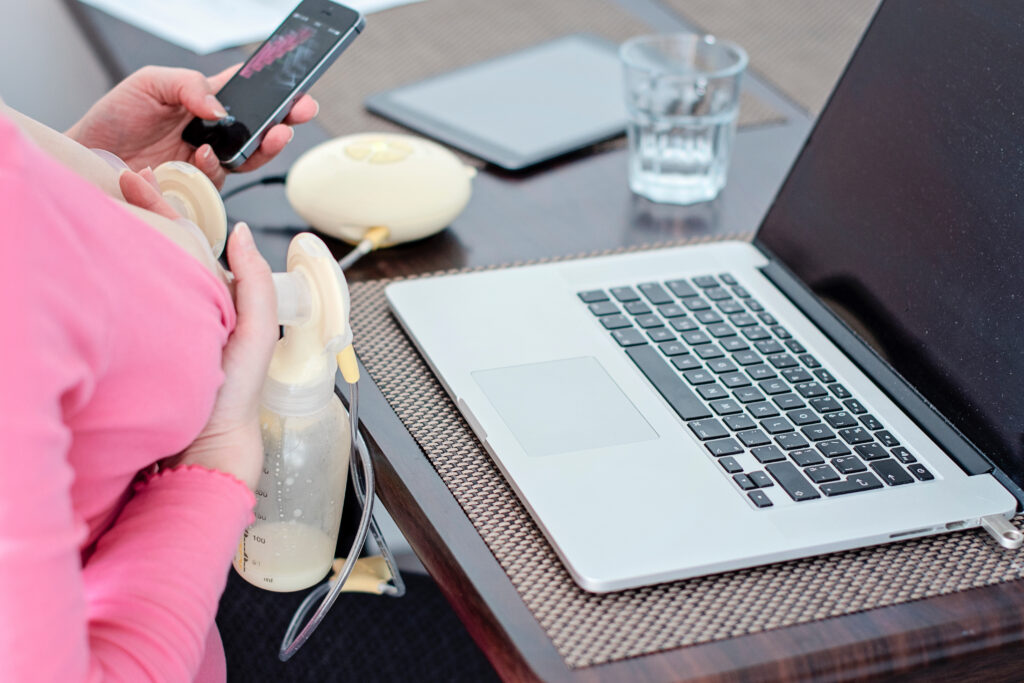
- Practicing hand expressing or pumping in a relaxed environment might be helpful practice in advance of your return to paid work, if you will be expressing or may need to express for comfort
- Test your breastfeeding and morning routines a few times before your return. This practice helps both you and your child adjust smoothly
- You might like to offer your child a cup or bottle of expressed breastmilk sometimes to help them get used to drinking that way. We discuss the issue of a child not taking a bottle in Mother Guide 12.
Before resuming paid work, it can be beneficial to conduct a few “trial runs.” These might include shorter periods of time away from your child or separations where you remain geographically close. These experiences can help ease the transition for both you and your child’s caregiver, fostering a sense of comfort and preparedness. Keeping in Touch (KIT) Days, offer a structured way to ease back into the workplace during your maternity, adoption, or shared parental leave. While entirely optional, they can provide valuable opportunities to:
– Stay updated on workplace developments.
– Participate in training or attend meetings.
– Complete specific projects.
– Gradually reacclimate to your work environment.
If you haven’t finalised childcare arrangements for KIT days, it might be possible to either bring your child with you or arrange for a family member to stay nearby to facilitate direct breastfeeding during breaks.
| KIT Day Case Studies
Lily, a nurse, returned when her daughter was 9 months but had used keeping in touch days (KIT) to get used to expressing milk at work. She started with half days, expressing once and then move to full keep in touch days and expressed morning, lunchtime and in the afternoon. Then she did a phased return returning two days a week until her son was 12 months and then moved to 3 days. She found the KIT days and phased return helped her body adjust and by the time he was 12 months she was only doing one expression at lunch time. Brenda, a health and safety manager, started KIT days when her son was 6 months. She took her mum and son with her. She fed her son in the office before she started work and Brenda’s Mum looked after her son and brought him back around lunch time for a feed, then her Mum took him home. Brenda then was able to feed her son again when she got home. |
Preparing for Your First Day Back at Work
Advice from La Leche League1 recommends starting your return on a Thursday or Friday. Or maybe you are able to do a phased return. This shorter workweek allows for a weekend to rest and address any unanticipated challenges before the next full week begins. Be prepared:
- You might prefer to pack your bag and organise your clothes etc the night before.
| Examples of things that mothers have told us they have packed include: ice blocks, insulated bag/box, breastmilk storage containers / bags, pump parts / spare parts, breast pads, washing up bowl and biscuits! Some also include a photo of their child or a have a film of their child feeding or being cute, and headphones. |
- If you are going to be separated from your child, feeding them when you first wake up, and maybe again before you leave or when dropping to childcare will help them to be satisfied (and hopefully will help your breasts too)!
Last reviewed: 3rd August 2026