

- This event has passed.
Global Perspectives on Lithographic Printing Symposium, 5-6 March 2026
Event Navigation
Building on Michael Twyman’s pioneering scholarship, this symposium will explore lithography as a truly global medium. It will consider lithography’s circulation across borders and oceans, its adaptation to diverse linguistic, artistic, and commercial contexts, and its embeddedness in cultural and political life from the nineteenth century onward.
The symposium includes invited papers, demonstrations on a reconstructed Senefelder Pole Press and sessions featuring material from University of Reading and private collections. It is in hybrid format for the papers only & is free and open to all.
In-person attendees please note: We are able to support 20 in-person places for the workshop & collections sessions. To join us in person, please email Beatty Hallas at b.r.hallas@reading.ac.uk (Places are limited, so will be allocated in order of application)
The venue for the symposium on both days is the Department of Typography & Graphic Communication, University of Reading (Whiteknights Campus), RG6 6BZ.
Online attendees please note: The symposium will run over two days, with separate MS Teams links for each day. To attend both days, please make sure you register using both of the links below.
- To join us via MS Teams on 5 March 2026, please register here
- To join us via MS Teams on 6 March 2026, please register here
PROGRAMME
Thursday, 5 March
| 9.30—10.00 | Coffee & registration |
| 10.00—10.15 | Welcome & opening remarks |
| 10.15—11.30 | Session 1: Early Lithography in Islamic & Scribal Cultures (HYBRID) Borna Izadpanah Script, stone, and type: visual continuities in Iran’s earliest printed Qurʼans Wei Jin Darryl Lim Lithography at Riau’s “Gateway to Mecca” |
| 11.30—12.00 | Coffee break (provided) |
| 12.00—13.00 | Parallel sessions repeated on Friday (max of 10 in each group) (IN-PERSON ONLY) i) Pole Press Demonstration (Geoff Wyeth) ii) Michael Twyman’s Lithographic Collection (Emma Minns) |
| 13.00—14.15 | Lunch (provided) |
| 14.15—15.30 | Session 2: Transregional Encounters with the Lithographic Press (HYBRID) Erin Piñon Ottoman-Armenian encounters with the lithographic press Mimi Cheng Medium and message in nineteenth-century maps of East Asia |
| 16.00 | Book Launch (HYBRID)
The Bloomsbury Handbook of Global Typography. Editors in conversation, followed by discussion (Online attendees: please go to this separate registration page for the book launch) Curators’ tour of exhibition in Department of Typography & Graphic Communication Display Area: Books and the People. Opening up access to books and reading #Go All In |
Friday, 6 March
| 9.30—10.15 | Coffee (provided) |
| 10.15—12.30 | Session 3: Modernity and Visual Experimentation (HYBRID) Hannah Rose Blakeley Belgian lithography and book illustration ca.1900 Helena de Barros Material logics of printed colour in European and Brazilian chromolithography Asiel Sepúlveda Lithography and the spectacle of sugar manufacturing in nineteenth-century Cuba |
| 12.30—13.30 | Lunch (provided) |
| 13.30—14.30 | Parallel sessions (max of 10 in each group) (IN-PERSON ONLY)
i) Pole Press Demonstration (Geoff Wyeth) ii) Michael Twyman’s Lithographic Collection (Emma Minns) |
| 14.30—15.30 | Collection Session: Iranian Lithography (Borna Izadpanah) (IN-PERSON ONLY) |
| 15.30—15.45 | Closing remarks & Tea in commemoration of Professor Michael Twyman (IN-PERSON ONLY) |
| 19.15 | Conference Dinner (participants & invited guests) |
Speakers and their talks
Borna Izadpanah, University of Reading
Script, stone, and type: visual continuities in Iran’s earliest printed Qurʼans
This paper examines the visual grammar of Iran’s earliest printed Qurʼans to demonstrate how early nineteenth-century Qajar printers negotiated the intersection of established manuscript practices and newly introduced print technologies. Focusing on the first movable-type Qurʼans produced from 1827 and the earliest lithographed editions issued from 1834, it argues that, unlike European precedents, Qurʼanic printing in Iran was conceived as a project of visual continuity rather than a break with prevailing scribal conventions. Printing techniques entering the country through its northern frontiers were selectively and carefully integrated by local craftspeople, resulting in editions that were framed, produced, and received as culturally grounded artefacts. Through a comparative analysis of textual rendering, page composition, ornamental devices, and colophonic formulae, this study shows that both typographic and lithographic Qurʼans pursued a shared strategy: sustaining manuscript-derived forms of authority while capitalising on the technical possibilities of mechanical reproduction.
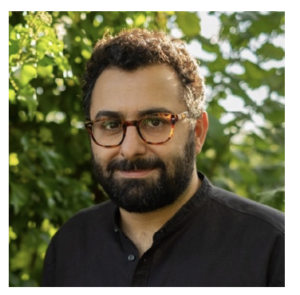
Dr Borna Izadpanah is a Lecturer in Typography & Graphic Communication. His areas of interest include typeface design, typography, lithography, and the history of printed letterforms, particularly in the context of languages that have been represented with the Arabic script. He seeks to develop diverse and inclusive theoretical and practical outputs by linking an updated understanding of the past with current practices. Central to his work is decolonising the curriculum and promoting diversity by combining expertise in a wide range of related disciplines that reach beyond European visual cultures and the Latin script.
Erin Piñon, Kunsthistorisches Institut
‘In the lithographic studio of Hovhannes Muyhendisyan’: Ottoman-Armenian encounters with the lithographic press
No one batted an eye when, in the middle of the nineteenth-century, Ottoman- Armenian printer-publisher typographer Hovhannes Muyhendisyan issued three consecutive titles, furnished with images prepared by three different artists, using three different methods of printing. This was par for the course in Istanbul’s highly competitive, collaborative, and commercialized Armenian language print market. These images, however, reflect the earliest encounters Armenian printers had with the lithographic press, the most cutting-edge method of reproducing images globally. They also mark a point of departure from how Ottoman-Armenian printed books looked in the seventeenth and eighteenth centuries—filled with muddy impressions of worn and battered Dutch woodblocks that constituted the capital’s “stock” of available images. This paper discusses the role Muyhendisyan’s print enterprise played in shaping Armenian book arts in the nineteenth century and the permanent, global repercussions his titles set in motion. It is the first to identify and treat Armenian contributions to lithography (վիմագրութիւն)—a troubling misnomer of “stone writing”—often confused in Armenian-language scholarship with the much more popular field of epigraphy. At stake here is a reconsideration of existing views on the development of the Armenian printed book and its images. An examination of the images, origins, and functions in new settings, allow us to move beyond the simple question of European material, iconographic and stylistic influence and instead ask, how does Armenian art interact with and build on itself?

Dr Erin Piñon is an art historian specializing in early modern Armenian book arts, spanning cultural networks from Europe to Asia. Her dissertation, The Illuminated Haysmawurk‘: Ottoman-Armenian Painting and Confessionalism in the Age of Print (Princeton, 2024), explored seventeenth-century Ottoman- Armenian manuscript art, book culture, translation, and ritual practices across Istanbul, Aleppo, and Isfahan. Piñon’s research on sixteenth- and seventeenth-century visual and material culture has appeared in the Metropolitan Museum of Art’s publications, the Journal of the Ottoman and Turkish Studies Association, West 86th Street, and the Journal of the Society for Armenian Studies, to cite a few. Her ongoing work examines the aesthetics of the Armenian diasporic condition and print culture between the seventeenth and nineteenth centuries.
Hannah Rose Blakeley, Princeton University
Belgian lithography and book illustration ca. 1900
This paper will explore the development of lithography in Belgium in the nineteenth and early twentieth centuries, considering the ways in which book illustration and intermediality were central to the Belgian avant-garde. Focusing on a key example, Léon Spilliaert’s series of ten lithographs, Serres chaudes (Hothouses), printed in 1918 to illustrate poems by Belgian playwright Maurice Maeterlinck, this talk will show how artists, writers, publishers, and printers formed a core network in and around Brussels, and how their collaborations helped to shape the trajectories of Belgian modernism.

Dr Hannah Rose Blakeley received her PhD in art history from Princeton University, where she is now a faculty member in the Princeton Writing Program. Her current book project explores how Belgian artists James Ensor and Léon Spilliaert transformed carnival from a social practice into a radical artistic strategy, offering a new and emphatically visual conception of the carnivalesque. She has published “Le 17e siècle de Rops : vers la modernité” with the Musée Félicien Rops in Belgium, has an upcoming article on James Ensor in Nineteenth-Century Art Worldwide, and recently recorded a short video interview with leonspilliaert.be. Her research has been supported by the Fulbright Scholars program and the Belgian American Education Foundation.
Helena de Barros, Universidade do Estado do Rio de Janeiro
Material logics of printed colour in European and Brazilian chromolithography
This talk examines chromolithographic production and practices in Europe and Brazil from the late nineteenth to the early twentieth century, drawing on research carried out at the University of Reading’s Department of Typography and on Brazilian archival collections. Grounded in Michael Twyman’s documentary approach, the study investigates technical, material, and chromatic evidence in ephemeral prints, children’s books, and progressive proofs. Special attention is given to the material logic of printed colour, understood as the interplay between tonal construction, sequential presswork, chromatic decision-making, and the economic and cultural factors that shaped lithographic workflows. Through magnified analysis of colour-layer structures, a purpose-built chromatic scale with descriptive universal naming, and visualisations of complex datasets, the study outlines a methodological framework that highlights the layered complexity of chromatic techniques and offers a material-based perspective on printed colour across different cultural contexts.
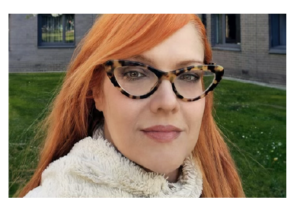
Dr Helena de Barros is an associate professor in the Design programme at ESDI/UERJ, where she teaches graphic design, digital imaging, and visual technologies. She received the CAPES Award in 2019 (doctoral thesis) and in 2025 (supervision) and was a Research Fellow at Brazil’s National Library (2018–2019). She is a member of the CNPq research group Memoráveis and coordinates the Special Interest Group on Graphic Memory of the Brazilian Society for Information Design. In 2025 she was a visiting researcher at the Centre for Book Cultures and Publishing, University of Reading, where she studied chromolithographic techniques in the Michael Twyman Collection. Her work as a researcher, designer, visual artist, and collector of printed artefacts explores visual language, graphic techniques, graphic memory, books, and ephemeral prints, with emphasis on Brazilian chromolithography.
Wei Jin Darryl Lim
Lithography at Riau’s ‘Gateway to Mecca’: print and scribal labour in Penyengat island, 1856–79
Lithography found its way to a C19 Malay world in 1826, imported First by Dutch and later English missionaries. Yet the ingress for local adaptation and adoption of lithography was arguably through oceanic routes that were linked by port cities along the pilgrimage path of the Hajj to, and from the centres of Islam. Through these streams, religiously-oriented literature and ephemera found their way back to the Malay world. This ushered a broader acceptance of lithography as a viable means of religious textual production, and reproduction.
By 1856, at least one lithographic press was at work on the island of Penyengat in Riau – possibly the earliest royal press extant in the Muslim-Malay world. This press was likely acquired by the court of the Yang dipertuan Muda (Viceroy of Riau who resided at Penyengat island). From the literature, this lithographic press seems to have been procured as a means to supplement scribal labour in the production of texts. Islamic histories, translations, ephemera, and legal documents were products that were lithographed by the court; and the lithographic press’ primary function it seems was to serve the bureaucratic needs, and Islamic literary production of Penyengat’s courtly elite.
This paper will focus on technical aspects of these lithographed texts that emanated from the Penyengat press; and will examine print within this specific nineteenth-century Muslim-Malay milieu, and expand on the court’s links to Singapore-based Muslim commercial lithographers. Despite the lithographic output of Penyengat’s printers, there is a distinct exclusion of the press from epistolary, notary, and bureaucratic documents kept by the Penyengat court; little to no information about its presence, purchase, or use is extant except for the lithographed artefacts themselves. This absence, I will argue, is of significance – and questions and hypotheses surrounding this lacuna within Penyengat records will be discussed.

Dr Wei Jin Darryl Lim is an independent book and printing historian. His research remit focuses on the histories of the lithographic book in Southeast Asia in relation to global histories of printing; the movement of printing materials and technologies, and missionary printing and typefounding projects in the Malay archipelago. His doctoral research on the early history of Muslim-Malay lithography and has been published in the journal Indonesia and the Malay World. Darryl was previously the American Printing History Association’s Mark Samuels Lasner Fellow (2019), and an Early Career Research Fellow at the University of London (2022–23).
Asiel Sepúlveda, Babson College
Picturing “the fog effect:” Lithography and the spectacle of sugar manufacturing in nineteenth-century Cuba
This paper will examine the cloudy visuality of Cuban sugar plantations. It focuses on the representation of fog, smoke and steam that emerges from industrial machinery, boiling houses and burning landscapes. During the early nineteenth-century, Cuban planters became avid technocrats. They invested in industrial machinery, railroads, steamships and many other technologies including lithography. This modernizing campaign attracted European artists who began to produce images for local elites. The paper argues that “capturing the fog effect,” a phrase that one lithographer used in his image, became an imperative to represent the modernization of the Cuban landscape. The fog, I add, also served to obscure the relationships between industry, environmental destruction and the exploitation of slave labor.
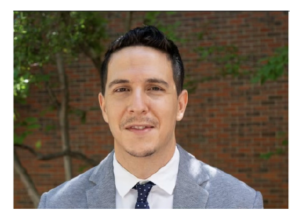
Dr Asiel Sepúlveda is Assistant Professor of Art History and Visual Culture at Babson College. His research focuses on the development of lithographic arts in late colonial Cuba. Sepúlveda’s forthcoming book Picturing the Planters’ Metropolis: Art, Slavery and Global Modernity in Nineteenth-Century Havana, explores how lithographic artists imagined a modern Havana built under the cultural regimes of Spanish colonialism and plantation slavery.
Mimi Cheng, Kunsthistorisches Institut
Medium and message in nineteenth-century maps of East Asia
This paper examines an unstudied series of maps published in China and Japan between 1875 and 1898. Each is titled “Map of East Asian Territories” [亞細亞東 部輿地圖] and shows the eastern Qing empire, southern Manchuria, Japan, Korea, and Taiwan. In addition to having the same title, they are also remarkably similar in both content and composition. By tracing the genealogy of each unique copy and attending to their aesthetic forms and epistemological claims, this paper seeks to chart a way to think about modern maps not just as expressions of sovereignty or territoriality, but also as material artifacts that contain the traces of their making. While they are just some of the countless examples of how foreign printing technologies were introduced and assimilated into local print cultures and economies, this series of maps also serves as a reminder that exchanges occur not just between metageographic categories of east and west, or binaries of foreign and indigenous, but at other geographic scales and relational categories.

Mimi Cheng is a cultural historian of the global nineteenth century whose research focuses on transnational visual culture between Europe and East Asia, comparative histories of cartography and the built environment, and the relationship between knowledge and imperialism. She is a postdoctoral researcher with the Lise Meitner Group Coded Objects, where she is completing her first book manuscript. Previously, she was a National Endowment for the Humanities Fellow at the Newberry Library. Her work has appeared in the Journal of Historical Geography and has been supported by the ACLS, SSRC, German Historical Institute Washington, and the Forschungzentrum Gotha at the Universität Erfurt. She earned her PhD from the University of Rochester in 2022.