
Details about our research interests and how to contact us 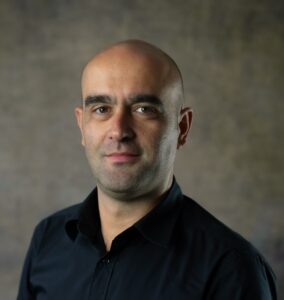
Contact:
Professor Christos Pliatsikas
Professor in Cognitive Neuroscience
School of Psychology and Clinical Language Sciences, University of Reading
Harry Pitt Building, Whiteknights, Reading, RG6 6AL
email: c.pliatsikas[at]reading.ac.uk
and
External Affiliate Researcher
Centro de Investigación Nebrija en Cognición, Universidad Nebrija, Spain
Contact Form
Personal webpages:


For PhD enquiries, please use the above contact details or the Contact Form.
———————————————————–
Short biography and research interests
I completed my studies in Psychology at Pantion University (Athens, Greece) (2003), followed by an MSc in Clinical Neurosciences at UCL (2005), and my PhD in Grammatical Processing in Second Language Learners at the University of Reading (2010). In 2010 I joined the Centre for Integrative Neuroscience and Neurodynamics (CINN- University of Reading) as a Postdoctoral Research Assistant. After that, I took a Research Fellow position at the University of Birmingham (2011), and I subsequently returned to the CINN in the role of the MRI Operations Manager (2012). In 2013 I joined the School of Psychology at the University of Kent as a Lecturer in Cognitive Psychology, and I then returned to the University of Reading as a Lecturer (Assistant Professor) (2015-018) and then Associate Professor (2018-2025) in Psycholinguistics in Bi-/Multilinguals at the School of Psychology and Clinical Language Sciences. Between 2019-2023, I also served as the Chair of the International Symposium on Bilingualism (ISB). Since August 2025 I am employed as a Professor in Cognitive Neuroscience and the Director of the Centre for Literacy and Multilngualism at the University of Reading.
My research background is in the fields of Cognitive Psychology and Cognitive Neuroscience, with a focus on bilingual acquisition and processing. My research focuses on experience-based neuroplasticity, with a primary interest on the effects of bi-/multilingualism on brain structure and function, investigated with behavioural and MRI (functional and structural) methods. My research has shown how learning and using additional languages affects the structure and function of the brain, as well as cognition. Moreover, it appears that these effects are modulated by the individual experiences of the bilingual, including when the additional languages were acquired and how often they are used. Several projects form my lab have shown that the effects of bilingualism actually interact with typical brain development and ageing, and that they have implications for age- or disease- related brain decline, including in diseases such multiple sclerosis. Ongoing projects look at the particular effects on the brain and/or cognition of language situations like diglossia (speaking two versions of the same language) and biliteracy (being able to read in different writing systems).