
FoodSEqual’s final annual conference took place on 28-29 October 2025 at Cranfield University.
The event covered updates from the FoodSEqual Team across all areas of the project. They were joined by Food System stakeholders representing the food industry, policy makers and third sector for wider discussion of food system-related challenges.
Biographies of our speakers can be found below.
FoodSEqual Annual Conference 28_29 10 25 FINAL AGENDA updated
Biographies of our keynote speakers
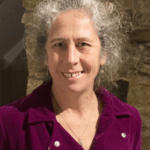
Carol Wagstaff is presently Professor of Crop Quality for Health and Associate Pro-Vice-Chancellor Research for Agriculture Food and Health at the University of Reading. She is Deputy Chair of the Agriculture Food and Veterinary Science Unit of Assessment panel for REF2029 and is Chair of the BBSRC Sustainable Agriculture and Food Strategy Advisory Panel. Carol leads a research group that takes a food-system wide approach to improving the quality of fresh produce and ensuring that everyone has access to it. She has provided expert advice to Defra during the 2024 UK Food Security Review and during the development of the National Food Strategy. She is co-author of the 4th Climate Change Risk Assessment chapter on Land, Nature and Food. When not supporting academic research Carol can most likely be found training and competing her dressage horses, or nurturing her garden and discovering just how difficult it is to try to grow your own food.

Professor Michael Bourlakis is the Director of Research for the Faculty of Business and Management and he is also the Director of the Centre for Logistics, Procurement and Supply Chain Management at Cranfield University. He has been involved with more than 45 research projects funded by various bodies and he has published extensively in logistics, supply chain and business and management journals. He specialises in food, retail and last mile logistics, sustainable supply chain management and digital logistics. He is currently a Vice President and a Trustee for the Chartered Institute of Logistics and Transport International which is a leading body in logistics worldwide. He has been a REF2021 Panel Member for “Business and Management Studies” and he will be a Panel Member for REF2029 too.

Roya Shahrokni is a Senior Programme Manager within the Global Food Security Programme and is the SPF Programme Manager. Previous to this position, Roya spent time at the Office for National Statistics and completed her PhD focussing on the effects of portion size reduction on consumer choice behaviour at the University of Bristol. It is her hope that this research could support evidence-based policy decisions related to population health. With a background in mental health support, Roya has a personal interest in encouraging positive and practical techniques for managing personal and work-related well-being as well as supporting sustainable and healthy eating practices.
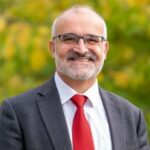
Neil Ward is based at the University of East Anglia in Norwich. He co-leads the AFN Network. He was formerly Director of Newcastle University’s Centre for Rural Economy. He is author of Net Zero, Food and Farming: Climate Change and the UK Agri-Food System (Routledge, 2023).
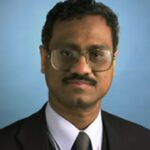
C.S.Srinivasan is a Professor of Agricultural and Development Economics in the School of Agriculture, Policy and Development at the University of Reading. His research focuses on the drivers of dietary and nutrition transitions in developed and developing countries. His other areas of research interest include intellectual property rights in agriculture and their impact on agricultural innovations. He is currently leading a UKRI-Transforming UK Food Systems Strategic Priority Fund project entitled “Realigning UK Food Production and Trade for Transition to Healthy and Sustainable Diets”.
Chris Hilson is Professor of Law and Director of the Centre for Climate and Justice at the University of Reading. He has published widely in the area of environmental and climate law and policy. He was the Editor-in-Chief of the Journal of Environmental Law (OUP) from 2008-2012 and has acted as an adviser on environmental law to NGOs including ClientEarth and Friends of the Earth. In the past few years he has worked on agrifood law and policy, including as part of the law work package for the TUKFS project “Realigning UK Food Production and Trade for Transition to Healthy and Sustainable Diets”.
Dr Tom Sizmur is an Associate Professor in Environmental Chemistry at the University of Reading. He is the Programme Director for the BSc Environmental Science degree and a member of the Environmental Science Research Division. Tom’s research interests span the biogeochemistry of soils in agricultural, natural, and polluted environments. His research interests particularly relate to the benefits that can be obtained from the incorporation of crop residues and other organic amendments into soils to recycle nutrients and feed soil organisms. Tom leads a research team consisting of PhD and postdoctoral researchers and technicians across a range of projects that work to develop and implement advances in soil biogeochemistry to improve sustainable soil management. Tom is the Vice Chair of the Environmental Chemistry Group of the Royal Society of Chemistry, an Editor for Environmental Toxicology and Chemistry, a member of the British Ecological Society and Commonwealth Scholarship Commission Peer Review Colleges.

Valia Christidou is passionate about innovation and product development and has over 30 years experience in the food industry. Valia has held senior R&D roles in large multinational companies, was a senior lecturer at London SouthBank University specialising in New Product Development, is a trustee and Fellow of the Institute of Food Science and Technology and a co-founder of a biscuits and snacks business. Having lead many multidisciplinary teams and launched in excess of 300 products, Valia is keen to drive excellence in product development and support and inspire the next generation of food professionals. Https://www.linkedin.com/in/valia-christidou-fifst/
Dr Olivier Sevenou is a Global R&D Leader with more than 15 years experience in the snack food industry. He has strong expertise in product development, technology, innovation, business development, and external collaboration through open innovation. He has a passion for connecting most relevant technology and science to consumer insights to design scalable healthier products. Olivier has been involved in numerous successful industry–academic projects as well as being active in the food start-up space.

Kate Halliwell is the Food and Drink Federation’s Chief Scientific Officer. She leads the FDF’s food safety, food law and labelling, and diet and health policy briefs. Previously Kate worked for the Department of Health and the Food Standards Agency on a range of nutrition and legislation policies. Kate is a Board member of SALSA, Chairs the IFST’s Special Interest Group for Food Science and Nutrition and is a registered nutritionist.
Caroline Bennett founded Moshi Moshi in 1994 and started the kaiten-sushi revolution, simply because she loved sushi and was convinced other Londoners would as well. Caroline is at the forefront of campaigns to protect fish stocks, and has won a number of awards, including the prestigious Green Apple Award for the Environment, the RSPCA Award for Animal Welfare, and she was lauded a 2009 international Seafood Champion by SeaWeb’s Seafood Choices, named Slow Food UK’s Restaurant of the Year in 2024, and most recently was recognised in The Indie Climate 100 List 2025. Caroline was the author of Sushi 500 published in 2013. She sat on the Board of Slow Food and remains involved through Slow Fish, is a Trustee of Open Seas Trust, a Scottish charity seeking to limit bottom trawling, and founded Sole of Discretion CIC, an ethical fishmonger in Plymouth, to safeguard the livelihoods of small-scale fishers and their marine friendly fishing methods. Sole of Discretion CIC is the only fishmonger permitted to use the Soil Association’s accreditation, and winner of the Fishing News ‘Fish Processor of the Year’ award in 2021. She is also pioneering a PGS Participatory Guarantee Scheme to identify fish caught with low impact on the environment and high social benefits with LIFE (Low Impact Fishers of Europe) in Brussels.

Christopher Sturman retired in 2018 after ten years as Chief Executive of the Food Storage and Distribution Federation, and previously in food logistics with wide experience of operational, tactical and strategic food supply chain and logistics management and consultancy assignments in UK, Europe, Central Asia and USA. Fellow of the Chartered Institute of Logistics and Transport UK, he co-chair CILT UK Retail Forum, and member of Freight and Logistics Policy Group. NATO Civil Expert on food supply contingency planning, and DEFRA nominee on the New Covent Garden Market Authority Traffic Advisory committee. He is also a Liveryman of the Worshipful Company of Carmen and Freeman of the City of London, and Fellow of the Royal Society of Arts.
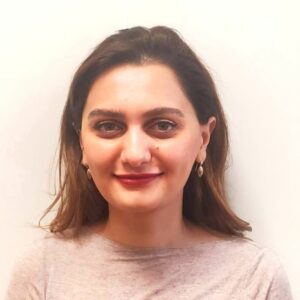
Rusudan Gongladze, PhD student at Cranfield University
Rusudan is studying the Surplus Food Redistribution Supply Chain Network in the UK, looking at network-wide relationships, physical and organisational resources, and activities involved in the recovery and redistribution of surplus food from donors to end users. Rusudan holds an MSc in Procurement and Supply Chain Management from Cranfield University and brings extensive operational experience across government, commercial, and non-profit sectors in Georgia.
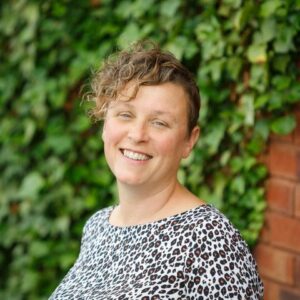
Helen Innes has spent 14 years embedded in Milton Keynes’ community action. For 8 of those, she has played a key role in developing the Community Fridge Network (CFN) locally, launched Food Connect, and now leads Sustainable MK.
Sustainable MK is a new charity created initially to take on local ownership and operational responsibility of Food Connect in Milton Keynes. Helen plans to launch a new initiative ‘Kickback Kitchen’ in 2026. The pilot project will utilise underused community kitchens to provide nutritious ready to reheat meals for local residents to ‘chip in what they can’. If successful, this ‘self-fund’ model will scale to new locations.
http://www.mkcommunityfridge.org/
https://hubbub.org.uk/community-fridge-network
https://hubbub.org.uk/food-connect
http://www.mkcommunityfridge.org/sustainable-mk.html
http://www.mkcommunityfridge.org/kickback-kitchen.html

Matt Leach is a member of the Independent Commission on Neighbourhoods (ICON), which has been advising government on approaches to addressing neighbourhood decline, and is widely recognised for its influence on the Prime Minister’s recent announcement of £3.5bn new funding for neighbourhood investment. Currently Chief Executive of the Built Environment Trust, until earlier this year Matt led major place-based funder Local Trust, where he pioneered work on social infrastructure, social capital and neighbourhood investment, helping initiate new interest in an area of policy neglected for almost two decades. A visiting fellow of Ruskin College, Oxford, prior to joining Local Trust, Matt held a range of senior roles spanning central government, national delivery agencies, social housing and think tanks.

Steven Griffin is a Co-founder of Change Box, an AI health-tech startup behind the Essentials for Everyone (E4E) platform. E4E helps families in poverty access affordable, nutritious food with dignity, working with retailers, brands and local authorities. A former Amazon/AWS leader, Steve focuses on modernising community support with evidence-driven policy innovation.
Fiona Pitt is a social entrepreneur and changemaker passionate about bridging the gap between food systems and community wellbeing. She is co-founder of The Food Investors Society and leads the development of foodXchange, a digital tool that helps individuals eat healthier through education, behavioural nudges, and affordability support. Fiona specialises in business development, having taught Business and Management Studies as a visiting lecturer and founded and led a successful manufacturing and retail business for over 17 years. She is committed to harnessing her entrepreneurial experience to deliver evidence-driven, scalable, and sustainable interventions that transform health outcomes and reduce inequalities. At this conference, she will explore how digital tools like foodXchange can create a network effect between online nudges and offline community action, strengthening connections while supporting healthier, more equitable food choices.

Sarah Malone is a Senior Advisor at ReLondon, currently leading the organisation’s food programme to enable a transition to a more low-carbon circular economy for food in the capital, where food loss and waste is reduced and where diets are healthier and more sustainable. This has included managing the delivery of London’s food footprint research project which mapped the material flows and consumption-based emissions of London’s food system as well as London’s Food Purchasing Commitment which was developed for London’s local authorities to reduce the climate impact of London’s food system. Prior to ReLondon, Sarah has held various research, communications, and policy roles in both the public and private sectors, including at the Food and Drink Federation where she provided policy advice to central government on behalf of the food and drink supply chain.