
The Power of the Public Plate
By Ali Ghanimi
Transforming public sector food buying in Brighton and Hove is improving access to healthy, affordable, sustainable food.
New figures released by Trussell reveal that more than 2.6 million emergency food parcels were provided to people across the UK in 2025 as hunger and hardship continues to grip communities.
The Food Foundation’s Food Prices Tracker shows that a reasonably costed basket of nutritious food has increased by around 35% since 2022. Proportionally, low-income households spend roughly 1.6–1.7 times more of their budget on food than high-income households. As well as the cost, less affluent communities face other barriers to eating healthily. Brighton and Hove has significantly higher number of fast-food outlets per capita than the national average and seven of its neighbourhoods are in the top 20% of places in England with food desert characteristics – a mixture of low incomes, poor access to transport, and a limited number of food retailers providing fresh produce and healthy groceries for affordable prices.
Unsurprisingly we see this impact on health inequalities. Almost a third of children in the city are overweight and only 38% of adults and 51% of 14-16 year olds consume 5 or more portions of fruit and veg per day. There is a 20% gap in healthy weight for children in the most and least deprived areas of the city and this gap has been widening. So what can be done to tackle these inequalities to enable everyone, including those in less affluent areas, to eat well?
Collaborating for better policies through the FoodSEqual project
Food System Equality (or FoodSEqual for short) is a UKRI-funded project which is empowering citizens living in less affluent areas to have more choice and agency over the food they consume. Local people in Brighton and Hove have been working with community researchers, universities, businesses and food partnerships to create new products, new supply chains, and new policy frameworks that deliver an affordable attractive, healthy and sustainable diet.
During the FoodSEqual policy workshops, listening to Brighton’s communities about what they wished to eat and the barriers they faced to eating well was revealing. People expressed a desire to eat seasonal and locally produced food, but their choices were limited by what was on offer. As people said, “healthy food should be the norm, not a luxury”. They wanted clear information on where their food comes from, less junk food advertising, better school food education and school meal environments, improved access to healthy food and healthy start vouchers. The research turned people’s views into policy recommendations in our FoodSEqual policy brief, and embedded them into Brighton and Hove’s Food Strategy.
Healthy, sustainable, fair food for all is the vision driving the city’s Food Strategy Action Plan, which has seen development of a ‘Whole School Food Approach’ and increased uptake of Healthy Start vouchers, Free School Meals, and the Holiday Activities and Food (HAF) programme. But when thinking about policy change that can widen impact, public sector food kept coming up. As the food strategy states: ‘Large caterers and food businesses have the power to transform food systems – relatively small changes here can have a bigger impact’.
Public money for public good: the Sussex Saver meal
Public sector food buyers, such as hospitals, schools, colleges and universities, can play a significant role in supporting the health of citizens as well as boosting local food economies. Each year in the UK, the public sector spends between £2-5 billion on food, influencing what people eat and how food is produced.
Influencing the supply chain of large contract caterers isn’t easy. In July 2025, FoodSEqual sponsored a University of Sussex local stakeholder policy event that triggered conversations around sustainable food procurement practices in the university. While the university caterer, Chartwell’s Universities, is already working with local suppliers, working with the University of Sussex and the FoodSEqual project, the Brighton and Hove Food Partnership helped identify a way to further support Chartwells’ existing efforts towards sustainability.
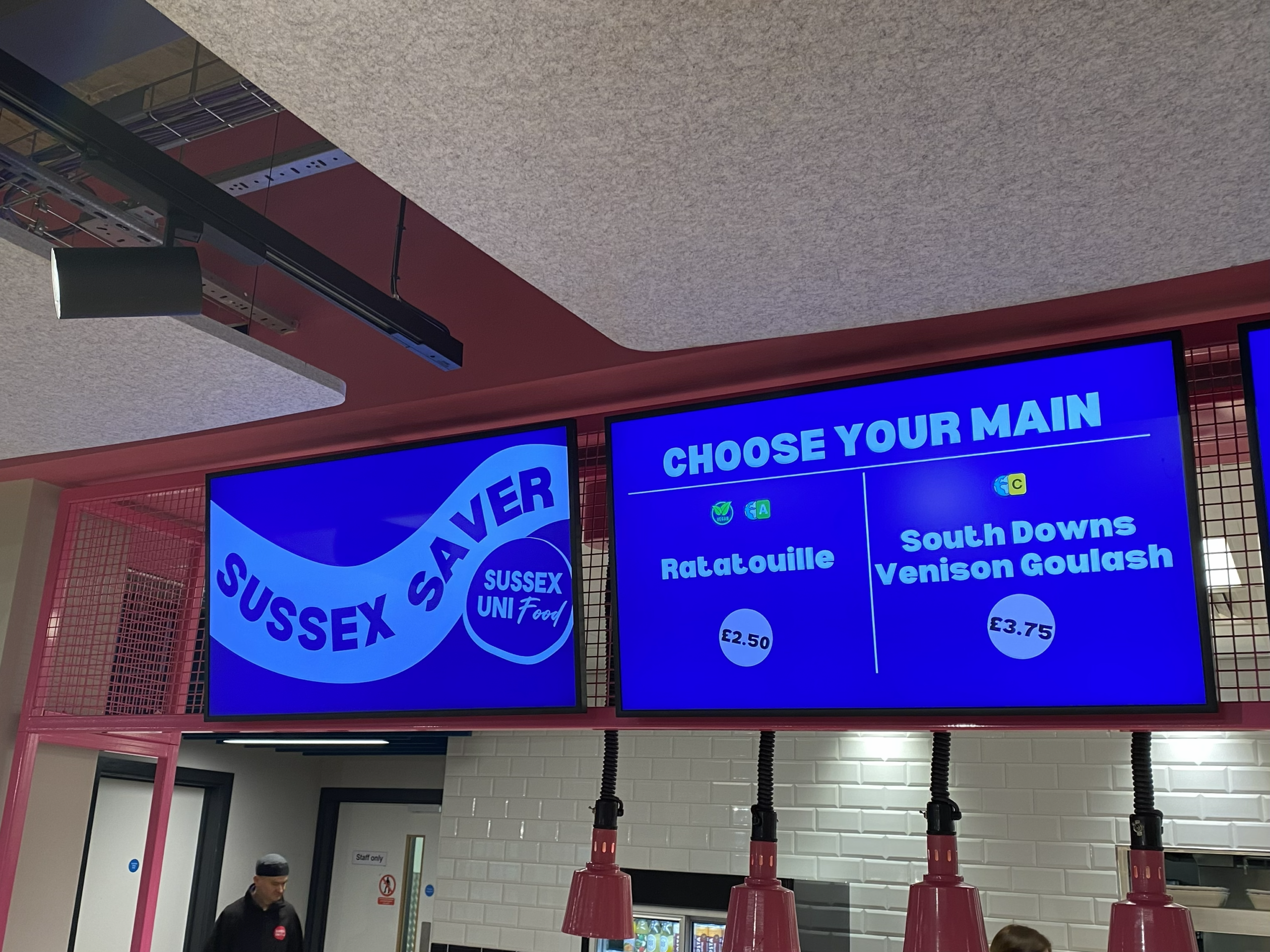
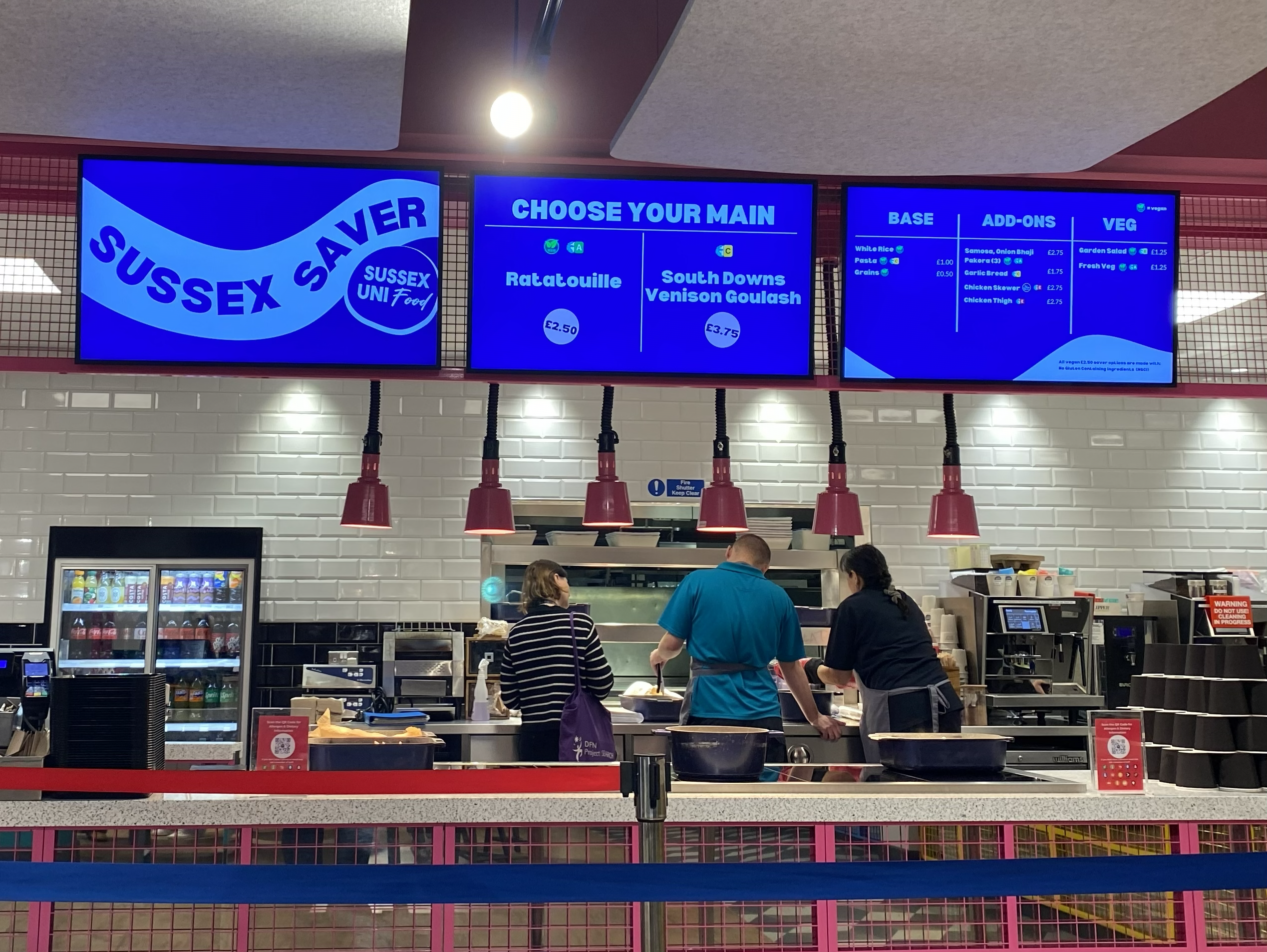
The ‘Sussex Saver’ meal – costed at around £2.50 – subtly nudges cost-savvy students towards the sustainable, vegetarian option. This is a really affordable, substantive and nutritious meal, popular with students. There is a more expensive meat option and, in step with Brighton and Hove Food Partnership’s Sussex Grazed project, the caterer has just started to trial switching from beef to more healthy and sustainable South Downs venison.
Responsible culling helps control out of balance deer herds, which in turn protects young forests, supports biodiversity, and allows ecosystems to regenerate naturally. This practice reduces the need for intensive farming, lowering the carbon footprint associated with meat production. Venison itself is lean, high in protein, and rich in essential nutrients such as iron, zinc, and B vitamins, making it a healthy alternative to many commercially farmed meats.
Sandra Juan Delgado, Social Impact and Sustainability Manager for Chartwells Universities said:
“Transitioning from beef to venison is an important step toward more sustainable and ethically sourced food systems. I’m enthusiastic about this initiative because it makes it easier for our campus community to adopt lower-impact diets without the sense of restriction that often holds people back from making change.” –
For full farm-to-fork traceability, Brighton and Hove Food Partnership connected Chartwell’s Universities with Chefs Farms who source from local growers. As a result, Sussex university students will have seasonal local farm produce on their menus in the new academic year commencing in September 2026.
Extending impact in the city
After connecting local children’s caterer, Little Tums, with Chefs Farms, venison now features on their menus too. Little Tums decided to trail venison on one main meal and one hot tea every 3 weeks, feeding 1,850 children, on average. The dishes currently on the menu are Venison Bourguignon (lunch) and Venison Pie (hot tea). The meat comes from a group of 15 or more trained deer stalkers who operate between Midhurst and Steyning.
Charlie from Little Tums said:
“Despite my initial reservations about venison being child friendly and how parents would perceive it, I have been very surprised and couldn’t have been more wrong.
Some of our customers raised queries about the inclusion of venison, but through clear communication on how sustainable, ethical, and progressive it is, they soon understood that it aligns with our company values and theirs.
It’s been a huge success, and we will have no hesitation in including it on our Autumn/Winter menu when venison season comes back around.”
As well as swapping less sustainable meat for venison, at least one meal per week is vegetarian and the majority of Little Tum’s vegetarian meals contain beans and pulses – which featured high on the list that FoodSEqual policy research participants said they wanted to eat more of. Little Tums’ Summer menu – which launches in May 2026 – will source more local, seasonal, fresh ingredients from Chefs Farms. The caterer aims to source as many of their ingredients as possible from a 50-mile radius and are open trying new dishes on the menu.
Transforming the public plate is possible. Building strong research partnerships and cross-city collaborations is key for a more sustainable food procurement system.