
Research Projects
The Global Development Research Division‘s work cuts across a wide variety of disciplines and encompasses a number of Departments and Schools at the University of Reading. These include the Development Economics, Department of Geography and Environmental Science, Department of International Development, and the School of Law. The Division also has close links to the Walker Institute, the Museum for English Rural Life (MERL) and the Participation Lab.
The GDRD is home to many research projects that aim to tackle global challenges and support the delivery of the United Nation’s Sustainable Development Goals. Below, we have provided links to some of our current projects
Current Projects
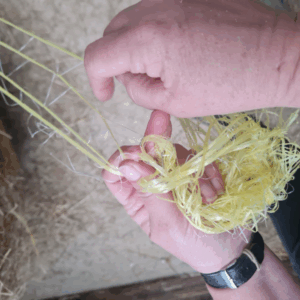
Agriplastic Project
The Agriplastic project is funded by the Global Challenges Research Fund & UK Research and Innovation. The aim of the project is to quantify the risk that agricultural plastics and associated co-contaminants may pose to the long-term health of smallholder farms in Low Middle-Income Countries (LMICs), with specific reference to food security and rural livelihoods. In addition, the project aims to identify practical, economic, socially acceptable and politically viable solutions to help remediate land contaminated with plastic and prevent further pollution from happening through social behaviour and policy change. The project is led by Professor Henny Osbahr and Dr Lewis Cameron.
African Livestock Observatory (ALO)
The African Livestock Observatory (ALO) was established in July 2024. It will be launched in May 2026, during the UN’s International Year of Rangelands and Pastoralists (IYRP). The ALO’s main objective is to amplify African scholarship and African voices in the global decision-making in relation to the polycrisis, namely the climate emergency and the catastrophic loss of biodiversity, both of which are most affecting the countries that are least responsible for it. In virtually all African countries, livestock-owning communities stand on the brink of a precipice in relation to cultural practices, modes of living and the livelihoods that they have practised for centuries.The Co-ordinator of the African Livestock Observatory is Dr. Andrew Ainslie.
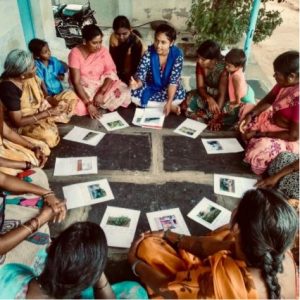
Andhra Pradesh Community-Managed Natural Farming (APCNF),India
APCNF is a grassroots agrarian movement in Andhra Pradesh, India. It is a low-cost, locally-sourced natural farming method that does not rely on the use of agrochemicals and has the potential to meet the twin goals of global food security and conservation of the environment. The project now in Phase 3 is being implemented by Rythu Sahikara Samstha, a non-profit organization established by the state government.An interdisciplinary team of soil and social scientists from the University of Reading are working to develop an evidence base to understand and review the strengths and weaknesses of the APCNF approach. Please click here for news and updates on the project.
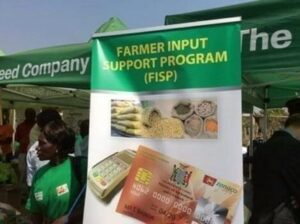
Assessing the Role of FISP in Enhancing Agricultural Productivity and Climate Resilience
The project aims to conduct a comprehensive evaluation of the FISP in Zambia, focusing on its impact on agricultural productivity, climate resilience, and pest management. Since its introduction in 2002, FISP has been a critical element of Zambia’s agricultural sector, with goals of boosting smallholder farmers’ income, enhancing food security, and alleviating poverty. However, despite its expansion and significance, challenges such as input delivery delays, inequitable distribution, and financial sustainability have raised concerns about its effectiveness. The project will evaluate whether FISP has effectively reached its intended beneficiaries and how it has influenced smallholder farmers’ ability to adapt to climate change and shocks. The project is led by Associate Professor in Economics, Dr Stafania Lovo and Post Doctoral Researcher, Albert Chongo.
BRAVE
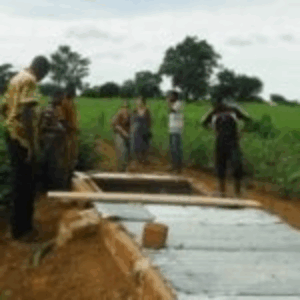
The BRAVE project aims to reduce risk and improve water security resilience of rural communities in sub-Saharan Africa by combining better understanding and planning of groundwater supplies with practical communication and knowledge exchange at all levels, from individual smallholder farmers to national government and regional bodies.
CeMI
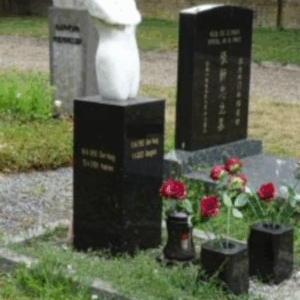
The CeMi project’s primary objective is to examine cemeteries and crematoria ‘gardens’ as public spaces of social inclusion, exclusion and integration with a particular focus on the migrant and Established Minority experience. CeMi is a part of the HERA 2019-2022 project Public Spaces: Culture and Integration in Europe.
Engaging Environments
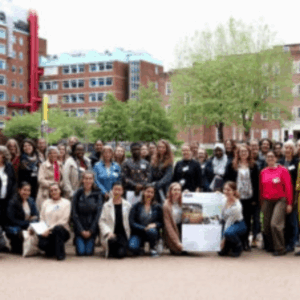
In response to the Climate Emergency and the Intersectional challenges of environmental and social justice, the Engaging Environments (EE) Project sought to build a UK wide Community of environmental scientists and diverse communities, working to reduce the impact of climate and biodiversity cris on the most affected people and places. The five years project is funded by funded by the Natural Environment Research Council (NERC).

Everyday Lives and Small Island States
The project explores how people’s daily activities and livelihoods intersect with physical environmental change in Fiji and the Maldives. By undertaking research with island and coastal communities, the main objective is to better understand how people support, accommodate, negotiate and resist such changes in their everyday lives.
Recently the project lead,Professor Alex Arnall joined PhD students partcipating in the Climate action studio to discuss coastal communities and climate change organised by the University of Reading’s The Pearl
HyCristal
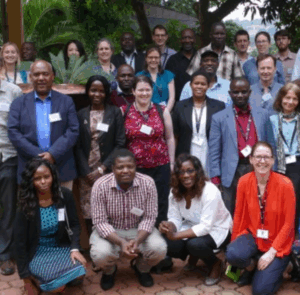
Water availability is fundamental for development in the East Africa. However, this resource is under stress from land degradation, pollution, and overfishing. These pressures are compounded by climate change thereby increasing the vulnerability of communities to water insecurity. HyCRISTAL works with decision-makers to manage water for a more climate-resilient future.
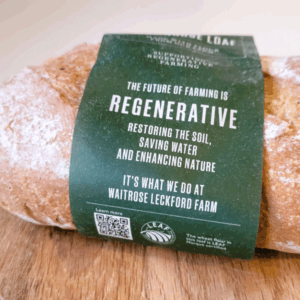
Knowledge and Innovation in Advisory Services for Regenerative Agriculture (KIARA) Project
The European Union supports the KIARA project through EIT Food, a Knowledge and Innovation Community initiative funded by the European Institute of Innovation and Technology (EIT). The project is led by Dr Sarah Cardey, Professor for the International Development Department, and will run for two years, focusing on training extension workers and other farm advisers in Regenerative Agriculture and extension skills.The EU supports Regenerative Agriculture as one of the most significant opportunities to help Europe address issues in human and climate health, as well as the financial well-being of farmers.
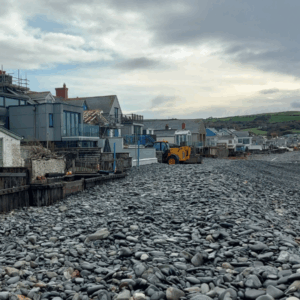
Life on the edge: Celebrating Borth and the Sea
People living in coastal communities have knowledge about their coastline and the natural world. They understand the risks involved in living close to the sea, including those associated with climate change and sea level rise. But they struggle to have their voices heard in local and national planning processes. They are sometimes represented by media, researchers and decision-makers in ways that do not reflect their local priorities and interests. To address this gap, a research project was conducted to find out how community-based exhibitions can explain the relationship between the people of Borth, a coastal village located in the county of Ceredigion, West Wales and the sea. For more information please visit: Life on the edge Celebrating Borth and the Sea
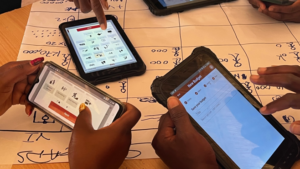
Preparing for Scale: Digital Climate Services for Smallholder Farmers in Zambia and Malawi (E-PICSA)
The E-PICSA project aims to scale a participatory extension and climate services approach (PICSA) to the whole of the Eastern Province in Zambia and to lay the foundations for sustainable scaling processes to national level in both Zambia and Malawi. This builds on work in the last two years to digitize the PICSA approach by co-developing an app with agricultural extension intermediaries and farmers. The E-PICSA app provides interactive tools, videos as well as locally specific climate information (historic and forecast) to support farmer decision-making and encourage adaptation practices.
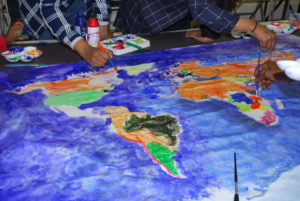
Transnational Families
Transnational Families Families in Europe is investigating the relationships between care, inequalities and wellbeing among different generations of transnational families in the UK, Spain, France and Sweden. This comparative, intergenerational project uses a multi-sited family-focused ethnographic and participatory action research methodology to co-produce the research with transnational families, peer researchers, third sector and statutory stakeholders.

Whitley Researchers
The Whitley Researchers focus on collaboration, co-production and participation to help local communities and organisations understand and tackle the complex issues surrounding wellbeing and social exclusion in South Reading. Through participatory research, the centre seeks to engage with and build upon the community’s assets.
Past Projects
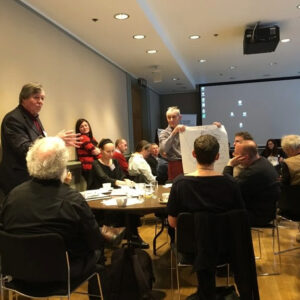
AALERT
AALERT is a transdisciplinary network that aims to foster debate and dialogue between artists, scientists, philosophers, policy practitioners, decision-makers and the public to articulate and advocate the role of arts research in communicating knowledge, opening-up different perspectives and creating new understandings of values within wider cross-disciplinary environmental research and decision-making collaborationsText
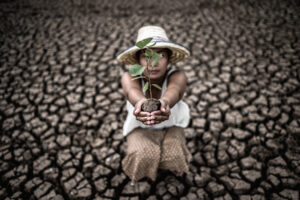
Adaptive Social Protection Information for enhanced Resilience (ASPIRE)
As part of the Weather and Climate Information Services for Africa (WISER) programme, ASPIRE’s aim was to integrate climate and livelihoods information into social protection (SP) decision-making in the Sahel. The overarching objective was to enhance resilience to climate shocks and facilitate dialogue between climate service providers and SP stakeholders.
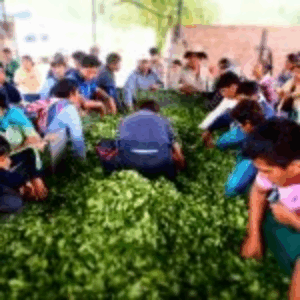
Drug Crops and Development in the Andes
The project provides a comparative analysis of the coca trade in Peru and Bolivia by contrasting the costs and benefits of development versus security-oriented policies. The overarching aim is to identify best practices, generate productive debates, and promote co-operation by linking farmers, policymakers, and scholars in both countries.
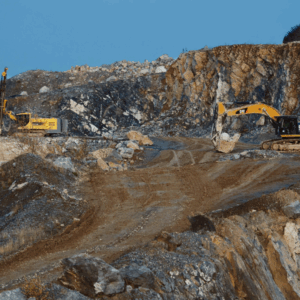
Gold matters
Despite its prevalence in low and lower-middle income countries, Artisanal and Small-scale Gold Mining (ASGM) is often associated with negative environmental, social, labour and health impacts which represent critical barriers to sustainability. Gold Matters explores whether societal transformation towards sustainable mining futures is possible in ASGM.
The Newton Project
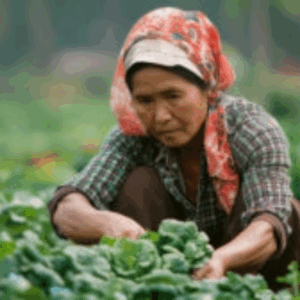
The livelihoods of most of the population in the Philippines are dependent on agriculture, yet the country is highly vulnerable to extreme weather events. Working with Aurora State College of Science and Technology, The Newton Project develops community-based climate change adaptation (CCA) strategies which integrate local knowledge and scientific technologies.