
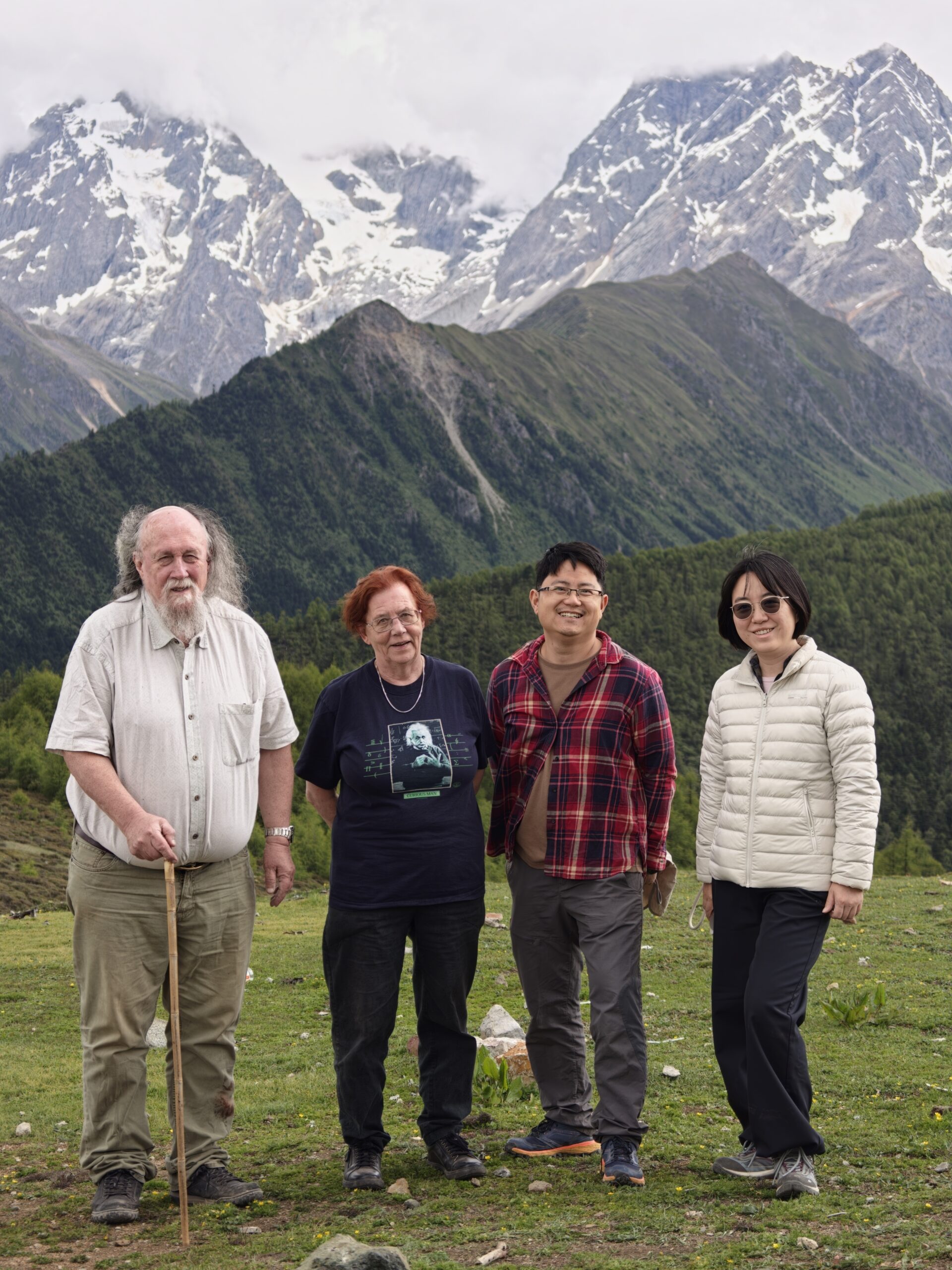

The LEMONTREE team is back in southwest China, where Professors Sandy Harrison and Colin Prentice are continuing their long-standing collaboration with colleagues at Tsinghua University. As Distinguished Visiting Professors at Tsinghua, Sandy and Colin spend time in China each year, working alongside students and researchers on field campaigns that help improve our understanding of how plants respond to changing environments.
This year’s fieldwork takes the team to the spectacular Baima Mountains in Yunnan Province, where they are based in a small town about an hour’s drive from Shangri-La.
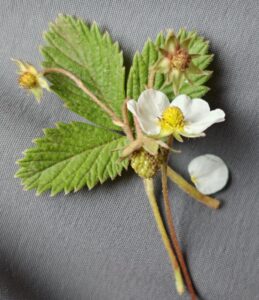
Their first day exploring the region confirmed that they had found what Sandy describes as a true smultronstellet – a Swedish expression meaning a “hidden gem” or favourite special place (Sandy would know as she did her PhD at Lund University in Sweden and her and Colin lived there for several years). Appropriately, wild strawberries were growing nearby too!
What makes the Baima Mountains such an exceptional natural laboratory is the remarkable environmental gradient packed into a relatively short distance. The team’s transect begins at elevations above 4,000 metres in alpine dwarf-shrub tundra, where yaks graze across the high mountain slopes. From there, it descends through a succession of mixed conifer and broadleaf forests before reaching semi-arid shrublands at the lowest elevations.
This dramatic transition in elevation creates equally dramatic changes in temperature, moisture and growing conditions. For plant scientists, it offers an ideal opportunity to investigate how vegetation adapts to contrasting environments while remaining within the same geographical region.
Over the coming weeks, the Tsinghua team will sample photosynthetic, hydraulic and fine-root traits from multiple woody species across 10–11 sites along the transect. By measuring these traits together, the researchers aim to understand how plants coordinate carbon uptake, water transport and belowground resource acquisition as environmental conditions change with elevation.
The work forms part of LEMONTREE’s broader goal of developing a more integrated understanding of plant function across environmental gradients, helping to improve predictions of how ecosystems will respond to future climate change.
The team is led by our intrepid Tsinghua colleague, Wang Han, ably supported by the world’s best taxonomist, Li Meng whose expertise in species identification is invaluable when working in such biodiverse mountain forests.
The field season is only just beginning, with sampling due to start in earnest over the coming days. We’ll be sharing more updates from the Baima Mountains as the campaign progresses, so watch this space!
You can read our previous blogs on Colin and Sandy’s visits to China: