Fellowship Opportunities
The Department of Meteorology hosts a thriving community of over 200 academics and research scientists and more than 150 students, working across a range of subjects including fundamental and applied weather, climate, and space weather science.
The Department prides itself on its friendly and supportive culture and holds an Athena Swan Silver award for the promotion of equal opportunities for women in science. To facilitate awareness of wider scientific activities, there are two Departmental seminars per week in each semester, and around 15 regular informal research group meetings, open to all, that cover the full range of scientific interests in the Department.
Fellowships
Fellowships are externally-funded grants which provide salary and research expenses for early career researchers and aim to support individuals on the journey towards research independence, in-between postdoctoral and academic positions.
Junior fellowships, such as the Horizon Europe Marie Sklodowska Curie Individual Fellowship, are closer to postdoctoral level. More senior fellowships, such as the UKRI Future Leaders Fellowship, NERC Independent Research Fellowship, STFC Ernest Rutherford Fellowship, or Royal Society University Research Fellowship are similar in status to permanent faculty. These Fellows will develop their own independent research programme, and typically co-supervise graduate students, postdoctoral research scientists, and win external funding to support their research.
We strongly support postdoctoral researchers who are becoming independent, from both inside and outside the department, to apply for Research Fellowships to come to Reading to set their own research agendas.
- The department will provide Fellows with office and laboratory space, and shared research facilities. They are also provided with a £6k start up fund and additional yearly incentives.
- Fellows are assigned a mentor to provide advice on all aspects of their career. They will have an annual Performance Development Review and Annual Review of research plans, with the opportunity to discuss achievements, mid-term and longer career plans.
- Almost all of our Fellows go on to be appointed to permanent posts, many in our department, but note that we are not able to guarantee a permanent post in the Department of Meteorology.
- Fellows are not expected to have a large teaching or administrative load (and usually funder rules prohibit spending more than 6 hours per week on non-research activities), but there will be opportunities to teach and become involved in departmental matters.
Fellowship Open Day in the Department of Meteorology
In May 2025, the Department of Meteorology held an Open Day to provide information and discussion of opportunities to prospective fellows. If you are interested in seeing the slides from the Open Day, including presentations from current Fellows, and video presentations about the Department, University’s Environment theme, and advice on applying for a fellowship then email fellowships@reading.ac.uk.
More information and how to apply for Fellowships in the Department of Meteorology
The University of Reading has an expert team of in-house research facilitators that can help with all aspects of fellowship applications for both internal and external candidates, spanning postdoctoral to established career levels. They can help identify the appropriate fellowship type, suitable academic contacts, and a mentor for your fellowship application. They can also provide access and opportunities to review examples of previously successful fellowship proposals. You can access further information on processes, deadlines, and forms here.
Please send all queries in the first instance to fellowships@reading.ac.uk
Examples of Fellowship holders in the Department of Meteorology
- Andrea Dittus, Towards climate stabilisation: understanding changes in climate, climate variability and impacts
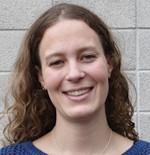
I am a NERC Independent Research Fellow based at the University of Reading’s Department of Meteorology and the National Centre for Atmospheric Science (NCAS). My research aims to better understand the Earth System response to a cessation of greenhouse gas emissions at global and regional scales, using state-of-the-art Earth System Model simulations. My fellowship is titled: “Towards climate stabilisation: understanding changes in climate, climate variability and impacts”. The fellowship provides me with the time and resources to build my independent research group over a period of 5 years. After spending several years at the University of Reading as a postdoctoral researcher, I was excited to continue my career here as an independent research fellow. One aspect that I particularly enjoy here in Reading is the breadth of expertise available in the department; and interacting with the many colleagues here in a friendly and supportive atmosphere. As one of the largest departments of meteorology in the UK and the world, there are many colleagues with common research interests, as well as many colleagues with expertise outside of my own, allowing me to broaden my horizons and understanding of other relevant research. So far, my fellowship has led to new opportunities for collaborations, both with internal and external colleagues. A highlight since becoming a NERC fellow here in Reading has been supervising my first PhD student, funded through the NERC Scenario DTP.
- Kieran Hunt, High-impact weather over India
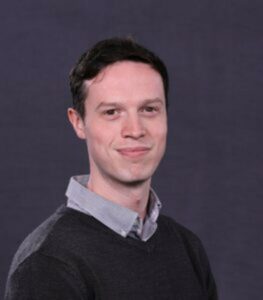 I was awarded a NERC Independent Research Fellowship in the summer of 2022, giving me a five-year remit to continue my research into high-impact weather over India. The flexible nature of this fellowship has allowed me to explore new meteorological theories and applications over South Asia, including the relationship between weather variability and renewable energy; using AI to discover dynamical relationships in the summer monsoon, and to develop better understanding of how past and future climates affect the monsoon; and building new dynamical theories to explain the processes that lead to heavy rainfall across South Asia.
I have also been afforded the time to continue to build and work alongside my network of international collaborators. The university has been a tremendous support to me throughout—from helping me put my proposal together (including a mock interview) to recently mentoring me through to promotion to associate professor.
- Luke Barnard, Data Assimilation Revolution in Space Weather Forecasting
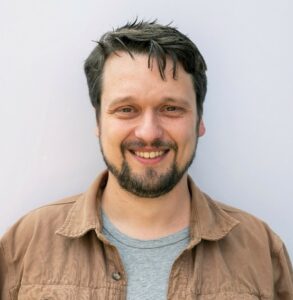 I hold a UKRI Future Leaders Fellowship that supports my project DARES: Data Assimilation Revolution in Space Weather Forecasting. Coronal Mass Ejections are large eruptions of magnetised plasma from the Sun and they cause the most severe space weather at Earth. For example, they can disrupt services we rely on, such as power distribution and telecommunications. My research is developing data assimilation methods to assimilate white light remote sensing observations of the flow of the solar wind and coronal mass ejection plasma from the Sun to Earth. These methods enable more accurate simulations of the evolution of coronal mass ejections, from which we can construct more useful space weather forecasts. It was clear to me that the University of Reading was the best place to conduct this research, due to its joint world-leading expertise in both data assimilation methods and space weather science and forecasting. The UKRI Future Leaders Fellowships have a focus on enabling interdisciplinarity and research impact. This makes it the ideal funder for DARES, through which I’ll also be working with partners at the UK Met Office and Rutherford Appleton Laboratory to transition my teams research results into operational space weather forecasting products.
Last updated 15/10/2025.