
Winner of the Research Output Prize 2025 – Prosperity & Resilience
Xiaolun Yu, Lecturer of Real Estate Finance, Henley Business School, explains why China’s most economically successful cities paradoxically impose stricter building height restrictions for housing than smaller cities, and how this contributes to housing affordability problems.
You’d expect China’s most economically successful cities like Beijing and Shanghai to be packed with skyscrapers to house their millions of residents. But my research reveals an opposite pattern – many of these urban economic powerhouses actually restrict building heights for housing more than smaller cities do.
Land use regulations, such as the green belt in the UK and zoning policies in the US, are set by governments to balance competing priorities: achieving desirable social, economic and environmental outcomes while determining how land can be used and ultimately shaping the size, function and dynamics of cities.
Economists argue that restrictive land use regulations (like low building-height limits) reduce the quantity of housing units that developers can build, which pushes up housing prices.
This thinking is reflected in policymaking. Take the UK’s current housing crisis – the Labour government has set a target to deliver 1.5 million new homes across its five-year term. To meet these housing needs, the government has proposed reforms to the planning system and a review of the green belt to identify “grey belt” – poor-quality areas within the green belt – for new construction.

Interestingly, land use regulations vary dramatically between cities. Research shows that the San Francisco and New York City Core-Based Statistical Areas are the most highly regulated markets in the US. The supply-side regulatory constraints, combined with high demand, lead to high housing prices and affordability issues.
So why do cities set stringent land use regulations and make it difficult to build new housing? In developed countries such as the UK and the US, different theories have been proposed. For instance, “not in my back yard” (NIMBY) residents may influence the local political process and oppose new developments to protect their property values and the local environment.
Yet little is known about what drives these regulations in emerging economies – many of which are rapidly urbanising and need high-quality land use planning for sustainable city developments.
Low-rise buildings in big cities in China
My study tackles this gap by exploring what determines land use regulations in China. I examined a key land use parameter called Floor Area Ratio (FAR), which controls construction density.
The FAR upper limit regulates the maximum ratio of a building’s total floor area relative to the land parcel size. For example, a FAR of 2.0 means you can build twice the floor space of your land plot – so on a 100 square metre plot, you could build 200 square metres of floor space across multiple storeys. This matters enormously for housing supply and land value, as it determines how many housing units can be produced on a given plot.
In China, local governments sell land parcels to real estate developers and collect the revenues. When I analysed land transaction records, I discovered something counterintuitive: economically vibrant cities tend to design low-rise buildings for residential use compared with other cities. This spatial difference is significant – for instance, the average FAR upper limit for residential use is 1.9 in Shanghai and 2.3 in Beijing, both lower than the national average of 2.8.
This finding contradicts the conventional wisdom. We’d naturally assume that major cities construct tall buildings to accommodate growing populations and economic activities. Instead, low-rise buildings reduce the supply of housing and push up housing prices. Research confirms that supply isn’t keeping pace with demand in tier-one cities such as Beijing and Shanghai, creating a serious housing affordability problem.
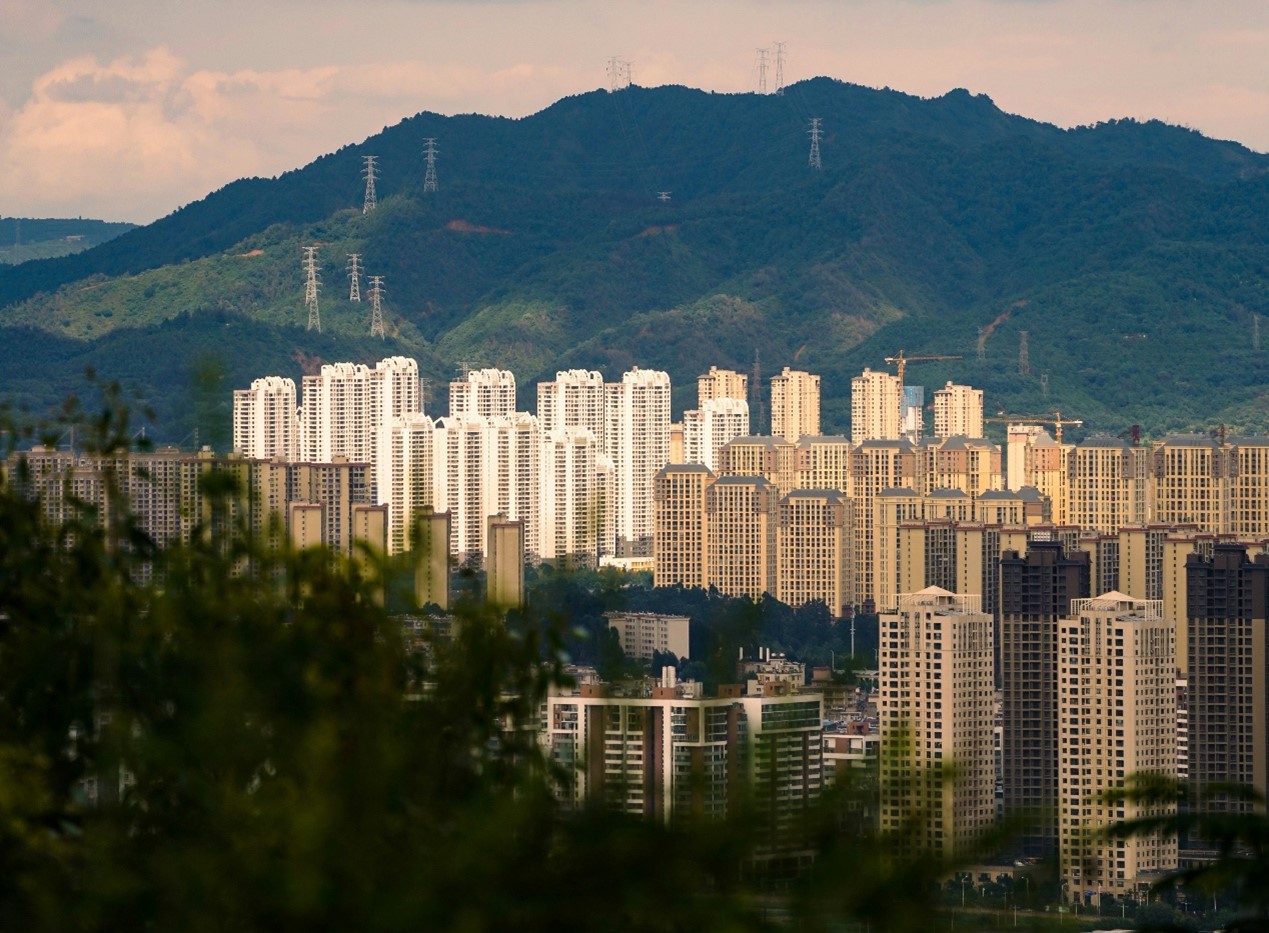
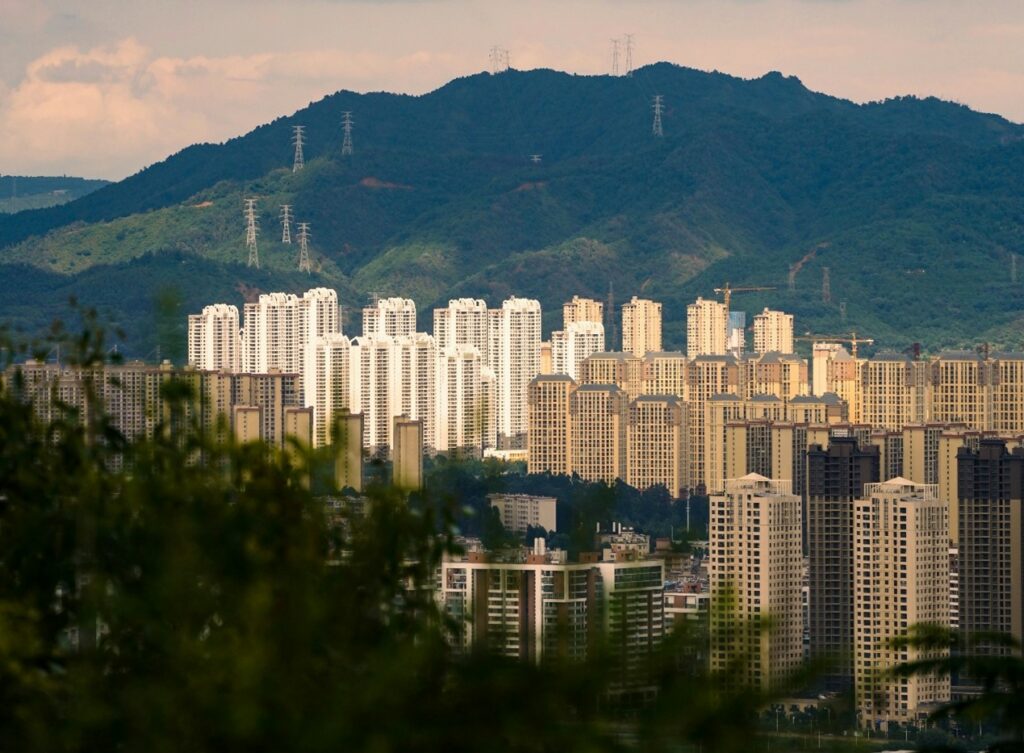
Meanwhile, some smaller cities have constructed high-rise buildings that sit empty – the so-called “ghost towns” that have captured media attention worldwide. Recent research confirms a decrease in overall housing utilisation efficiency in China, with the over-supply of housing particularly acute in low-tier cities.
The trade-off for high FAR design
So why are FAR limits set differently across Chinese cities? I argue that local governments trade-off between the benefits and costs of high construction density when they design FAR limits.
High construction density can increase housing supply and reduce housing costs. Besides, land values rise with FAR limits, meaning local governments can set high FAR limits to collect more revenue for public service provision. My analysis of land transactions and residential projects shows that FAR limits are usually binding in practice – developers tend to build as densely as they are permitted to.
However, high construction density may bring social and environmental problems: more noise, pollution and congestion. My empirical findings confirm that construction density correlates with higher local PM2.5 levels and fewer green spaces.
Major cities such as Beijing and Shanghai can collect sufficient revenue from local taxes and other sources. This means they are less financially reliant on land sale revenues, and so can place more weight on the costs of high construction density – leading them to design lower FAR limits.
Smaller cities have different fiscal conditions. Because they are more reliant on land sales, they tend to design higher FAR limits to boost revenues, pushing up the total supply of housing.
I developed a spatial equilibrium framework to formalise this mechanism and tested it using over 400,000 land transactions across China. The results strongly support the theory that local economic and fiscal conditions influence land use design and contribute to housing affordability issues and spatial inequality.
The contrast is stark: while FAR limits are relatively low and housing prices are high in Beijing and Shanghai, housing units in some smaller cities are over-supplied and can be bought for only 400 RMB/m2 (around £41 per square metre).
What this means for the future
My ongoing research digs deeper into these supply-side factors. I’m currently measuring the regulatory taxes and fees incurred during the real estate development process in China. Early findings suggest that these charges significantly reduce new construction and drive up housing prices, especially in major cities.
This research raises important questions about urban development. How should we think about spatial equality and housing affordability in fast-growing cities? The United Nations projects the proportion of the world’s population living in urban areas to increase to 68% by 2050, with most of the increase taking place in Asia and Africa. As China and other emerging economies continue their rapid urbanisation, it will be crucial to explore how cities can balance fiscal needs while developing and urbanising sustainably.
Cover photo by Xinle M on Unsplash. Green belt photo by Tom Wheatley on Unsplash.