
Winner of the Research Output Prize 2025 – Environment
Jacob Gardner, Postdoctoral Research Associate at the University of Reading, and Lauren Wilson, PhD student at Princeton University, examine whether Bergmann’s rule – the principle that animals in cooler climates tend to be larger – has been a consistent driver of body size evolution throughout Earth’s history.
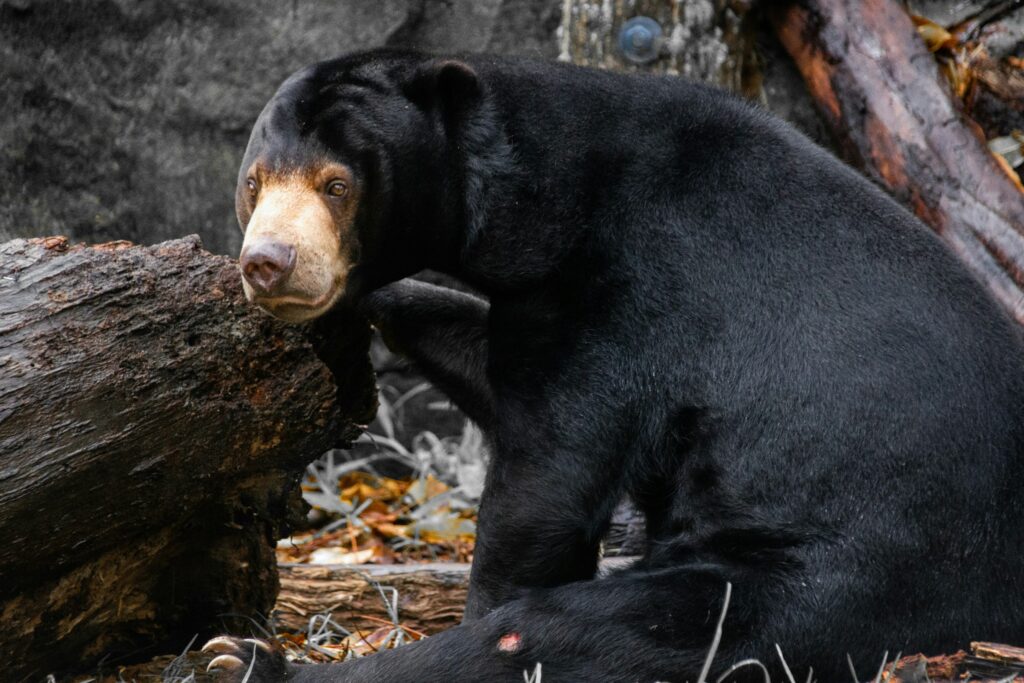
Picture a polar bear next to a sun bear from Southeast Asia. The Arctic giant dwarfs its tropical cousin. This size difference seems to follow a pattern that scientists have noticed for nearly two centuries: animals living in colder places tend to be bigger than their warm-climate relatives.
This phenomenon is called Bergmann’s rule, named after the 19th-century German biologist Carl Bergmann. The logic seems sound – larger bodies retain heat better in cold environments, giving bigger animals a survival advantage in chilly climates. Biologists have long considered this one of nature’s fundamental principles, with examples ranging from emperor penguins in Antarctica being larger than Galápagos penguins to moose in northern Canada outweighing their southern relatives.
But biological “rules” are only as good as the evidence supporting them. And we wanted to know: has this pattern held true throughout Earth’s history, or is it a more recent development?
Dinosaurs: the ultimate test subjects
To answer this question, we turned to some of the most successful animals ever to walk the Earth – dinosaurs. These remarkable creatures evolved into every conceivable body size, from chicken-sized Compsognathus to the colossal long-necked sauropods weighing dozens of tonnes. They lived everywhere from polar regions to tropical forests for over 160 million years – making them perfect candidates to test whether Bergmann’s rule has been a consistent driver of evolution.
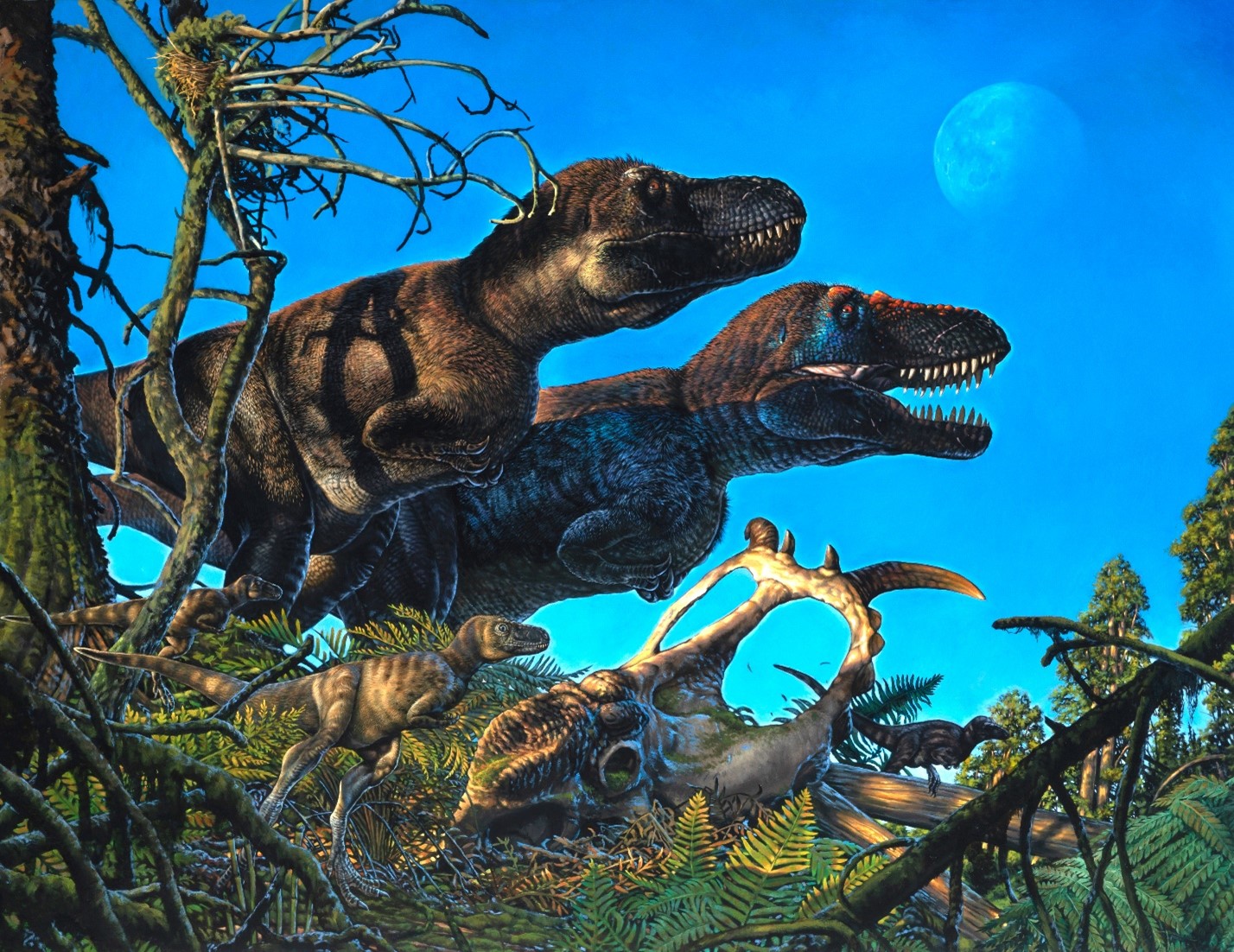
We collected data on 339 dinosaur species, including early birds, plus 62 mammals from the Mesozoic Era (roughly 252 to 66 million years ago). Our dataset even included dinosaurs from Alaska’s Prince Creek Formation – the only dinosaurs known to have endured cold, dark winters.
But testing ancient climate patterns isn’t straightforward. We had to account for three major complications that make fossil research tricky.
Rewinding the planetary clock
First, continents move. The fossils we dig up today aren’t necessarily where those animals lived millions of years ago. When the first dinosaurs evolved over 230 million years ago, all the continents were together in a supercontinent called Pangaea. Over the following 200 million years – the entire span of dinosaur evolution – these landmasses drifted closer to their current positions.
We used sophisticated computer models to “rewind” continental drift and figure out where each fossil site was actually located when those dinosaurs were alive.
Second, ancient climates were dramatically different. The Mesozoic world was much warmer overall than today, with no permanent ice caps. We collaborated with climate scientists to estimate local temperatures at specific locations and times, using the same climate models that help us understand modern global warming.
Third, we needed to account for the fossil record’s quirks. Bigger bones preserve better than smaller ones, and palaeontologists are more likely to spot large fossils in the field. We developed statistical methods to correct for these biases.
The surprising results
When we crunched the numbers, accounting for evolutionary relationships between species, we found something unexpected: there was no evidence for Bergmann’s rule in Mesozoic dinosaurs or mammals.
This could be explained by the warmer global temperature of the Mesozoic. With a new methodology in hand, we then turned to modern mammals – the poster children for Bergmann’s rule. Do they show the expected pattern?
They didn’t. We analysed 2,305 modern mammal species and found no clear relationship between body size and temperature when accounting for evolutionary relationships. This came as a genuine shock, given how often Bergmann’s rule is cited to explain why northern mammals like moose and bears are bigger than their southern cousins.
Birds tell a different story
Modern birds – the living descendants of dinosaurs – provided our most intriguing results. We found no relationship between bird size and latitude (how close they were to the poles), but we did detect a weak connection between body mass and temperature – about 13% of bird size variation could be explained by temperature differences.
This raises fascinating questions. If Bergmann’s rule was truly fundamental, why don’t we see it in mammals or ancient birds? Why only in some modern birds?
Our preliminary investigations suggest recent climate change might be involved. The greatest historical changes in bird sizes appears in groups that rapidly diversified and spread around the world within the last 23 million years. This timing coincides with global cooling trends and, more recently, with documented cases of birds shrinking in response to modern warming.
Rethinking biological rules
Our research highlights the power of deep-time perspectives in testing ecological principles. Just because we observe a pattern in today’s world doesn’t mean it represents a fundamental law of nature.
The fossil record reveals that what we consider universal rules might actually be recent developments, shaped by Earth’s current climate conditions or evolutionary history. Bergmann’s rule, despite its intuitive appeal and frequent citation, doesn’t explain most of the body size diversity we see in warm-blooded animals.
This matters for conservation. As climate change accelerates, we need to understand which biological principles are truly robust and which might break down under changing conditions. Our findings suggest that predicting how animal body sizes will respond to future warming is more complex than simply inverting Bergmann’s rule.
The lesson? Even well-established biological principles deserve rigorous testing across different timescales and species – you never know what the data might reveal.
https://doi.org/10.1038/s41467-024-46843-2
Cover photo by James Havens.
Sun bear photo by Tarryn Grignet on Unsplash.