
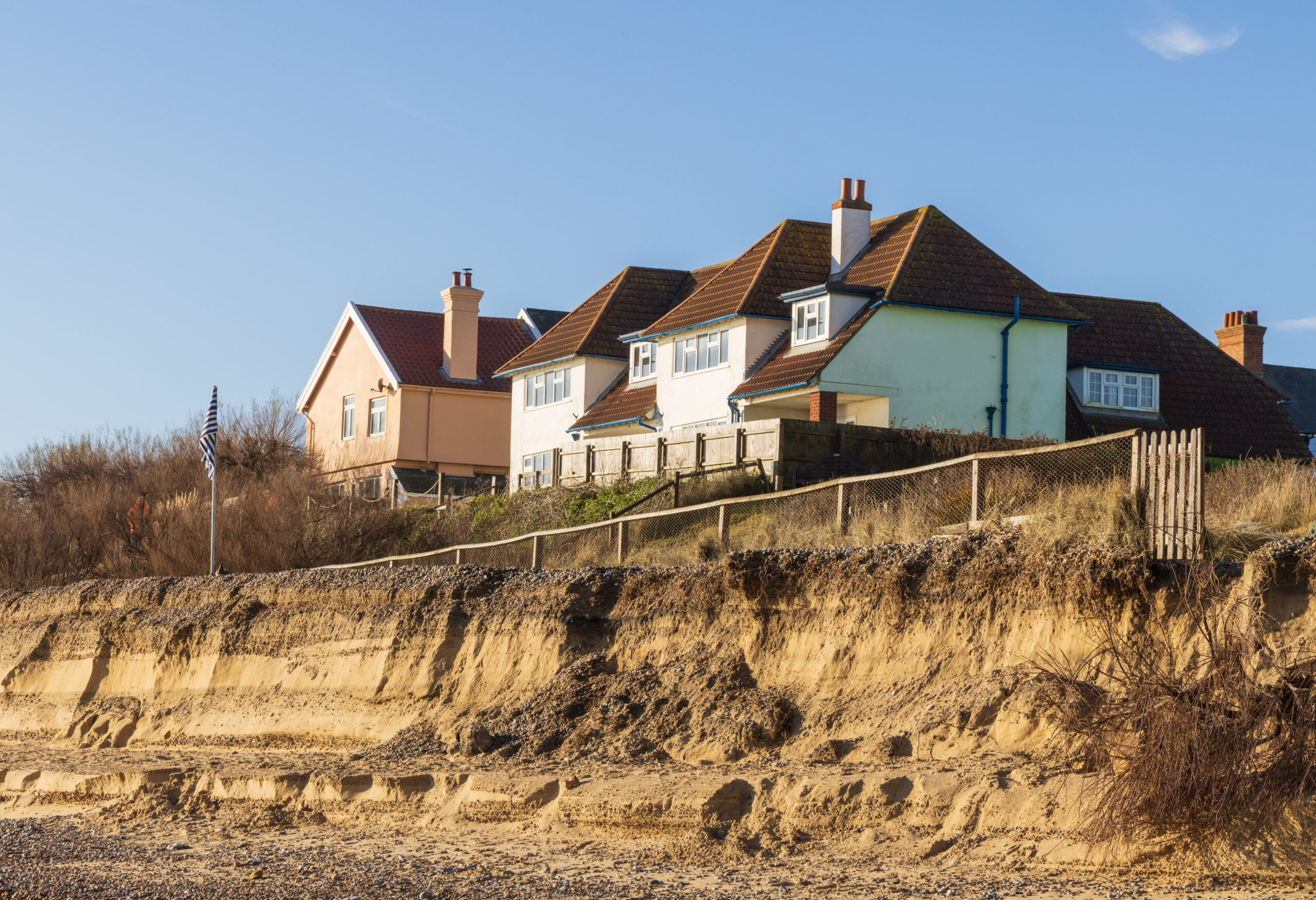
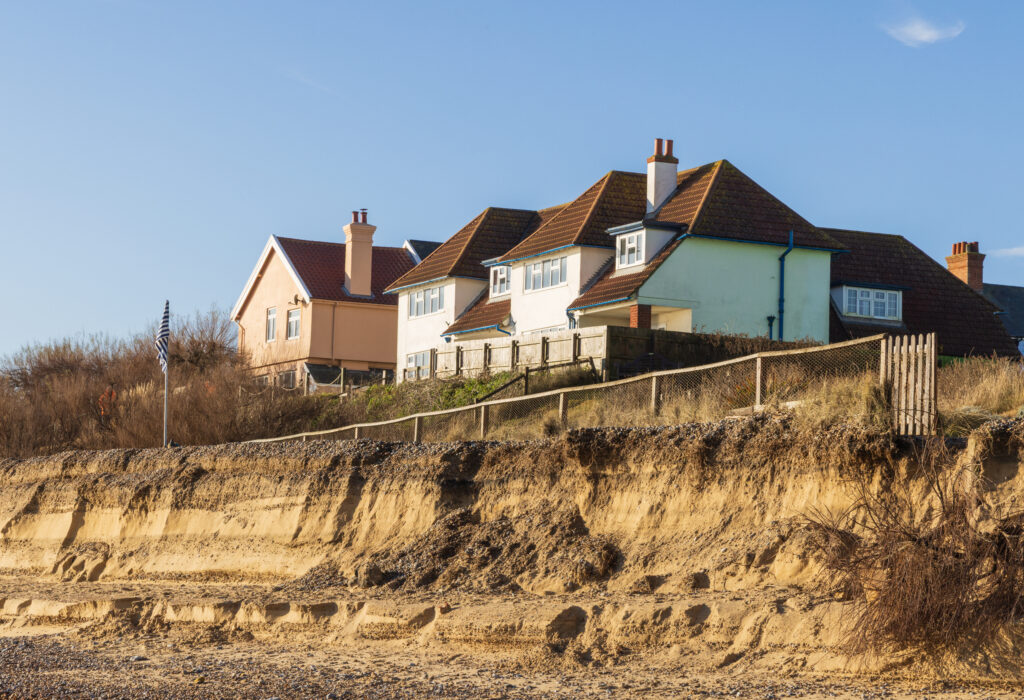
Recent storms washed away large sections of roads in the UK after sea defences were damaged. For residents, it was a shock. But for coastal scientists, it was not unexpected.
Parts of the A379 between Torcross and Slapton, in south Devon, collapsed leaving a 200-metre stretch of road broken apart and part of a nearby car park destroyed. Engineers say even steel-reinforced protection failed under repeated wave action.
The road runs along the crest of a shingle barrier beach, with the sea on one side and Slapton Ley, a freshwater lake, on the other. Recent monitoring shows the beach has become narrower and steeper as storms move sediment along and away from the shoreline.
With less material in front of it, waves now break closer to the road and can undercut the edge of the carriageway. In places like this, the problem is not a single extreme storm. Rather, it is the gradual loss and redistribution of beach material that leaves the road increasingly exposed.
Hard defences such as seawalls and rock armour are often the first response. They can hold the line for a while, but they do not remove the force of incoming waves. The energy simply moves elsewhere, often speeding up erosion further along the coast. The risk is diverted rather than resolved.
As sea levels rise and storms intensify, these defences simply cannot keep up. What they usually provide is time, not lasting protection.
Even the science used to inform coastal management decisions comes with caveats. Computer models help estimate how beaches might change in the future, but real coastlines are messy and constantly evolving. Small differences in the assumptions of these models can produce very different forecasts, which makes long-term planning difficult.
Natural ways to manage the coastline are increasingly put forward as alternatives. Restoring dunes, saltmarshes or wetlands can help absorb wave energy while supporting biodiversity and storing carbon. These natural landscapes can adapt, hard defences cannot.
However, they are not quick fixes. They take time and space to establish, and their protection varies. Studies show they can reduce wave energy, but often only modestly reduce flooding during extreme events.
Public expectations often pull the other way. In the UK, natural ways to manage the coastline are popular in principle, yet when storms threaten, people tend to favour hard defences because they offer immediate, visible protection, even if it does not last.
The economics add another layer.
Flood and erosion risks affect where people live and invest. When people see flood maps, they often look elsewhere and pay less for homes in exposed areas. Property prices and insurance costs reflect that. But these maps are usually treated as certain, even though they are not, so prices can fall suddenly after major storms.
In practice, that means money and development often remain concentrated in places that science suggests will become increasingly vulnerable.
A wake-up call
The situation at Slapton brings all of this into focus. Rebuilding the same stretch of road after every storm may not be physically or financially realistic.
Some shoreline plans already acknowledge this potential reality through policies such as managed realignment or “no active intervention”, allowing the coast to move inland and creating natural buffers such as mudflats and marshes. In some places, relocating development inland may simply be safer and cheaper than trying to defend an increasingly exposed shoreline.
But these decisions come with real trade-offs.
Roads may need to be rerouted. Farmland may flood more often. Homes and businesses may have to relocate. Existing habitats may be lost before new ones establish. In areas dominated by high-value waterfront properties or second homes, decisions about who receives protection, and who does not, quickly become political as well as practical.
The alternative is a costly cycle of damage, repair and rebuild, with less benefit each time.
Slapton is not simply an engineering failure. It is a reminder that coastlines are inherently dynamic and cannot always be pinned in place. Seawalls can buy time. Nature can help soften impacts. Better information can guide smarter decisions. But none of these removes risk altogether.
Long-term resilience means accepting how coasts really behave and being practical about where to defend, where to adapt and where it may be wiser to step back and let the shoreline reshape itself.
Avidesh Seenath, Course Director, MSc Environmental Change and Management, University of Oxford and Scott Mahadeo, Lecturer in Economics, University of Reading
This article is republished from The Conversation under a Creative Commons license. Read the original article.