
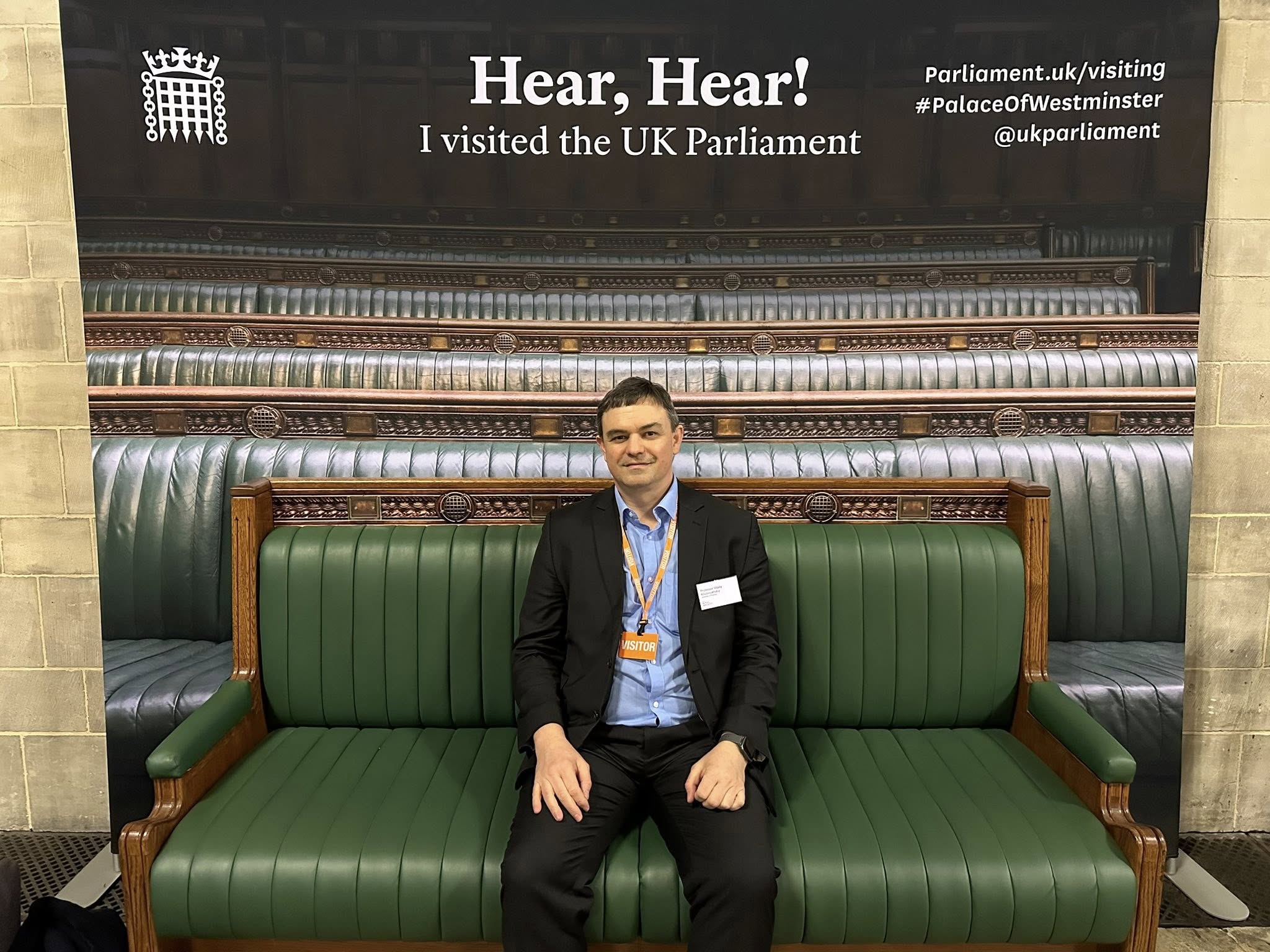
I recently completed a week at Westminster through the Royal Society Pairing Scheme, which took place on 16–19 March 2026, and I wanted to share some information that could be used for a possible news story.
This was a highly competitive scheme. The Royal Society received more than 300 applications and selected only 30 participants. The University of Reading was represented by Dr Selin Kudret from Henley Business School and me.
During the week, the Royal Society organised a series of activities designed to help scientists engage with governmental organisations and better understand how they can contribute to science policy. We attended presentations from speakers representing the Royal Society, the Institute for Government, the House of Lords Science and Technology Committee, the Parliamentary Office of Science and Technology, the Government Chief Scientific Adviser, the Government Office for Science, the Royal Academy of Engineering, and other organisations.
The programme also included very interesting interactive, game-based activities, which gave us a practical insight into how different science offices and advisory structures within government gather relevant information, consider possible responses, and communicate evidence to the appropriate people in government. It was fascinating to see how much pressure can be placed on those involved in science advice, particularly when responses need to be accurate, balanced and delivered in a timely manner.
Each participant from academia was paired with a Member of Parliament or another civil servant. I was paired with Yuan Yang, MP for Earley and Woodley. I had a meeting with Yuan and members of her team, and I also had the opportunity to shadow her at an advisory board meeting of The House magazine. This weekly parliamentary magazine, published when Parliament is sitting, features interviews with politicians, as well as news, opinion, analysis, and coverage from both the House of Commons and the House of Lords.
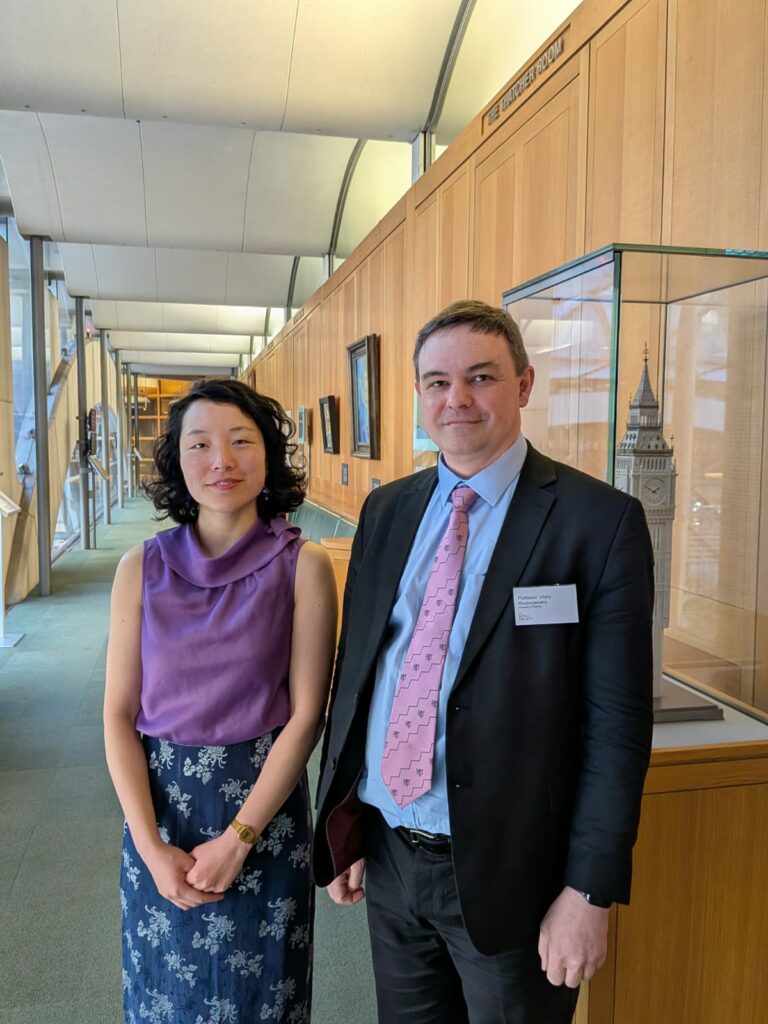
During our conversations, Yuan and I discussed my research, alternatives to animal experimentation, research funding, immigration-related challenges, and some of the wider challenges currently facing universities and research funding in the UK. Following this meeting, I also had the opportunity to attend Prime Minister’s Questions.
One of the most interesting aspects of the scheme was learning more about the different structures within Parliament and government that support the use of scientific evidence in policy-making. I was surprised to see that several offices and organisations are responsible for science advice and for gathering, evaluating and summarising evidence on topics relevant to many areas of research. For example, I was particularly interested to read a POSTnote about the state of animal experimentation and alternatives. Given my own research on alternative models and the 3Rs, including the use of live invertebrates for toxicological testing, I would have been very happy to contribute expertise to such a briefing had I been aware of the opportunity earlier.
Overall, this was a brilliant opportunity for me to gain insight into the work of government, the development of policy, and the ways in which I might contribute to policy discussions through my own expertise. It was also a useful reminder that scientific research does not exist in isolation, and that evidence needs to be communicated clearly if it is to support decision-making. I came away with a better understanding of how researchers can engage with Parliament, and how important it is for scientists to make their expertise visible and accessible.
Following the scheme, I also signed up to the UK Parliament fortnightly newsletter, which provides updates on new opportunities for the research community to engage with Parliament. I plan to monitor these opportunities in case my expertise could be valuable and my research could contribute to science policy discussions or have a broader policy impact.
We are now planning a reciprocal visit for Yuan to the University of Reading, where she will be able to see my newly established live invertebrates laboratory and learn more about our work on alternative models for pharmaceutical and toxicological research.
Professor Vitaliy Khutoryanskiy is professor of formulation science in the School of Pharmacy and is a Fellow of the Royal Society of Chemistry (FRSC), Academy of Pharmaceutical Sciences (FAPS), Higher Education Academy (FHEA) and Member of the Society of Chemical Industry and of the United Kingdom Society for Biomaterials.
Dr Selin Kudret is associate professor of leadership at Henley Business School, a Fellow of the UK Higher Education Academy (FHEA) and director of the British Army’s Higher Education Pathway (AHEP) degree programme in partnership with the MOD.