
SCoP Members
Prof Simonetta Longhi. Co-Director, University of Reading Statistics Community of Practice
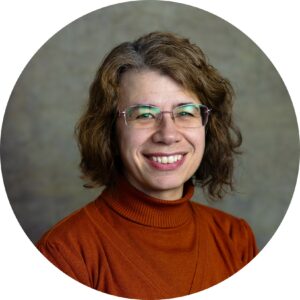
Department of Economics
School of Philosophy, Politics and Economics
Simonetta is an applied economist with experience using large individual and household data such as the UK Labour Force Survey, the British Household Panel Study, and the UK Household Longitudinal Study. Most of her research focuses on inequalities in labour market outcomes by gender, ethnicity, and disability. Her research interests also include topics related to unemployment, underemployment and overwork, on-the-job search and retirement.
Dr Francesco Tamagnini. Co-director of Reading Statistics Community of Practice
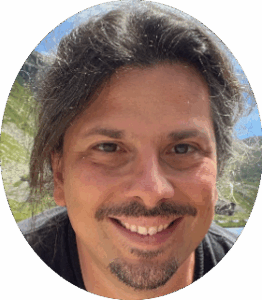
Reading School of Pharmacy
School of Chemistry, Food and Pharmacy
Dr Francesco Tamagnini is a neurophysiologist and Lecturer in Pharmacology at the University of Reading, UK, where he leads research focused on the neurophysiological mechanisms underlying dementia, particularly Alzheimer’s disease. Originally from San Marino, Dr Tamagnini has been recognized for both his scientific contributions and his public engagement on dementia and neuroscience.
Get help from our experts
Our SCoP Volunteers have extensive expertise in statistical and other quantitative methods and are happy to be approached for collaboration, research guidance, or to discuss shared research interests. If you seek statistical or quantitative support you can contact our volunteers directly to discuss your project.
Here is the list of our current volunteers and their areas of expertise.

Discipline: Psychology
Method and Data: Sam is an expert in numerous advanced analytic methods, including psychometrics (common variance factor analysis, item response theory, measurement invariance, differential item functioning), latent variable modelling techniques (structural equation modelling family: latent growth curve modelling, path analysis, latent class analysis, latent profile analysis), intensive longitudinal methods, multilevel modelling, and supervised machine learning (e.g., classification and regression trees). Sam has experience working with both academic and industry partners in psychology, public health, social work, philosophy, engineering, and religious studies, including the North Carolina Department of Adult Corrections, Uniformed Services Office, and U.S. Department of Defense.
Research: Sam’s research includes work in stigma against vulnerable groups, suicide prevention, suicide risk, and improving measurement.
Discipline: Economics
Method and Data: Simonetta can offer support with a variety of statistics and econometric methods to detect (causal) relationships between variables. Her expertise is on individual and household behaviours, attitudes, and outcomes. She has experience working with data such as UK Labour Force Survey, the British Household Panel Study, the UK Household Longitudinal Study, and other international individual/household datasets.
Research: Her research focuses on inequalities in labour market outcomes by gender and ethnicity, but also include topics related to job search, unemployment, retirement, and migration.
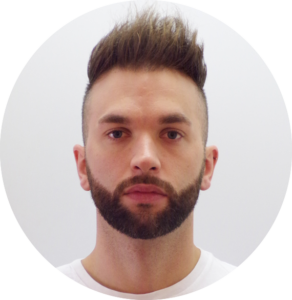
Discipline: Climate Science, Earth Observation, and Climate Risk
Methods and Data: Ross can provide support in the statistical analysis of weather and climate data, including time series analysis, climate variability assessment, extreme event analysis, product skill evaluation and uncertainty quantification. He routinely works with large satellite and model datasets using Python, applying statistical methods to assess climate patterns, evaluate product performance and strengthen understanding of climate risk. He has experience collaborating with both academic and industry partners, particularly in the development of climate services and risk applications across Africa.
Research: His research focuses on advancing the use of satellite-derived environmental indicators, such as rainfall and soil moisture, for hazard monitoring and early warning, and on their application to disaster risk finance, particularly across Africa
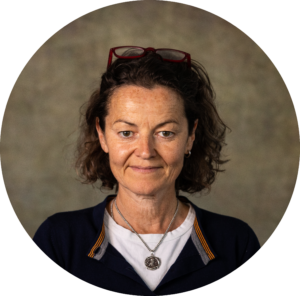
Discipline: Education and Psychology
Method and Data: Daisy can offer support with quantitative research design and statistical analysis in the social and behavioural sciences. She has experience with experimental and quasi-experimental designs, survey data, longitudinal data, and with mixed-effects models. She can also advise on power analysis, effect sizes, model interpretation, and transparent reporting, and has experience supporting researchers who are developing their statistical understanding.
Research: Her research spans education and psychology, with a primary research interest in literacy development, and the cognitive and environmental factor that influence it. Her research has typically involved behavioural, quasi-experimental methods but more recently she has become interested in participatory research using qualitative as well as quantitative methods. She’s also recently become interested in using large, longitudinal administrative datasets and is developing knowledge of statistical techniques allowing causal relationships to be inferred from these data.

Discipline: Applied Statistics and Cognitive Science
Method and Data: Etienne provides support in statistical modelling and quantitative analysis of behavioural and experimental data, including Bayesian modelling and experimental design. His methodological expertise covers inferential statistics applied to perception and decision-making, with experience analysing laboratory-based experimental datasets and complex neuroimaging data (fMRI and EEG).
Research: His work lies in a wide remit of fundamental research and industrial applications, including reproducibility of science, climate change science, machine learning, neuroscience and cyber psychology.
Discipline: Neuroscience and biology
Method and Data: Francesco can offer support with defining the working hypotheses and experimental design to address a number of scientific questions, especially in the biomedical field. He can provide support helping to choose the adequate statistical test for interrogating your datasets, discuss the interpretation of data (significance, power, effect size) and navigate you through the different aspects of frequentist or Bayesian approaches to hypothesis testing. He will also be able to assist you in choosing the most adequate format for your descriptive statistics.
Research: His research focuses on the neuronal and molecular correlates of memory and learning and their alteration in dementia inducing disorders, such as Alzheimer’s disease.