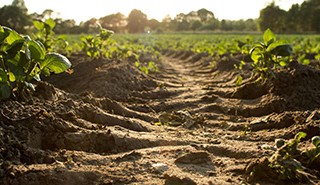

Europe’s soils are under increasing threat, and with them, our ability to produce the food, fuel and raw materials the continent depends on.
Now, researchers at the University of Reading are leading a major European project to help farmers and foresters alike produce plant biomass, which is used to make fuel, generate electricity, and create materials in a more sustainable way.
The SOILBIOMASS+ project will bring together researchers, farmers, foresters, land managers, industry and policy actors to find practical solutions to a shared problem: how to meet Europe’s growing demand for biomass without further damaging already fragile soils.
The project will span a range of landscapes, including cropland, peatlands, forests, agroforestry systems, and marginal lands, deepening our understanding of how growing plants can improve soil conditions and functions. Researchers will use this knowledge to show which landscapes are best suited to specific types of biomass production, both today and in future as the climate changes.
The team will gather consistent, comparable data on how farming, forestry and agroforestry practices affect soils across Europe, making it easier to spot what works and where. The ultimate goal is to translate that science into clear, practical guidance, giving farmers, land managers and policymakers the evidence they need to make better decisions about land use and sustainable biomass production.
“Europe faces a dual challenge: it needs more biomass for food, feed, materials and energy, yet our soils are under mounting pressure from degradation, biodiversity loss and climate change,” said Dr Jorge Campos-González, Senior Research Fellow at the University of Reading and project coordinator.
“Simply producing more biomass doesn’t automatically improve soils. In many cases, it can actually make things worse, particularly on peatlands and other vulnerable landscapes.
“This project asks how Europe can produce what it needs in ways that actually restore soils and protect long-term food security.”
Reading’s team also includes Dr Laurence Smith and Professor Martin Lukac, whose expertise in agri-food sustainability assessment and soil ecology strengthens the project’s scientific leadership.
A smarter approach to soil and biomass science
What sets SOILBIOMASS+ apart is that it brings together living lab approaches, field data, advanced modelling, geospatial intelligence and AI-driven analysis into a single, joined-up research framework built directly with the people who manage the land. This integrated approach has not previously been attempted at this scale.
The University of Reading is leading the project’s data work, building an openly accessible database of crop yields, land management practices and measures of soil and biomass health.
Access to reliable data is the backbone of the entire research effort; a consistent, high-quality evidence base that allows meaningful comparisons across very different landscapes and regions.
AI and machine learning will then be applied to make sense of this complexity. Drawing on field measurements, satellite data, and farming records, researchers will identify patterns linking land management practices to soil health, predict where biomass production is most viable, and model how different approaches might perform as conditions change across Europe.
Beyond its immediate applications, the project also aims to advance the use of AI in land research more broadly, demonstrating how it can help researchers handle and interpret complex environmental data more effectively, supporting better decisions at the farm level and accelerating scientific progress across the sector.
SOILBIOMASS+ has received €6 million in funding under the Horizon Europe Mission “A Soil Deal for Europe”. The project runs between September 2026 and August 2030.