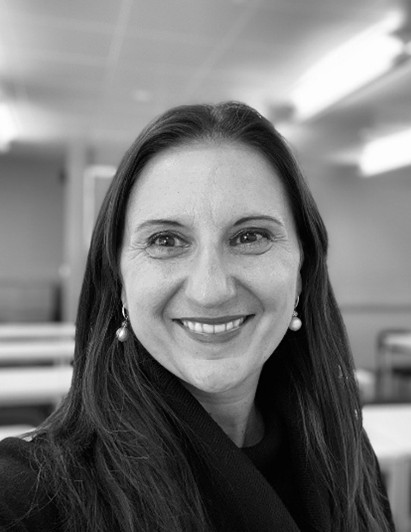
What is the subject of your research?
As a historian of 20th– and 21st-century U.S. history, my research explores the dynamic interplay between American foreign policy and the evolving global landscape, with a particular focus on environmental and climate change diplomacy. I’m especially interested in how the United States has used soft power and cultural diplomacy to shape international perceptions and influence global norms. My work also sits at the intersection of history and technology. As a digital humanist, I leverage digital tools and methodologies to reframe how we understand the past, visualise historical change, and engage with diverse audiences. By combining traditional historical analysis with digital innovation, I aim to uncover new narratives and foster deeper insights into America’s role in the world.
How and why did you get involved with Digital Humanities?
My journey into the world of Digital Humanities (DH) began in 2009, when the Obama administration announced that there would be no physical archive of his presidency because 99% of the records were born digital. That announcement set off alarm bells for me. It was a wake-up call that the nature of historical records was rapidly changing, and I needed to adapt my research skills accordingly. Determined to upskill, in 2017, I was fortunate to receive funding from the University of Reading to attend the Digital Humanities at Oxford Summer School, an experience that introduced me to the tools and thinking that define DH. In 2020, I deepened this engagement as a fellow at the History Lab at Columbia University, where I explored DH as both a discipline and a methodology. These experiences fundamentally transformed my research practice, expanding the ways I think about sources, archives, and how we can use digital technologies to ask new questions of the past.
How have you used Digital Humanities methods or principles in your research?
In my research, I’ve embraced a range of DH methods, from text analysis using R to social network analysis with Gephi and even virtual reality reconstruction – but the method that has most profoundly reshaped my practice is the video essay. Originating in film studies, the video essay enables scholars to build arguments using audiovisual language rather than relying solely on the written word. Professor John Gibbs introduced me to this method, and his summer school provided me with essential training. My first video essay explored the spectacle and symbolism of the 1939 New York World’s Fair, an event that captured the spirit of modernity, technological optimism, and American ambition on the brink of World War II. While I had previously published traditional scholarship on the New York World’s Fair based on archival collections from institutions like the New York Public Library, videographic experimentation revealed fresh angles and arguments through the very process of assembling and editing.
What were the benefits of doing so? Were there any challenges?
Transitioning from traditional research methods to videographic scholarship required me to rethink how I construct and communicate historical arguments. Historians are trained to rely on written narratives, but the video essay required me to use images, sound, and editing rhythms to build meaning. Archival research took on a new dimension, as I searched for historical footage, audio recordings, and photographs that could be woven into a compelling narrative. Editing became an interpretive act – crafting sequences, contrasting perspectives, and using voiceover and music to guide emotional and intellectual engagement. However, gaining technical fluency in video editing software was a steep learning curve, and sourcing, organising, and integrating audiovisual materials demanded patience and creativity. Presenting a video essay in traditional academic settings can also raise questions about scholarly legitimacy and rigour – challenges familiar to many working in DH. But the response to presenting my first video essay at the American Historical Association (AHA) conference in January 2025 was overwhelmingly positive, affirming that this new approach has a place in the discipline.
What would you advise others to think about when engaging with DH?
The DH Hub at Reading is a fantastic starting point, offering a wealth of resources, tools, and examples that can help you get a sense of the field’s breadth and potential. Whether you’re interested in text analysis, data visualisation, mapping, or multimedia storytelling, there’s likely a project or tutorial that aligns with your interests. But beyond tools and techniques, it’s important to think critically about why you’re drawn to DH. What kinds of questions do you want to ask that traditional methods might not fully answer? What sources are you working with, and how might digital approaches help you see them differently? DH isn’t just about adopting technology. It’s about reimagining how we do research, teach, and communicate knowledge. Be open to experimentation, collaboration, and learning new skills, but also be mindful of the ethical and methodological implications of working digitally. Most importantly, remember that DH is not a one-size-fits-all solution. It’s a flexible, evolving space where you can tailor your approach to suit your project and your discipline.
Where can we learn more about your research?
You can find details of my research and publications on my staff page. I have also written several blogs for the DH Hub portal.