

From August 10th–15th, four members of the LEMONTREE project from Nick Smith’s Lab (Texas Tech University) will be presenting their research at the Ecological Society of America’s 2025 Annual Meeting in Baltimore, Maryland. Under the theme “Ecology is Everywhere”, the team will share research that bridges experimental and global-scale ecology, tackling how traits, symbioses, and nutrient dynamics shape plant responses to a changing world.
Below is a guide to their talks — stay tuned after the event for an updated post including team photos and reflections from the conference!
Monday, August 11 | 1:30–3:00 PM
 Presenter: Dr. Evan Perkowski
Title: Global response patterns of plant functional traits to combined nitrogen and phosphorus addition are driven by additive individual effects of nitrogen and phosphorus addition
Session: COS – Physiological Ecology 1
Evan will open the week for the LEMONTREE contingent with a global-scale meta-analysis exploring how plant traits respond to combined nitrogen (N) and phosphorus (P) additions. Drawing on data from full-factorial nutrient addition experiments around the world, this talk examines how these key nutrients influence:
- Leaf nutrient content (N, P)
- Photosynthetic traits
- Above- and below-ground biomass allocation
Interestingly, while N and P additions boosted leaf nutrient content and aboveground biomass, they did not affect photosynthetic rates, suggesting decoupling between nutrient uptake and photosynthetic function. The findings also revealed additive, rather than synergistic, effects of N and P, and stronger responses in colder, drier regions, where plant nutrient demand may be higher.
This study helps refine models of carbon-nutrient dynamics under global change and underscores the importance of distinguishing between individual and combined nutrient effects.
 Wednesday, August 13 | 3:30–5:00 PM
Presenter: Snehanjana Chatterjee (PhD Candidate)
Title: The influence of arbuscular mycorrhizal fungi on plant resource use economics
Session: COS – Mycorrhizae 2
Later in the week, Snehanjana Chatterjee will present results from a greenhouse experiment examining how arbuscular mycorrhizal fungi (AMF) affect plant resource use strategies under different water and nutrient regimes.
Using cotton (Gossypium hirsutum), her study explored the effects of AMF presence, water availability, and nitrogen levels on key physiological traits and growth metrics, interpreted through the lens of least-cost theory, which predicts plants aim to maintain photosynthesis at the lowest combined cost of water and nutrients.
Findings include:
- Reduced intrinsic water-use efficiency with AMF, likely due to fungal water provisioning.
- Higher leaf nitrogen concentrations under low-N conditions with AMF, indicating a reduction in nitrogen acquisition costs.
- No significant changes in photosynthetic capacity or biomass, suggesting AMF-mediated nitrogen was allocated to non-photosynthetic functions.
This study provides a much-needed step toward integrating plant–fungus interactions into models of plant eco-physiology and resource economics.
Wednesday, August 13 | 5:00–6:30 PM
Presenter: Dr. Alissar Cheaib
Title: The satisfaction of leaf nitrogen demand under drought is modulated by soil nitrogen availability and drought severity
Session: Poster Session
Alissar will present a poster on how drought severity and soil nitrogen availability jointly influence plant nitrogen economy and photosynthesis.
Using Helianthus annuus (sunflower) grown under two nitrogen levels and three drought treatments, the study tested predictions of photosynthetic least-cost theory under combined resource stress.
Key insights:
- Under low nitrogen, drought suppressed leaf N content, Vcmax, and photosynthesis, likely due to impaired nitrogen uptake via reduced transpiration.
- Under high nitrogen, drought did not reduce (and sometimes even enhanced) photosynthetic performance, with plants showing greater nitrogen efficiency.
- Carbon costs of nitrogen acquisition rose sharply under drought, but only when nitrogen was scarce, highlighting a key interaction.
This research reinforces the idea that water–nutrient interactions must be jointly considered in predictive models of plant functional response under climate extremes.
 Thursday, August 14 | 5:00–6:30 PM
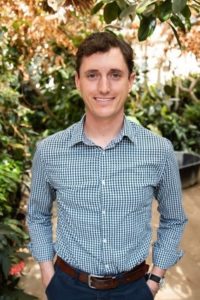
Presenter: Prof. Nick Smith (on behalf of Dr. Alissar Cheaib)
Title: The power of traits: How population growth rate is shaped by leaf and plant traits across global environmental gradients
Session: Latebreaking Poster Session
Wrapping up the week, Prof. Nick Smith will present a poster on behalf of Alissar that bridges functional trait ecology with demographic modelling. Using species trait data from the TRY database and Nutrient Network field plots, this study explored how interspecific variation in traits like leaf nitrogen (Nmass), specific leaf area (SLA), and height predicts population growth rate (λ) across 162 global sites.
Major findings:
- High Nmass conferred higher λ under dry conditions, suggesting benefits for photosynthesis under water stress.
- High SLA boosted λ especially in humid, nutrient-poor sites, while taller species had an edge in light-competitive, humid environments.
- Surprisingly, shorter species performed better in arid regions, perhaps due to belowground carbon allocation for water and nutrient uptake.
- Results were consistent across both global trait databases and local field data, reinforcing the generalizability of trait–demography relationships.
This study provides rare evidence that species-mean trait values can predict local demographic dynamics, offering a scalable path toward trait-based modelling of biodiversity and ecosystem change.
The LEMONTREE team’s talks offer understanding about how traits, mutualisms, and nutrient dynamics interact to shape plant strategies across scales, from local experiments to global syntheses.
We’ll be updating this post after ESA 2025 with photos from the team and personal reflections from each speaker about their experience presenting and engaging with the broader ecological community.
Until then, we wish them a successful and inspiring week in Baltimore!