
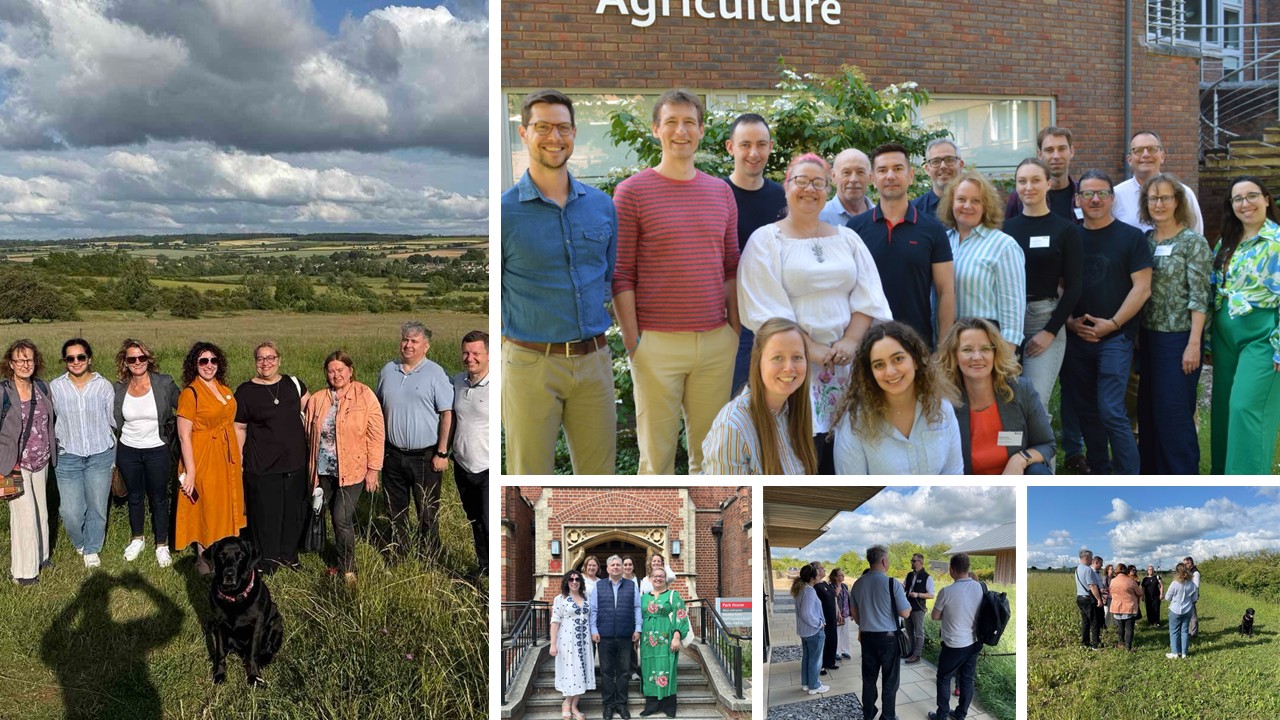

The KIARA project team were pleased to host the consortium kick-off workshop at the University of Reading from 3rd–5th March 2025, welcoming partners from England, Ireland, the Netherlands, Poland, Germany and Ukraine.
The University of Reading brought partners together for a focused programme of discussions and collaborative sessions. The workshop marked the formal start of the KIARA project, creating an opportunity to build connections across the consortium and establish a shared understanding of the project’s aims and priorities.
A key part of the programme was a visit to the University’s Sonning Farm, where participants explored examples of sustainable and regenerative farming practices within a UK setting. The visit provided a valuable practical dimension to the discussions, highlighting how research and on-farm application can work together to support knowledge exchange.
Following the kick-off meeting in March, this collaboration continued with a dedicated workshop in May involving KIARA partners from Ukraine. As part of this visit, participants travelled to the Waitrose Leckford Estate Farm, where they took part in a knowledge exchange session and guided farm tour, gaining further insight into the practical implementation of sustainable and regenerative farming approaches.
Given the nature of the kick-off meeting, sessions were centred on setting up the project for success. This included clarifying roles and responsibilities, agreeing on ways of working, and shaping the approach to developing training programmes for agricultural advisors. Particular attention was given to how the project will support small- and medium-sized farms in adopting regenerative practices through strengthened advisory services.
Hosting the workshop at the University of Reading underscored the importance of collaboration across countries and disciplines from the outset. It also set a clear direction for the next stages of the project.
The University of Reading team would like to thank all partners for their engagement and contributions, and we look forward to continuing this collaborative work in the months ahead.