

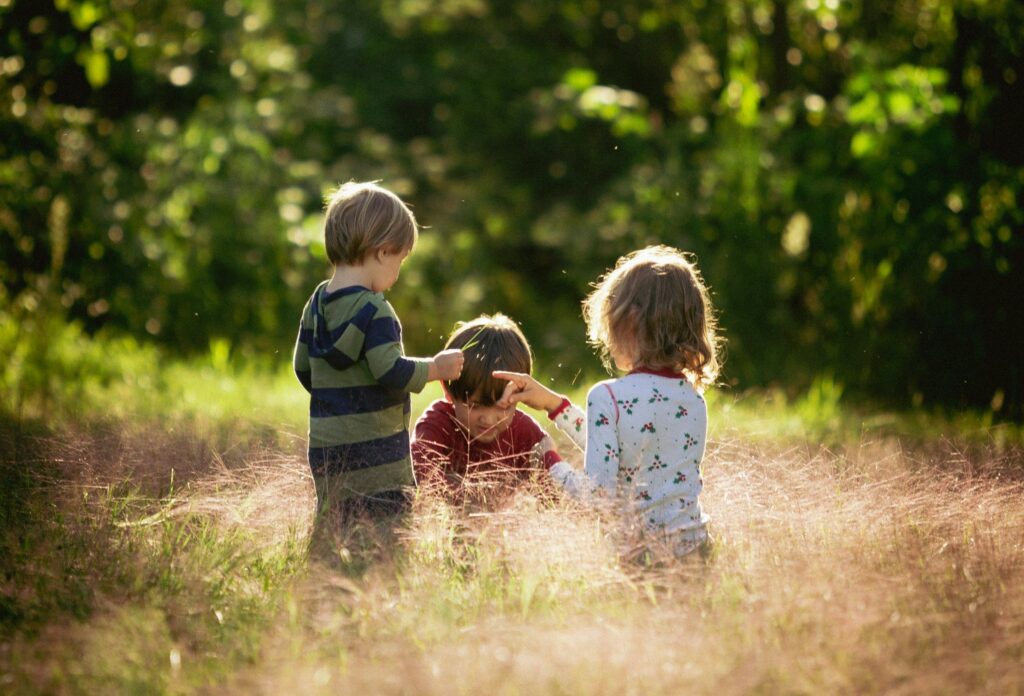
Naomi Lott, Lecturer in Law, argues that parents must actively encourage children to engage in outdoor play during the free time offered by the school summer holidays.
As the summer holidays begin and the school gates close, parents across the country are facing the next six weeks with a mix of emotions. Perhaps it’s the dread of juggling working from home with a house full of kids. Maybe it’s the burden of hundreds, if not thousands, of pounds to cover holiday clubs. But hopefully, for those that can, there is also anticipation of some time off to make memories and spend quality time with our children.
Without the pressures of school or restrictions of normal routines, the summer offers an extended time for children to play. Yet this annual ritual shines a light on a deeper problem. Over the past two generations, significant changes in our culture and way of life have placed parents under increasing pressure to take control of children’s time, actively entertain them and – ultimately – make sure that they don’t disturb others. This has led to empty streets, children spending hours being “entertained” and kept quiet by screens, community-wide loneliness, and a plethora of physical and mental health problems. These cultural changes are harming children and making parents’ lives harder.
The right to play
Children have a right to play, provided for in the UN Convention on the Rights of the Child (Article 31). This right applies to all children – not just young children who we most commonly associate with play, but also adolescents. Having a right to play means that children must be enabled and supported to engage in and enjoy play.
My research has focused on trying to understand where the right to play comes from, why it matters for children, and what this means for how the state, community, parents and teachers support children to play. Supporting children’s play, and in particular their outdoor play, can help to address the cultural problems we’re seeing. It is also crucial to children’s holistic development and expression.
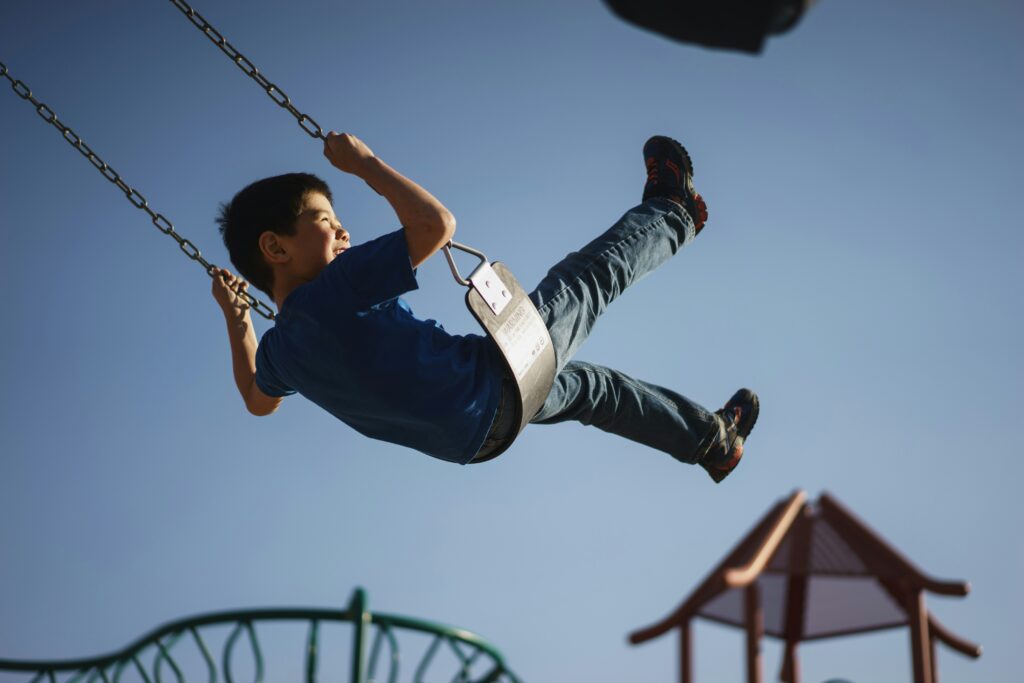
What children need to play
I have devised a framework for understanding what the right to play includes and how it should be implemented. To enjoy their right to play, children need:
Space
Children need safe and quality physical spaces for play – both formal and informal – that are close to their homes, or easily accessible from home. These spaces must enable quality play experiences – those that include risk, support a sense of belonging and independence, and are engaging and fun! Ideally, they should enable children to play independently. For example, playing outside their houses or within a few streets from home.
Children also need the psychological space to engage in play, free from burdens or expectations that hinder play. Digital play spaces must also meet similar criteria: they should be safe and fun, while supporting children’s agency and autonomy.
Time
Children need time to engage in play meaningfully. Research shows that children in England now have approximately 50 minutes less time for play per school week compared to 30 years ago. The summer holidays therefore give a unique opportunity for children to engage in play for extended periods of time, enabling deeper senses of connection, more creativity and independence.
Crucially, children’s play should be self-directed and free from external pressure, with freedom to exercise choice and autonomy in how and where they play. So often children’s “play” is directed by adults – for example in sports clubs and during the school day. However, children do not associate adult directed activities as play, and the benefits of play are limited when they are unable to practise independence and use their own creativity and imagination to decide how to play.
Acceptance
With the significant societal changes we have seen over recent generations, children’s free, unstructured and independent play has almost disappeared from our public spaces. A 2022 study found that only 27% of children regularly play outside their homes, compared to 80% of their grandparents’ generation. It also found that 41% of children have been told to stop playing in their street or local spaces by their parents or neighbours, and 30% have been criticised for noisy play.
Yet, the same study found that adults who played out regularly as children had better mental health as adults, and research shows that playing outdoors – especially in nature – is positive for children’s current and long-term mental health. Children’s enjoyment of their right to play requires a societal culture that acknowledges play as a child’s right, and celebrates and enables children’s engagement in play. This means that over the summer, we may need to permit children to be noisy, accept that play is a normal and healthy part of children’s lives, and actively encourage children to play freely with their peers outdoors.
Rights
Children have a range of rights – they all matter for play. These include rights to be protected from harm, rights that encourage children’s participation and empowerment, and rights focused on children’s developmental needs. “Good” play naturally centres on the child’s voice and agency: play that is child-led, driven by their interests and choice. Supporting children’s play requires that children’s voices are heard on how and where they play. This matters for both the day-to-day experiences of play at home, in public spaces and in holiday clubs.
It also matters for local and national policies. It includes considering children’s rights in the design and implementation of play spaces, policies, and practice; children’s rights to freedom of expression and association; their right to be supported to enjoy their rights according to their evolving capacities; and their right not to be discriminated against.
The path forward
This summer, we have an opportunity to address the loss of play. Alongside University of Reading Chancellor Paul Lindley OBE, I recently presented the Raising the Nation Play Commission report to the House of Lords, which calls for the Government to establish a National Play Strategy.
The path forward is clear, but whilst we wait for the Government to take action we can play our role to bring about change now. The holidays present a prime opportunity to support children’s right to play, ensuring they have the time, space, acceptance and rights to play freely.
Cover photo by Laura Ohlman on Unsplash
Article photo by Myles Tan on Unsplash