
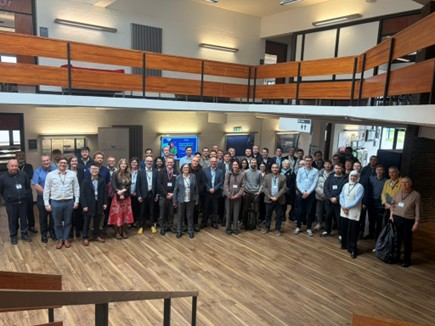
At the end of March, nearly 100 scientists, researchers, and industry professionals gathered at the University of Reading for TAC 2026, the annual conference of the Royal Society of Chemistry’s Thermal Methods Group. As the host, I had spent months preparing for the event. But nothing quite prepares you for the moment the room fills up and the conversations begin.
What struck me most was not the size of the audience, though that was gratifying. It was the moment — repeated several times over three days — when a delegate pulled me aside and said: “I had no idea this kind of work was happening at Reading.” That, perhaps more than anything, is why events like TAC 2026 matter.
A conference that brought the field together
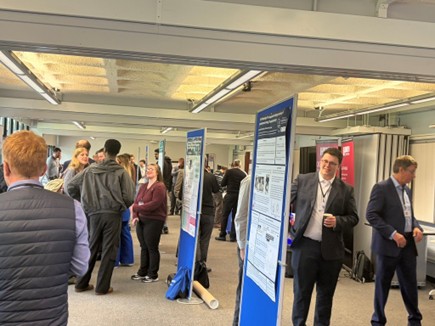
TAC 2026 ran across three days, beginning with a short course on Monday before moving into two full days of talks, presentations, and discussion. The programme covered the full breadth of thermal analysis — the science of understanding how materials behave when heated, cooled, or subjected to changing conditions. It is a field that sits quietly at the heart of pharmaceutical development, materials science, food safety, and advanced manufacturing.
Attendees came from universities, national laboratories, and major industries across the UK and internationally — established names in the field alongside early-career researchers presenting their work for the first time. The mix made for exactly the kind of rich, cross-pollinating conversation that good science depends on.
We also opened up the University’s Chemical Analysis Facility (CAF) for tours, and the reaction was remarkable. The CAF is one of the most comprehensive university-based analytical laboratories in the UK, housing an exceptional range of instruments and expertise. For many visitors, it was their first time seeing what Reading has quietly built here. The feedback was overwhelmingly positive, and more than a few delegates left with plans to explore potential collaborations.
The technology I’ve been working on: ThermoLens
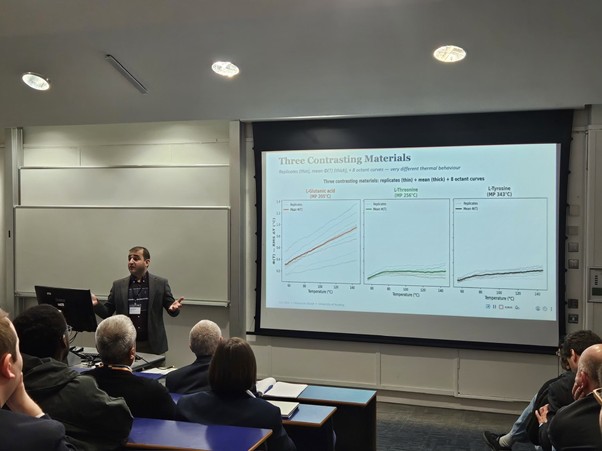
Alongside organising the conference, I took the opportunity to present ThermoLens — a technology I have been developing here at Reading that combines thermal analysis with artificial intelligence to analyse pharmaceutical materials in a way that has not been possible before.
Let me explain what it does in plain terms. When you heat a material, it responds in ways that reveal its inner structure — how its molecules are arranged, how tightly its crystals are packed, how it might behave when it dissolves in the body. Standard techniques measure this as a single overall signal. Powerful, but limited — like measuring the average temperature of a room rather than seeing a detailed heat map of every corner.
ThermoLens goes further. By placing an infrared camera above a conventional heating instrument, it captures a spatial map of the entire sample as it heats up, pixel by pixel. Machine learning algorithms then analyse these maps, identifying patterns in the data that no human eye could detect alone — building what I call a ‘thermal fingerprint’: a rich, unique signature for each material.
This is where AI makes a genuine difference. The fingerprint contains far more information than any single measurement could capture — and it is the machine learning layer that unlocks it, teaching itself from examples to distinguish one material from another with consistently high accuracy, even when those materials are chemically very similar.
What can that fingerprint tell us? Quite a lot. ThermoLens can identify pharmaceutical materials from a single scan, distinguish between molecules that are structurally almost identical — a distinction with real implications for drug quality and safety — and detect contamination in powder samples at remarkably low levels. It also reveals connections between the thermal fingerprint and properties like solubility and drug-polymer compatibility — information that formulation scientists need when developing new medicines.
And it does all of this without destroying the sample. No grinding. No specialist preparation. You pour a small amount of powder into a pan, heat it, and the fingerprint emerges.
The support that made it possible
ThermoLens did not emerge overnight. It has been years in the making, and it would not have been possible without the support of the University of Reading — both in terms of funding and in providing the environment and infrastructure to develop and test the technology rigorously.
That commitment has recently been formalised in a significant way: the University has filed a patent on ThermoLens, which has now entered the national phase. For those unfamiliar with the patent process, this is a meaningful milestone — it reflects confidence in the strength and originality of the intellectual property, and it opens the door to commercial partnerships and licensing discussions.
I am also grateful to colleagues across the School of Pharmacy and the Chemical Analysis Facility whose expertise and collaboration have shaped this work. Science of this kind is rarely a solo endeavour.
Industry interest — and what comes next
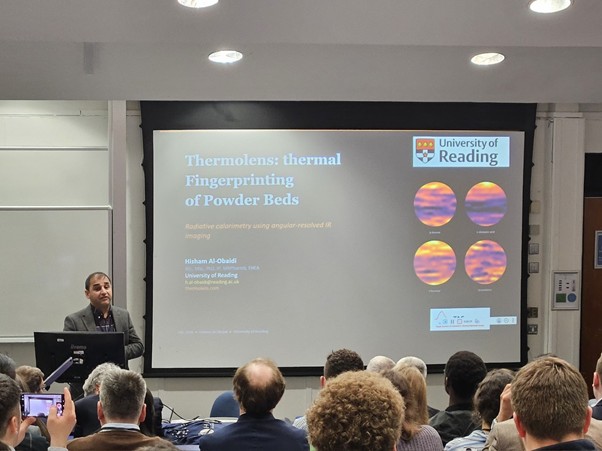
When I presented ThermoLens at TAC 2026, the response was one of the most rewarding moments of my career so far. The questions were sharp, the interest was genuine, and the conversations that followed the talk went on long after the session had ended.
Several pharmaceutical companies approached me during and after the conference. We are now in the early stages of formal discussions with a number of them, under non-disclosure agreements which means I cannot share details at this stage, but I can say that the conversations are serious and the potential applications are exciting.
For instrument manufacturers, ThermoLens represents an opportunity to add a genuinely new dimension of analytical capability to existing equipment — not by replacing what is already there, but by building intelligently on it. For pharmaceutic al companies, it offers the prospect of faster, more informative quality control. For the broader scientific community, it is a new AI-powered tool that complements and enriches the analytical methods we already rely on.
Why this matters beyond the laboratory
I am a pharmacist and a scientist, and my motivation for developing ThermoLens has always been grounded in what I see in the laboratory and in the clinic: the need for better, faster ways to understand the materials that medicines are made from.
But the implications reach further. The UK government has set out ambitions across life sciences, artificial intelligence, and advanced manufacturing — and delivering on those ambitions requires exactly the kind of innovation that sits at the intersection of all three. ThermoLens is one example of what that looks like in practice: an AI-powered analytical technology, developed at a UK university, that helps us develop safer medicines more efficiently, reduce waste in manufacturing, and protect the integrity of pharmaceutical supply chains.
The fact that this technology was conceived, developed, and validated here at Reading — and is now attracting serious interest from industry — is precisely the kind of story that demonstrates what university research can achieve when it is given the space and support to grow.
A final thought
Hosting TAC 2026 was a privilege. Presenting ThermoLens to that audience was a highlight I will not forget. But what has stayed with me most is the broader message the conference sent: that Reading is a place where serious science happens, where industry is welcome, and where the distance between the laboratory and the real world is shorter than many people think.
If you are interested in ThermoLens, in the Chemical Analysis Facility, or in potential collaborations, I would be very glad to hear from you.
About the author
Dr Hisham Al-Obaidi is Associate Professor in Pharmaceutics and Translational Drug Delivery at the University of Reading, and Thermal & Optical Analysis Lead at the Chemical Analysis Facility. He is also an Advanced Clinical Pharmacist Practitioner in Emergency Medicine with the NHS Ambulance Services.
Contact: h.al-obaidi@reading.ac.uk | thermolens.com