
Dr. Mark Turner
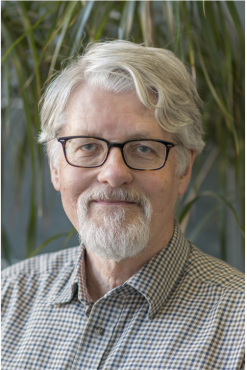
Mark examines rapid climate change and its effect on vegetation using pollen accumulations in lake sediments. He examines modern pollen assemblages and uses the relationships between pollen and climate to infer changes in climate variables through time.
His current work focuses on the last glacial (~20,000 years ago to ~120,000 years ago). During this time, there are at least 20 periods of rapid temperature increases (Dansgaard-Oeschger cycles) with similar rates of change to what the world is currently experiencing. Pollen assemblages in lake sediments reflect these changes, and the modern pollen-climate relationships may be used to quantitatively reconstruct climate changes during these events. This work helps in answering questions about the fate of vegetation under current and future climate change.